
Lee County
Mold remediation in Fort Myers Beach, FL
For Estero Island homes that survived Ian, the rebuilds that replaced them, and everything the salt air touches.
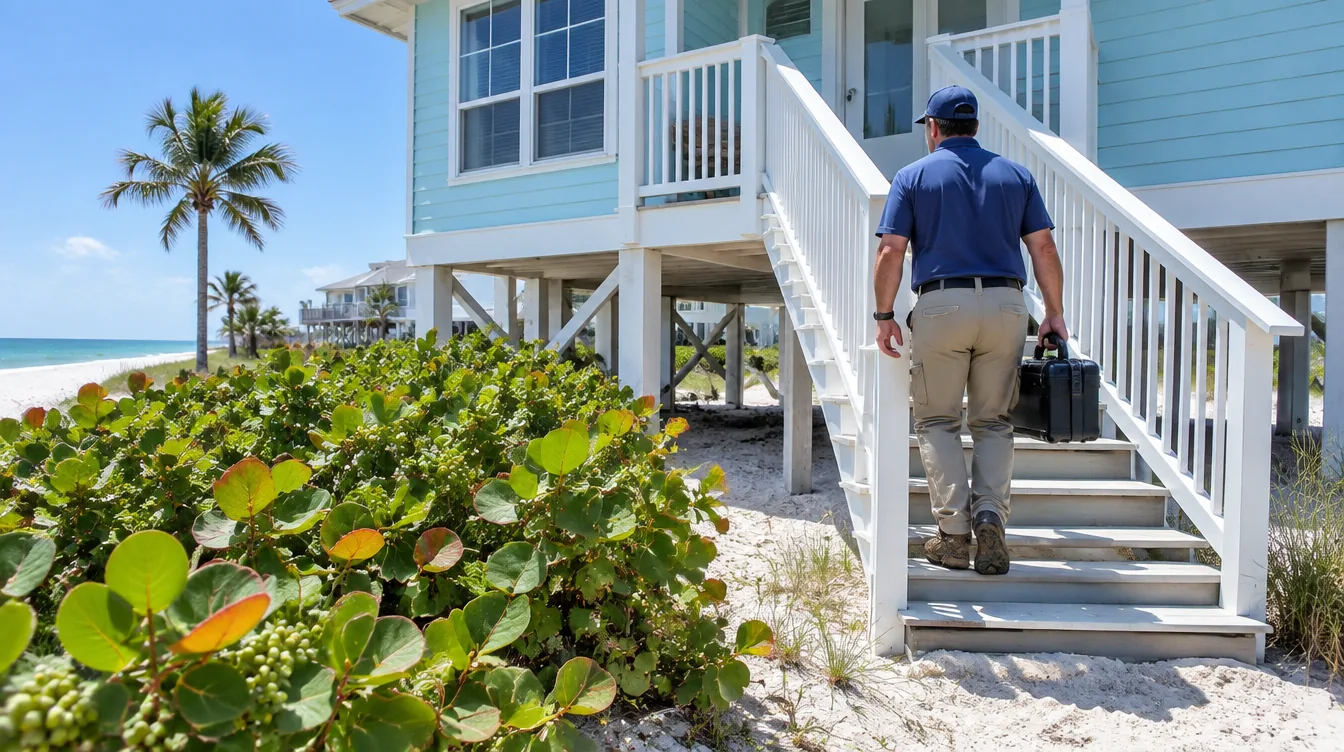
Mold remediation on Fort Myers Beach
Mold remediation in Fort Myers Beach, FL is the contained removal of mold-damaged materials and the cleanup of mold and mycotoxins, in homes that are often elevated, rebuilt or used seasonally. American Mold Experts does the removal. An independent licensed mold assessor inspects and samples the home, writes the scope, and performs clearance testing, so the result is verified by someone other than us.
An island that is still rebuilding
Fort Myers Beach sits on Estero Island, a narrow barrier island between the Gulf and Estero Bay. The town incorporated at the end of 1995, and for most of its history it was a mix of older beach cottages, motels, condos and newer elevated homes.
Hurricane Ian changed that in a single day in September 2022. The National Hurricane Center put peak surge inundation on Fort Myers Beach at roughly 10 to 15 feet above ground. Times Square was leveled, the pier was destroyed, and many ground-level homes were swept off their foundations or gutted.
What stands now is a mix: homes that survived and were repaired, new elevated construction, and lots still waiting. Each carries a different mold risk. Surviving homes may have salt-soaked block and framing that was dried and closed up quickly. New homes are built high but still sit in the salt air and humidity of an island, and many stand empty for part of the year.
- County
- Lee County
- Setting
- Estero Island, between the Gulf and Estero Bay
- Typical housing
- Elevated homes, older cottages, condos
- Storm history
- About 10 to 15 feet of Ian surge, 2022
Mold services for Fort Myers Beach
- Hurricane and flood moldSurge-flooded and rebuilt homes
- Seasonal home moldSecond homes and rentals left closed
- Condo and HOA moldBeachfront condos and associations
- Commercial mold remediationRestaurants, shops and lodging
- Mycotoxin remediationToxins in dust and surfaces
- Mold remediation in Southwest FloridaOur full removal process

Why families trust us with their homes
-
Family-owned since 2008
A multigenerational family business. Not a franchise, not a private-equity rollup.
-
Trained and certified
Our team holds IICRC, CMR, CRMI and CCMI credentials in mold remediation and inspection.
-
Called on as experts
Attorneys bring us into legal cases involving mold and mycotoxins.
-
Documentation at every step
Photos, moisture logs and lab reports you can hand to your insurer or FEMA.
- IICRC Certified Firm
- CMR
- CRMI
- CCMI
- BBB A+ Accredited
- NAMRI
- IAQA
- NORMI
- AMMA
- PMII
Nearby areas we serve
Salt water leaves more behind than a waterline
Most homes that took surge on Estero Island were soaked in Gulf water mixed with sand, sewage and debris. When it drained away, it left salt in block, stucco, wood and whatever drywall stayed in place. Salt pulls moisture from humid air, so surfaces that were “dried” in 2022 can keep picking up moisture in island humidity. That’s one reason repaired beach homes sometimes develop a musty smell long after the work was finished.
Surge water also counts as the most contaminated category of water, so porous materials it soaked generally have to come out rather than be cleaned in place. If you’re not sure how thoroughly your home was stripped and dried, our guide on whether mold can come back after hurricane remediation explains what to look for.
Elevated doesn’t mean dry
New homes on the island are built up high, with parking and storage underneath. The living space stays above surge, but it’s still a sealed box in a very humid place. The areas we check first are the AC closet and ducts, walls around sliding doors facing the Gulf, bathrooms without strong exhaust, and closets on outside walls. The enclosed space under the house matters too, since things stored there often stay damp. Our page on AC and duct mold covers the most common source.
Verified by someone else
On Fort Myers Beach, as everywhere in Florida, an independent licensed mold assessor tests before and after our work. The company testing your home has no reason to find more mold than is there, and the company removing it can’t grade its own work. We serve the beach and the rest of Lee County as part of our Southwest Florida team.
We remove mold and mycotoxins from buildings. We don’t diagnose or treat medical conditions.
Fort Myers Beach mold questions
Have a question that isn't here? Call a specialist
Our home survived Ian and was repaired. Could there still be mold?
It's possible, especially if walls were closed up while contractors were scarce and materials hadn't fully dried. Salt water also leaves residue that keeps drawing moisture from the air. A musty smell, bubbling paint or recurring spots along lower walls are worth an independent assessment.
Can a new elevated home get mold?
Yes. Height keeps surge out, but it doesn't stop humidity, roof or window leaks, or a struggling AC system. Island homes left empty for months with the AC set high are especially at risk.
Do you work on short-term rentals?
Yes. Rentals change hands often and sit empty between guests, so problems can grow unnoticed. We plan work around bookings where we can, and the clearance report gives you a record for your files.
How do you get equipment onto the island?
The same way everyone else does, over the bridges from the mainland. Island work takes more planning around parking, access and building rules, and we factor that into scheduling.
We're done when the lab says so.
Every remediation ends with clearance testing, and our work is backed by a complete-removal guarantee. We don't close a job on a failed result.
Talk to a specialistTalk to a specialist about your Fort Myers Beach property
Tell us whether the building survived Ian, was rebuilt or is new. A Southwest Florida specialist will call you back.
Not sure yet? Try the free AI Mold Risk Check