
Estero storm recovery
Hurricane mold remediation in Estero
Surge from the bay and the river: we dry, remove and clean, then an independent assessor confirms it.
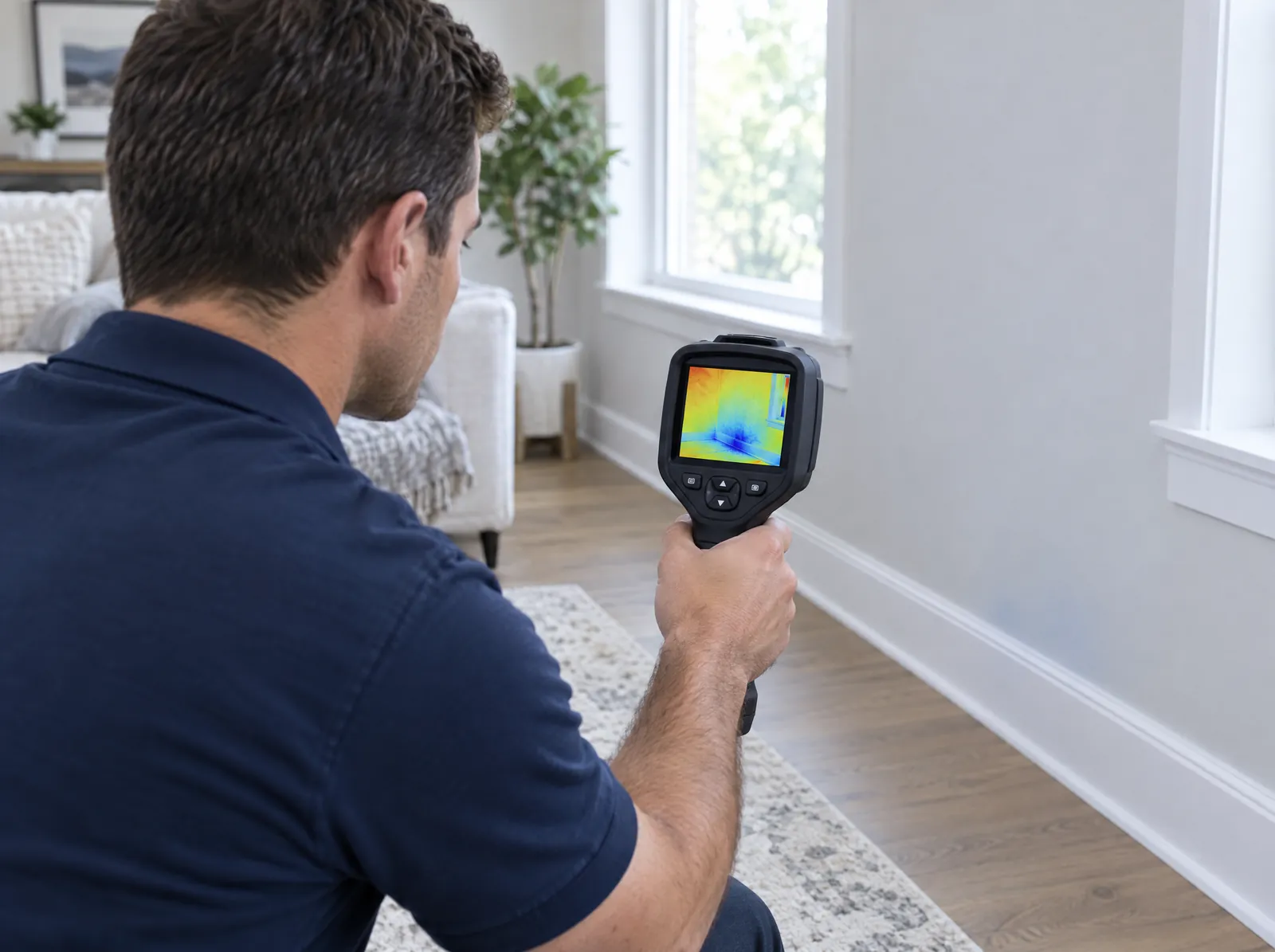
What does hurricane mold remediation in Estero involve?
Hurricane mold remediation in Estero involves drying a storm-damaged home, removing the drywall, insulation and flooring flood water ruined, and cleaning out the mold before it spreads. In Estero, the risk is highest near the Estero River and Estero Bay, where Ian's surge flooded more than 1,000 homes. An independent licensed assessor tests before the work and confirms clearance after.
What Ian taught Estero about surge
Estero sits on Estero Bay, and the Estero River runs through the village to meet it. Both rise almost as fast as the Gulf does. In Hurricane Ian, the National Hurricane Center estimated 8 to 12 feet of flooding above ground in Estero, and the village counted more than 1,000 homes affected by flooding and surge. Low neighborhoods near the water took the worst of it, while homes farther from the river and bay were more likely to see wind and rain damage. The mold work that followed depended on which side of that line a home was on.
Sound familiar?
- Your home near the river or bay took surge and you don't know what to keep.
- Your manufactured home flooded and the floor still feels soft.
- Your repair budget is running up against the village's 50 percent rule.
- Your insurer is asking for moisture logs you don't have.
We do it differently.
| A fast storm cleanup | AME storm mold remediation in Estero | |
|---|---|---|
| Drying | Fans for a few days | Moisture readings until block, framing and slab test dry |
| Manufactured homes | Surface cleanup | Floor, insulation and belly area assessed and addressed |
| Permits | Left to you | Scope and itemized costs ready for your permit and 50 percent review |
| Testing | Often none | Independent licensed assessor, before and after |
| Records | An invoice | Photos, moisture logs and lab reports |

Why families trust us with their homes
-
Family-owned since 2008
A multigenerational family business. Not a franchise, not a private-equity rollup.
-
Trained and certified
Our team holds IICRC, CMR, CRMI and CCMI credentials in mold remediation and inspection.
-
Called on as experts
Attorneys bring us into legal cases involving mold and mycotoxins.
-
Documentation at every step
Photos, moisture logs and lab reports you can hand to your insurer or FEMA.
- IICRC Certified Firm
- CMR
- CRMI
- CCMI
- BBB A+ Accredited
- NAMRI
- IAQA
- NORMI
- AMMA
- PMII
The AME Clearance Method
How we handle storm mold in Estero
Seven steps. The paperwork runs alongside the physical work, because in Estero it can decide what gets rebuilt.
Talk to a specialist-
Safety and documentation
Power and structure checked, then photos and video of every room, the waterline and damaged belongings.
-
Extract and dry
Standing water and wet debris come out. Dehumidifiers and air movers run while we log moisture in walls, block and floors.
-
Independent assessment
A licensed Florida mold assessor, independent of us, inspects and samples the home and writes the protocol.
-
Check permit requirements
Before demolition, confirm with the village what permits apply to your tear-out and repairs. We give you an itemized scope to take with you.
-
Contain and remove
Negative air and barriers protect dry rooms. Wet drywall, insulation, flooring and cabinet bases come out.
-
Clean and treat
HEPA vacuuming and hand cleaning, enzyme treatment for mycotoxins, and AC cleaning if the system took on water.
-
Independent clearance
The assessor retests before rebuilding. You keep the report for your insurer, the village and a future buyer.
What an Estero storm project includes
- Photo and video documentation from day one
- Daily moisture logs until materials test dry
- Containment with negative air
- Flood cuts and removal of porous materials
- Assessment of floors and insulation in manufactured homes
- HEPA vacuuming and detailed cleaning
- Enzyme treatment for mycotoxins
- AC and duct inspection and cleaning where needed
- An itemized scope for permits and insurance
- Coordination with an independent licensed assessor

Proof you can hold in your hands
When we finish, you don't get a handshake and a promise. You get the paperwork your family, your doctor, your insurer or your buyer can rely on.
Inspection report
What we found, where it is coming from, with color photos.
Written remediation plan
Scope, timeline and what will and won't be removed, before work starts.
Clearance lab report
Air, surface and mycotoxin results after the work is done.
A report for your doctor
With your permission, we share results directly with your care team.
Storm mold in Estero, explained
Ian in Estero, by the numbers
The Village of Estero published a snapshot of Ian’s damage a month after the storm. Together with the National Hurricane Center’s report, it shows how concentrated the flooding was.
| What was reported | Figure | Source |
|---|---|---|
| Peak flooding above ground in Estero | 8 to 12 feet | National Hurricane Center |
| High water mark near Mullock Creek, north of the village | 8.3 feet above ground | USGS survey, cited by the National Hurricane Center |
| Homes affected by flooding and storm surge | More than 1,000 | Village of Estero, October 2022 |
| Homes in Estero River Heights affected by surge | All 120 | Village of Estero, October 2022 |
| Dwelling units posted with unsafe structure placards | More than 1,000 | Village of Estero, October 2022 |
| Homes checked by inspectors village-wide | More than 8,000 | Village of Estero, October 2022 |
The National Hurricane Center also notes that stream gauges in the canals north and east of Estero Bay recorded significant surge well inland. The village reported that areas off West Broadway flooded, including single-family subdivisions and mobile home parks, in addition to Estero River Heights.
Two Esteros, two kinds of storm damage
Most of Ian’s worst surge damage in Estero was in lower neighborhoods close to the river and bay, and homes farther from the water were more likely to see wind and rain damage. So storm mold work in the village tends to fall into two groups.
Surge-flooded homes near the water
These homes took salt and brackish water, often several feet deep. The work is a full flood response: water out, drywall cut above the wicking line, insulation, flooring, baseboards and cabinet bases removed, and block, framing and slab dried and cleaned. Salt left behind in porous materials draws moisture from the air, so salt-soaked materials come out rather than staying to dry.
Wind and rain damage inland
Homes that stayed above the surge still saw roof damage, torn soffits, failed window seals and wind-driven rain. Water from those leaks runs down inside walls and across ceilings, often far from where it came in, and it tends to go unnoticed until it smells. The scope here is usually narrower, but it depends on finding every path the water took. Thermal imaging and moisture readings do most of that work.
If your home stayed dry inside
Many Estero homes never saw surge but still took water from above. Wind-driven rain gets in at roof edges, soffits, windows and sliding doors, and a small tear in the roof can soak attic insulation for days before anyone notices. After a storm, check these places even if the floors stayed dry:
- Ceilings near exterior walls, for stains, sagging or bubbling paint
- The attic, if you can reach it safely, for wet insulation or daylight through the roof deck
- Window sills and the drywall below them
- The bottom of walls beside sliding doors to the lanai
- The AC closet, the air handler and the ceiling around supply vents
A musty smell a few weeks after the storm usually means something stayed wet. Moisture readings will tell you where.
Manufactured and mobile homes
Mobile home parks off West Broadway were among the areas that flooded in Ian. Manufactured homes handle flood water differently from block houses. Floors are often particleboard or plywood panels that swell and lose strength when wet. Insulation under the floor is held in place by a wrap underneath the home, which can hold water against the floor for a long time. Walls are thinner, with less space to dry. An assessment shows whether a flooded manufactured home can be dried, cleaned and repaired in sections, or whether the damage is too widespread to be worth it. Either way, you’ll have the documentation to support your decision.
Permits and the 50 percent rule in Estero
After Ian, the Village of Estero’s recovery guidance explained that homes in special flood hazard areas fall under the substantial damage and substantial improvement rules, known as the 50 percent rule. If repair costs equal or exceed 50 percent of the building’s market value, the home must be brought up to current flood standards. The village’s worksheet also counted the value of permitted improvements from the previous five years toward that limit, and its recovery packet included a permit application for hurricane-related demolition and drywall repair.
Rules can change, so confirm the current requirements with the village before you start tear-out or rebuilding. What we can do is give you an itemized scope and cost breakdown for the remediation, kept separate from the rebuild, so the village and your insurer can review it on its own.
Independent testing and clearance
Under Florida Statute 468.8419, a mold assessor may not remediate a structure it assessed within 12 months, and a remediator may not assess or clear one it remediated within 12 months. Certified Division I contractors are the exception. On our Estero storm projects, an independent licensed mold assessor inspects and samples the home, writes the scope, and performs clearance testing. We do the remediation to that protocol. The company testing your home has no reason to find more mold than is there, and the company removing it can’t grade its own work.
Records for insurance, FEMA and the village
We keep dated photos, daily moisture readings, the assessor’s reports, an itemized list of what was removed and the final clearance report. FEMA’s mold guidance says NFIP flood policies won’t cover damage from mold, and the policy also excludes mold caused by failing to inspect and maintain the property after the water recedes. Ask your adjuster in writing how your claim will be handled. Records still matter for the flood damage itself and for any other coverage you have. FEMA’s Individuals and Households Program may help with disaster-caused mold when it makes a home unlivable, and our answer on whether FEMA pays for mold remediation goes further.
If someone in your household has health concerns their doctor connects to mold since the storm, see our page on mycotoxin remediation in Estero. Our Southwest Florida team serves Estero and the rest of Lee County, along with Collier and Charlotte counties.
Common questions
Have a question that isn't here? Call a specialist
How many Estero homes flooded in Ian?
By the Village of Estero's count at the end of October 2022, more than 1,000 homes were affected by flooding and storm surge, including all 120 homes in Estero River Heights. Inspectors had checked more than 8,000 homes village-wide, and more than 1,000 dwelling units had been posted with unsafe structure placards.
What is Estero's 50 percent rule?
For homes in a special flood hazard area, if repair or improvement costs reach 50 percent of the building's market value, the home must meet current flood standards. The village's Ian guidance counted permitted improvements from the previous five years toward that total. Confirm the current rules with the village before you plan repairs.
Did Helene and Milton affect Estero?
Both raised water along this coast. The National Hurricane Center estimated 3 to 5 feet of flooding from south of Englewood to Bonita Beach in Helene, and 4 to 6 feet from south of Boca Grande through Bonita Beach in Milton. Homes near the bay and river are the first to see it.
Can a flooded manufactured home be saved from mold?
Sometimes. It depends on how high the water got and how long it sat. Floors, insulation under the floor and wall panels soak up water quickly. An assessment shows whether cleaning and replacement of damaged sections is realistic or the home is a loss.
Can the same company test and remove mold in Estero?
Generally not on the same property. Florida Statute 468.8419 bars an assessor from remediating a structure it assessed, and a remediator from assessing one it remediated, within 12 months, except for certified Division I contractors.
Does FEMA pay for mold remediation?
It can. FEMA's Individuals and Households Program may help with disaster-caused mold when FEMA verifies it makes the home unlivable. Apply at DisasterAssistance.gov and keep photos, receipts and reports.
We're done when the lab says so.
Every remediation ends with clearance testing, and our work is backed by a complete-removal guarantee. We don't close a job on a failed result.
Talk to a specialistStorm damage in Estero? Talk to us
Tell us how close you are to the river or bay, how high the water got and when. A specialist will call you back.
Not sure yet? Try the free AI Mold Risk Check