
Moving after mold
Moving after mold exposure: belongings and the new home
A new address doesn't leave the dust behind. Sort, clean and pack so the next home starts clean.
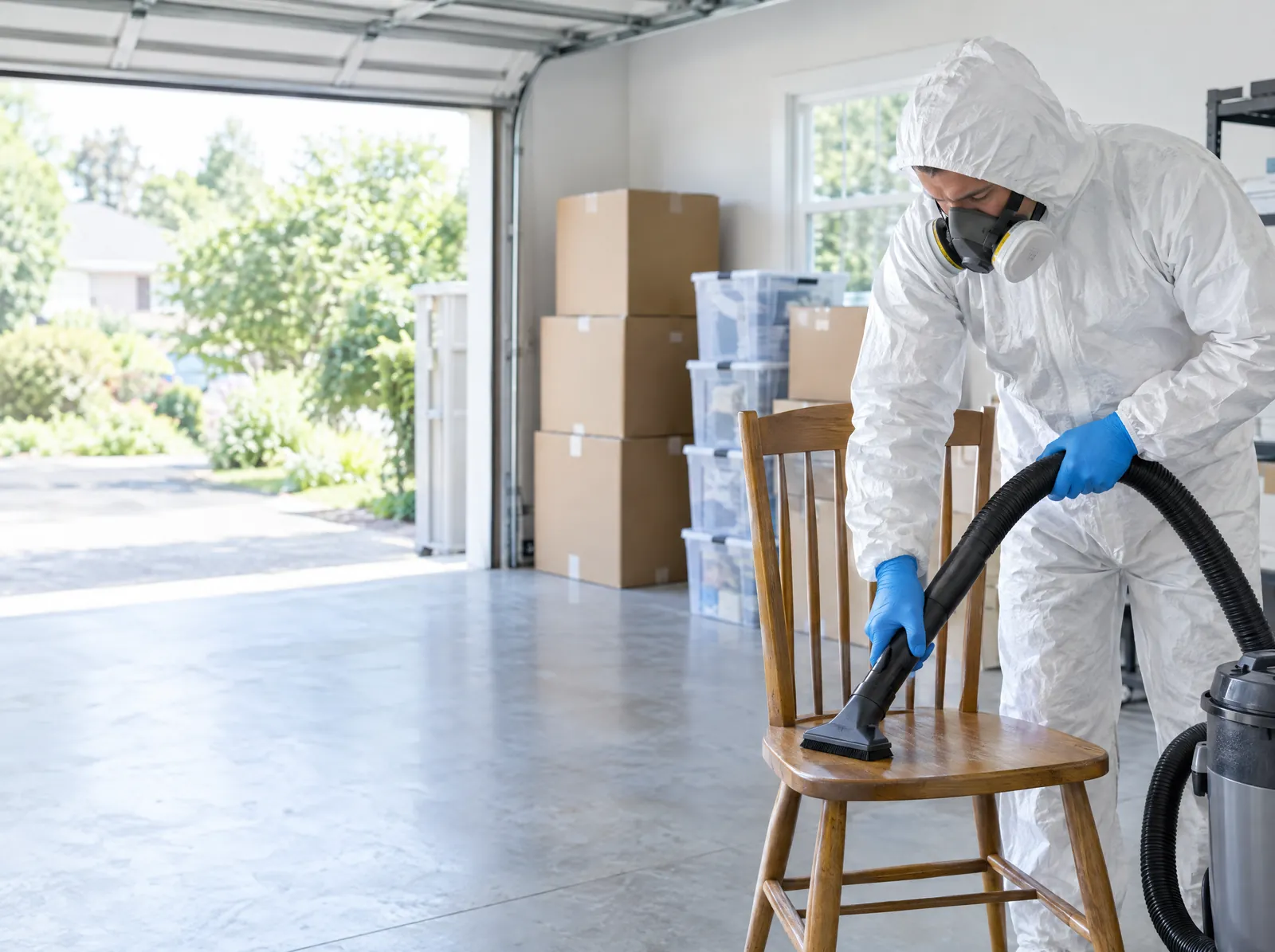
What should you do with belongings when moving after mold exposure?
When you're moving after mold exposure, belongings should be sorted, cleaned and packed before they reach the new home. Hard items can usually be HEPA-vacuumed and wiped. Washable fabrics can be laundered. Mattresses, upholstered furniture and heavily contaminated soft items are the hardest to clean and are often replaced. Pack in new containers, clean somewhere other than the new house, and test the new home before you move in.
Why a move can carry the problem with you
Mold spores, mold fragments and mycotoxins settle into dust, and dust settles on everything: the tops of books, the inside of drawers, the fabric of a couch, the folds of clothes in a closet. Pack those things as they are, and the dust travels in the truck and unpacks in the new house.
Families who move to get away from a moldy home are often heartbroken to find the new place feels no different. Often the new house was never the problem. The contents were. A careful sort and a clean-before-packing rule prevent most of that.
Sound familiar?
- You don't know which belongings are worth the effort of cleaning.
- Your old moving boxes have been sitting in a damp basement.
- You haven't tested the new house and aren't sure you need to.
- You're packing in the same rooms that were contaminated.
We do it differently.
| A typical move | A clean move | |
|---|---|---|
| Sorting | Pack everything, decide later | Sort into clean, hold and replace first |
| Cleaning | After unpacking, if at all | Before packing, outside the contaminated rooms |
| Containers | Old boxes from storage | New boxes or washable plastic bins |
| New home | Assumed clean | Tested before move-in |
| Unpacking | Everything at once | Clean essentials first, uncertain items last |

Why families trust us with their homes
-
Family-owned since 2008
A multigenerational family business. Not a franchise, not a private-equity rollup.
-
Credentialed where it isn't required
Indiana doesn't license mold remediators. We hold IICRC, CMR, CRMI and CCMI credentials anyway.
-
Called on as experts
Attorneys bring us into legal cases involving mold and mycotoxins.
-
Lab results in 24 to 48 hours
Every inspection comes with a written report, color photos and lab results.
- IICRC Certified Firm
- CMR
- CRMI
- CCMI
- BBB A+ Accredited
- NAMRI
- IAQA
- NORMI
- AMMA
- PMII
The AME Clearance Method
How we approach contents during a move
Every move is different, so the scope is set after a walk-through. The order below is the one we recommend.
Talk to a specialist-
Walk through and inventory
Room by room, we look at what you own, where it was stored and how close it sat to the affected areas. That shapes what can be cleaned.
-
Sort before anything is packed
Each item goes into one of three groups: clean and move, hold for a decision, or replace. Sentimental items get extra time.
-
Set up a clean-out area
Cleaning happens in a separate, controlled space away from the contaminated rooms, so cleaned items don't pick up dust again.
-
Clean item by item
HEPA vacuuming and damp wiping for hard goods, laundering for washable fabrics, and case-by-case decisions for books, papers and electronics.
-
Pack clean, in new containers
Cleaned items go straight into new boxes or washable bins, sealed and labeled, never back into cardboard that sat in the old basement.
-
Test the new home first
Dust and air testing before move-in tells you whether the new house is starting clean, before your belongings arrive and complicate the picture.
What a clean move plan covers
- A room-by-room contents walk-through
- A clean, hold and replace sorting plan
- Guidance on mattresses and upholstered furniture
- A separate cleaning and packing area
- HEPA vacuuming and damp wiping of hard goods
- Laundering guidance for clothing and linens
- Packing rules for cleaned items
- Testing the new home before move-in
- An unpacking order for the new home

Proof you can hold in your hands
When we finish, you don't get a handshake and a promise. You get the paperwork your family, your doctor, your insurer or your buyer can rely on.
Inspection report
What we found, where it is coming from, with color photos.
Written remediation plan
Scope, timeline and what will and won't be removed, before work starts.
Clearance lab report
Air, surface and mycotoxin results after the work is done.
A report for your doctor
With your permission, we share results directly with your care team.
A room-by-room guide to moving after mold
Sort first, then clean, then pack
The instinct when leaving a moldy house is to pack as fast as possible. Resist it. Packing first and sorting later means every box has to be opened, cleaned and repacked on the other end, often inside the new house. Sorting first means only the things worth keeping get cleaned, and only clean things get packed.
Three piles are enough. Clean and move is for items you’re confident can be cleaned. Hold is for anything you’re unsure about, sealed in a bin and kept out of the new living space until you decide. Replace is for things that can’t be cleaned well or aren’t worth the effort. The hold pile keeps a hard week from turning into a pile of regrets.
How different materials usually sort
| Item | Usual pile | How it’s handled |
|---|---|---|
| Dishes, glass, metal, hard plastic | Clean and move | Wash or wipe. The easiest category. |
| Solid wood and finished furniture | Clean and move | HEPA vacuum, including undersides and drawer interiors, then damp wipe |
| Clothing, towels, bedding | Clean and move | Launder before packing, sometimes twice |
| Rugs | Hold or replace | Depends on the fiber and where it lay |
| Books, papers, photos | Hold | Individual decisions. Scan what matters most. |
| Electronics | Hold | Exterior cleaning is simple. Fans and vents pull dust inside. |
| Mattresses, pillows, upholstered furniture | Often replace | Dust works into the padding, beyond what cleaning reaches |
| Stuffed toys and soft keepsakes | Hold | Washable ones can be laundered. The rest are decided one at a time. |
For the specific questions families ask most, see can I take my furniture if I move out of a moldy house? and should I throw away my mattress after mold exposure?
Where to clean
Cleaning an item in the room it came from, then setting it back down on the same dusty floor, undoes the work. Choose a space away from the affected areas: a garage, a covered porch, a cleared room or, for bigger projects, a separate staging area. Clean there, pack there, seal the box there, and move it straight to the truck or to storage that’s known to be dry and clean.
A few supplies make this easier: a vacuum with a true HEPA filter, microfiber cloths that are damp rather than dry, new boxes or plastic bins, and tape and labels so you know which boxes are finished. Wear gloves and a well-fitted respirator while you work in contaminated areas, and change clothes before you go into the clean space.
Test the new home before the truck arrives
A new house can have its own water history, even a newer one. Testing it before move-in gives you two things: confidence that it’s starting clean, and a baseline to compare against later. If you test after you’ve moved everything in, it becomes much harder to tell whether a result came from the house or from your belongings. Our answer on whether a new house can have mycotoxins explains why this matters even for recent construction.
Unpacking in the right order
- Set up the bedrooms first, with new or cleaned bedding, so everyone has a clean place to sleep.
- Unpack daily essentials: kitchen items, clothing and hygiene supplies.
- Bring in cleaned furniture.
- Leave the hold bins in the garage or another space outside the main living areas until each item has been decided.
- Change the HVAC filter after the move, since moving day stirs up dust from every direction.
If you’re still deciding whether to move at all, start with our remediate or move decision guide.
We remove mold and mycotoxins from buildings and help families plan what to do with their belongings. We don’t diagnose or treat medical conditions, and nothing on this page is medical advice. Please make health decisions with your doctor. With your permission, we’re glad to share test results and our plan with them.
Common questions
Have a question that isn't here? Call a specialist
Can I take my furniture if I move out of a moldy house?
Usually some of it. Solid wood, metal and other hard furniture can generally be cleaned. Upholstered pieces are the hardest because dust works deep into the padding, and sensitive households often replace them.
Should I throw away my mattress after mold exposure?
Many families dealing with mold illness replace mattresses and pillows, because they can't be cleaned all the way through. If a mattress was far from the affected area and is in a sealed encasement, talk it through before deciding.
Can clothes be saved after mold exposure?
Most washable clothing can be laundered, sometimes more than once. Dry-clean-only items and leather need individual judgment. Wash clothes before they're packed, not after they arrive.
Do I need new moving boxes?
Yes, if your old boxes were stored in a basement, crawlspace, garage or anywhere damp. Cardboard absorbs moisture and dust. New boxes or washable plastic bins are a small cost next to the rest of the move.
Should I test the new house before moving in?
For a household dealing with mold illness, testing before move-in is worth it. It shows whether the new house starts clean, and it gives you a baseline before your belongings arrive.
What about books, photos and papers?
Paper holds dust and can hold toxins, and it doesn't tolerate wet cleaning. Irreplaceable items can often be cleaned carefully or scanned. Ordinary books and papers are sometimes easier to replace.
Can movers bring contamination into the new house?
They can carry dust on pads, dollies and blankets that were used in the old house. Ask your mover about clean pads, and keep uncleaned items out of the truck entirely.
We're done when the lab says so.
Every remediation ends with clearance testing, and our work is backed by a complete-removal guarantee. We don't close a job on a failed result.
Talk to a specialistPlan a clean move
Tell us where you're moving from, where you're going and what you're worried about bringing along. A specialist will call you back to help plan it.
- (833) 772-6653
- info@americanmoldexperts.com
- Open 7 days, 8am to 8pm