
For families with mold illness
Preparing a CIRS safe home for recovery
Clearance is the starting line. Here's how to keep a cleaned home clean for the person who needs it most.
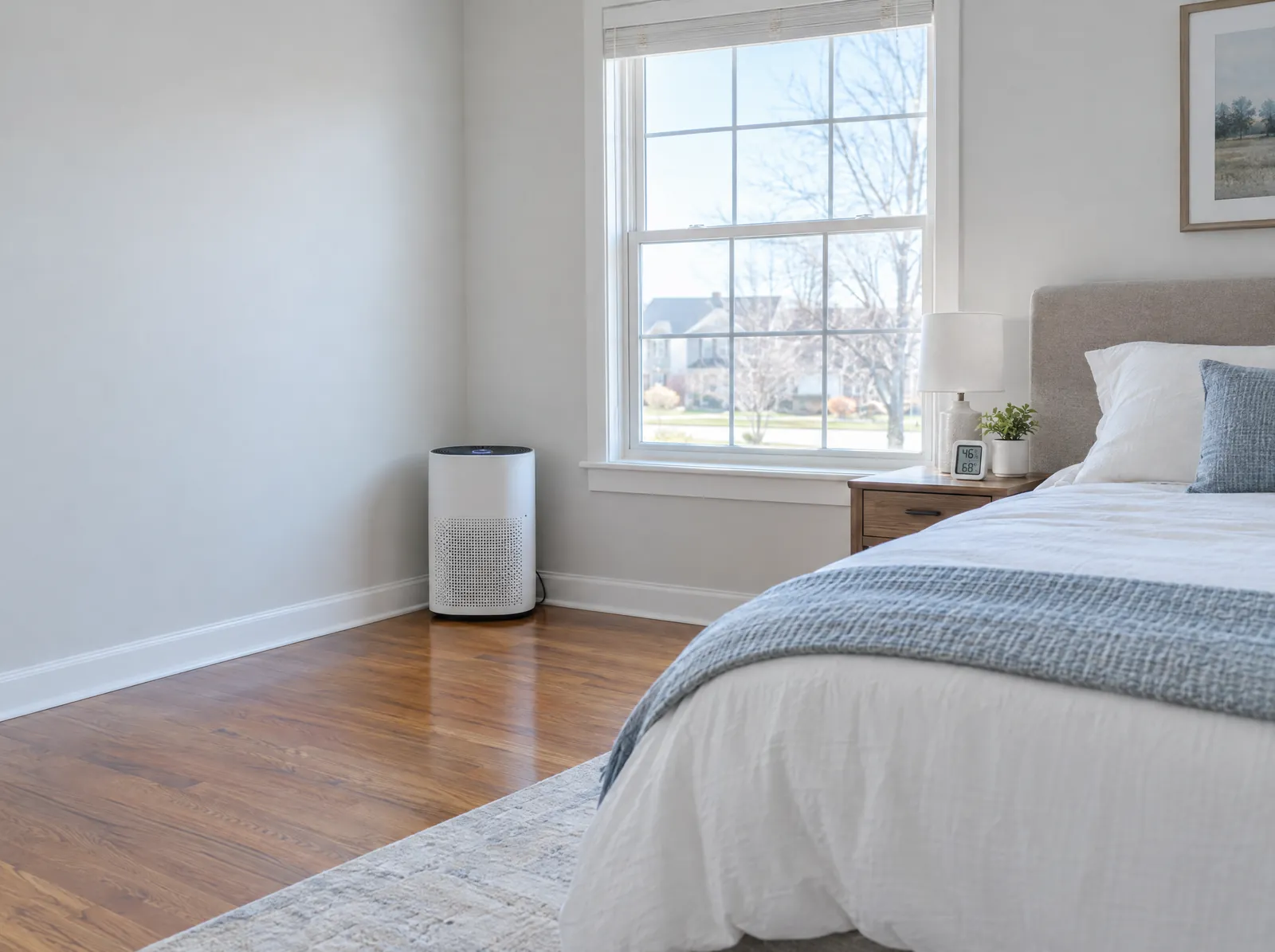
What does it take to prepare a CIRS safe home?
A CIRS safe home, in the building sense, is one where the moisture source is fixed, contamination has been removed and cleared against the target your doctor set, and habits are in place to keep it that way. Preparing one means resetting the HVAC system, cleaning top to bottom, controlling what comes back inside, and watching humidity. Whether the home suits a particular person is your doctor's call.
Why a cleared home can slide backward
A passed clearance test describes the house on the day it was tested. What happens next decides whether it stays there. We see the same few patterns again and again: boxes from the basement come back upstairs uncleaned, the old furnace filter stays in, a sofa that sat in the contaminated room returns to the living room, or a small leak starts under a sink and nobody notices for weeks.
None of these undo the remediation all at once. Together, over a few months, they can bring a home back to where it started.
Sound familiar?
- Belongings returned before anyone cleaned them.
- The HVAC system was never reset after the work.
- There's no plan for what happens the next time it rains hard.
- The person who is recovering has nowhere clean to sleep while everything gets sorted.
We do it differently.
| Clearance and done | A recovery-ready home | |
|---|---|---|
| After clearance | The crew leaves | A written plan for re-entry and upkeep |
| First room ready | Whenever the whole house is done | A cleared bedroom, early in the project |
| HVAC | Filter changed, maybe | System cleaned, filter matched to the equipment |
| Belongings | Carried back in | Cleaned in a staging area before re-entry |
| Moisture | Checked once | Monitored with hygrometers and rechecked after heavy rain |

Why families trust us with their homes
-
Family-owned since 2008
A multigenerational family business. Not a franchise, not a private-equity rollup.
-
Credentialed where it isn't required
Indiana doesn't license mold remediators. We hold IICRC, CMR, CRMI and CCMI credentials anyway.
-
Called on as experts
Attorneys bring us into legal cases involving mold and mycotoxins.
-
Lab results in 24 to 48 hours
Every inspection comes with a written report, color photos and lab results.
- IICRC Certified Firm
- CMR
- CRMI
- CCMI
- BBB A+ Accredited
- NAMRI
- IAQA
- NORMI
- AMMA
- PMII
The AME Clearance Method
How we get a home ready, in order
Order matters here. Cleaning a room before the HVAC is reset, or before the source is confirmed fixed, means cleaning it twice.
Talk to a specialist-
Confirm the source is fixed
The leak, drainage or humidity problem behind the mold is corrected and checked again, ideally after a heavy rain, before final cleaning starts.
-
Clear one room first
Usually the bedroom of the person who is recovering. It is cleaned, cleared and kept closed so there's one reliable clean space during the rest of the work.
-
Reset the air system
The air handler, coil, drain pan, returns and ducts are cleaned where testing calls for it, and the filter is matched to what the equipment is designed to handle.
-
Clean top to bottom
HEPA vacuuming and damp wiping from ceilings and high ledges down to floors, in every room that shares air with the affected area.
-
Set up a re-entry point
A staging area outside the clean zone where belongings are cleaned before they come back inside, so nothing skips the process.
-
Verify against the target
Clearance testing measures the standard your doctor set at the start. You receive the complete lab reports.
-
Hand over a monitoring plan
Where to place hygrometers, what readings to watch for, when to check the sump, gutters and attic, and when a retest makes sense.
What home preparation includes
- Verification that the moisture source is corrected
- A cleared bedroom early in the project
- HVAC cleaning where testing calls for it
- Top-to-bottom HEPA vacuuming and damp wiping
- A staging area for cleaning belongings before re-entry
- Clearance testing against your doctor's target
- Written guidance on filters and portable air cleaners
- A hygrometer placement and humidity plan
- A seasonal check list for the moisture-prone spots

Proof you can hold in your hands
When we finish, you don't get a handshake and a promise. You get the paperwork your family, your doctor, your insurer or your buyer can rely on.
Inspection report
What we found, where it is coming from, with color photos.
Written remediation plan
Scope, timeline and what will and won't be removed, before work starts.
Clearance lab report
Air, surface and mycotoxin results after the work is done.
A report for your doctor
With your permission, we share results directly with your care team.
Setting up a home for the person who is recovering
Start with one clean room
Remediation and cleanup can take a while, and families often spend part of it living around the work. The single most useful thing we can do in that stretch is give the household one room that is finished, cleared and protected. For most families that’s the bedroom of the person who is recovering.
Once that room passes clearance, it’s treated as a clean zone. The door stays closed, anything carried in has been cleaned first, and nobody walks in wearing clothes or shoes from the work areas. If the room has an HVAC supply that connects to unfinished parts of the house, it may be covered until the system is cleaned. A small, true HEPA air cleaner running in the room can help with fine particles between cleanings.
The order of operations
Getting the sequence right is most of the job. Here’s how the work usually flows once remediation of the source area is finished:
| Stage | What happens | Why it comes here |
|---|---|---|
| 1. Source confirmed | The moisture repair is checked, ideally after heavy rain | Everything after this is wasted if water comes back |
| 2. HVAC reset | Air handler, coil, drain pan and ducts cleaned where needed | A dirty system spreads dust into rooms you just cleaned |
| 3. Whole-home cleaning | HEPA vacuuming and damp wiping, top to bottom | Fine dust travels well beyond the room where mold grew |
| 4. Clearance | Testing against your doctor’s target | The lab result, not appearance, decides when it’s done |
| 5. Belongings return | Cleaned items come back through a staging area | Keeps cleared rooms from being recontaminated |
A rule for everything that comes back in
The simplest rule we give families is this: nothing crosses into a cleared room without being cleaned first, and cleaning happens somewhere else. A garage, a covered porch or one room set aside for the purpose works as a staging area. Hard items get HEPA-vacuumed and wiped there. Washable fabrics go straight to the laundry. Anything you can’t decide on goes into a sealed bin and stays out of the living space until you do.
New purchases count too. Furniture and mattresses that were stored in a humid warehouse can smell musty out of the box. Unpack them outside the clean zone and let them air out before they come in. Our guide to cleaning belongings exposed to mycotoxins goes item by item.
Air, filters and portable cleaners
Air equipment helps, but it isn’t a substitute for removing contamination. A few practical points:
- Furnace filter. Use the best filter your system is rated for and change it on schedule. More restrictive isn’t always better if it chokes airflow.
- Portable HEPA cleaners. Pick a true HEPA unit sized for the room. They capture fine particles, and they work best in rooms that are already clean. See can air purifiers remove mycotoxins?
- Skip ozone. Ozone generators don’t reliably break down mycotoxins and add an irritant of their own.
- Dehumidifiers. A basement dehumidifier with a drain line, rather than a bucket someone has to remember, keeps humidity in check without depending on memory.
Rebuilding with fewer dust traps
If walls, floors or finishes were removed, the rebuild is a chance to make the home easier to keep clean. Many sensitive households choose hard flooring in bedrooms and basements, closed storage instead of open shelving, washable window coverings instead of heavy drapes, and a bathroom fan that actually vents outdoors. None of these are requirements. Each one simply means less dust to manage and fewer places for moisture to hide.
After you’re back in
The first few months back in a remediated home are when a missed problem shows up, if there is one. Keep a hygrometer in the bedroom, the main living area and the basement, and write down the readings once a week for the first season. Check the areas where the original problem started after every heavy rain. If a reading climbs or a musty smell returns, call early. Our page on how clean a home needs to be for someone with CIRS covers the testing side, and keeping a home low-mold covers the long-term routine.
We remove mold and mycotoxins from buildings. We don’t diagnose or treat medical conditions, and nothing on this page is medical advice. Please make health decisions, including whether and when to return to a home, with your doctor. With your permission, we’re glad to share test results and our plan with them.
Common questions
Have a question that isn't here? Call a specialist
What is a CIRS safe home?
From the building side, it's a home where the moisture source has been fixed, contamination has been removed and verified by testing, and the household has what it needs to keep it that way. What makes a home right for a specific person is a question for their doctor.
Which room should be cleaned first?
Usually the bedroom of the person who is recovering, because it's where they spend the most continuous hours. Once it's cleared, it stays closed off from the rest of the work.
Should we buy a portable HEPA air cleaner?
A true HEPA unit sized for the room can help capture fine particles, especially in a bedroom. It works alongside cleaning, not instead of it. Avoid units that make ozone, which doesn't remove mycotoxins and adds its own irritant.
What furnace filter should we use?
The highest-rated filter your system is designed to handle. A filter that's too restrictive can reduce airflow, so check the equipment documentation or ask your HVAC technician before you upgrade.
When can belongings come back into the house?
After the rooms they're going into have passed clearance, and after each item has been cleaned outside the clean zone. Items you're unsure about can wait in sealed bins until you decide.
Should we retest after we move back in?
Many families do, especially after the first full season back in the house or after any new water event. Talk with your doctor about whether and when they'd like to see another round.
Is carpet a problem in a home for someone recovering?
Carpet holds dust and can hold moisture, which makes it harder to keep clean. Many sensitive households choose hard flooring in bedrooms and basements when they rebuild. It's a preference, not a requirement.
We're done when the lab says so.
Every remediation ends with clearance testing, and our work is backed by a complete-removal guarantee. We don't close a job on a failed result.
Talk to a specialistPlan the home side of recovery
Tell us where your project stands, whether you're just starting or already past clearance. A specialist will call you back to talk through the next steps.
- (833) 772-6653
- info@americanmoldexperts.com
- Open 7 days, 8am to 8pm