
Prevention
How to prevent mold in your house and keep it low-mold
Mold needs water. A simple routine that watches for moisture keeps a clean home clean.
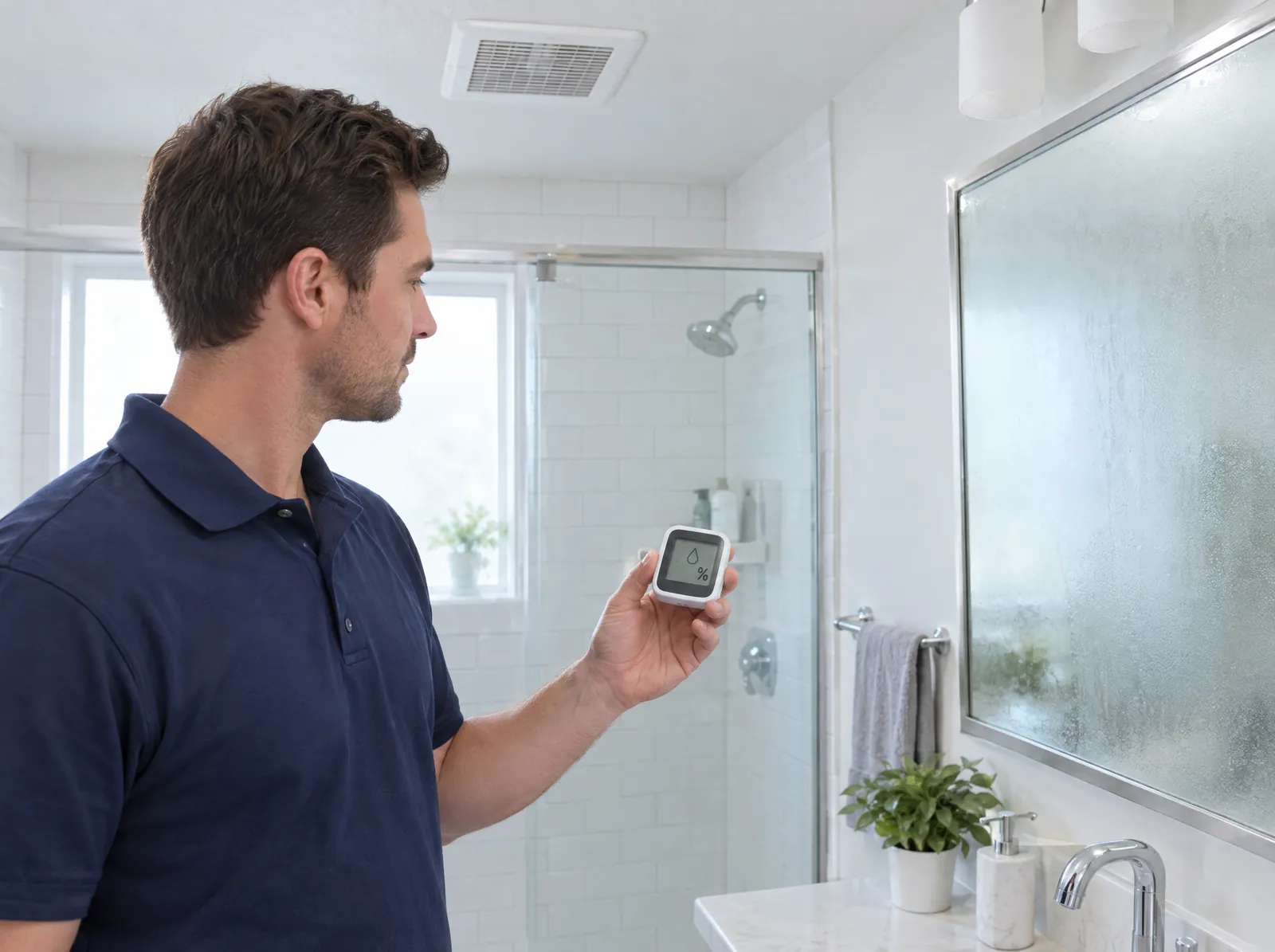
How do you prevent mold in your house?
To prevent mold in your house, control moisture. Keep indoor humidity low, which the EPA puts at below 60 percent and ideally between 30 and 50 percent. Dry any wet materials within 24 to 48 hours, as the EPA recommends. Send roof and ground water away from the foundation, vent bathrooms and kitchens outdoors, keep the HVAC system and its drain clean, and check hidden spaces like the attic, basement and crawlspace each season.
Why mold prevention fails quietly
Most mold problems don't start with a flood. They start with something small that nobody noticed for a few weeks: a slow drip under the kitchen sink, a bathroom fan that stopped working, a gutter that overflows at one corner, a dehumidifier bucket that filled up and shut the machine off.
By the time there's a smell or a stain, the material has been wet long enough for growth to start. Prevention isn't complicated. It's mostly about noticing moisture earlier than you'd notice mold.
Sound familiar?
- You've never actually measured the humidity in your home.
- You find leaks only when there's a stain on the ceiling.
- You aren't sure where your bathroom fan actually vents.
- Nobody has looked in the attic or crawlspace in years.
We do it differently.
| Reacting to mold | Keeping a home low-mold | |
|---|---|---|
| Humidity | Guessed from how the air feels | Measured with hygrometers in key rooms |
| Leaks | Found when stains appear | Caught with alarms and routine checks |
| Wet rooms | Fans that run sometimes | Fans that vent outside, run after every shower |
| HVAC | Filter changed when remembered | Filter, coil and drain on a schedule |
| Hidden spaces | Checked when there's a problem | Checked every season |

Why families trust us with their homes
-
Family-owned since 2008
A multigenerational family business. Not a franchise, not a private-equity rollup.
-
Credentialed where it isn't required
Indiana doesn't license mold remediators. We hold IICRC, CMR, CRMI and CCMI credentials anyway.
-
Called on as experts
Attorneys bring us into legal cases involving mold and mycotoxins.
-
Lab results in 24 to 48 hours
Every inspection comes with a written report, color photos and lab results.
- IICRC Certified Firm
- CMR
- CRMI
- CCMI
- BBB A+ Accredited
- NAMRI
- IAQA
- NORMI
- AMMA
- PMII
The AME Clearance Method
A low-mold routine in seven habits
None of these take much time. Together they catch almost every moisture problem before it becomes a mold problem.
Talk to a specialist-
Measure humidity
Put inexpensive hygrometers in the main living area, a bedroom and the basement. Readings tell you more than how the air feels.
-
Move water away from the house
Clean gutters, extend downspouts well away from the foundation, and make sure soil slopes away from the walls.
-
Vent the wet rooms
Bathroom and kitchen fans should vent outdoors, not into the attic, and run during and after showers and cooking.
-
Keep the HVAC clean
Change filters on schedule and have the coil, drain pan and condensate line checked, since a clogged drain is a common hidden source.
-
Keep dust down
A HEPA vacuum and damp dusting reduce the settled dust that spores and fragments ride on.
-
Respond to leaks the same day
Stop the water, then dry or remove wet materials quickly. The EPA advises drying within 24 to 48 hours to prevent growth.
-
Check hidden spaces each season
Look in the attic, basement, crawlspace and under sinks with a flashlight, and note any musty smell, stain or damp spot.
What a low-mold routine covers
- Hygrometers in the living area, a bedroom and the basement
- Gutter, downspout and grading checks
- Bathroom and kitchen fans that vent outdoors
- A dehumidifier with a drain line where needed
- Filter changes and HVAC drain checks
- Water leak alarms at the water heater, washer and sinks
- HEPA vacuuming and damp dusting
- A same-day plan for leaks
- Seasonal checks of the attic, basement and crawlspace

Proof you can hold in your hands
When we finish, you don't get a handshake and a promise. You get the paperwork your family, your doctor, your insurer or your buyer can rely on.
Inspection report
What we found, where it is coming from, with color photos.
Written remediation plan
Scope, timeline and what will and won't be removed, before work starts.
Clearance lab report
Air, surface and mycotoxin results after the work is done.
A report for your doctor
With your permission, we share results directly with your care team.
Preventing mold, room by room and season by season
Moisture is the whole game
Mold spores are everywhere, indoors and out. You can’t keep them out of a house, and you don’t need to. What you can control is whether they find something wet enough to grow on. Drywall paper, wood, carpet backing, cardboard and the dust in a humid basement all become food once they stay damp. Take the moisture away, and the same spores simply sit there.
That’s why every piece of advice on this page comes back to water: where it gets in, where it collects, and how quickly it leaves. For the numbers behind humidity targets, see what humidity level prevents mold.
Room by room
- Bathrooms. Run the fan during every shower and for a good while after. Check that it vents outdoors, not into the attic. Keep caulk and grout intact, and squeegee glass doors.
- Kitchen. Use a range hood that vents outside. Look under the sink every month for drips, and check behind the refrigerator if it has an ice maker line.
- Laundry. Vent the dryer outdoors, check washer hoses for bulges or cracks, and leave the washer door open between loads.
- Bedrooms. Keep furniture a few inches off exterior walls so air can move. Watch for condensation on windows in cold weather.
- Basement. Watch humidity closely, run a dehumidifier if needed, test the sump pump before the wet season and keep stored items in plastic bins off the floor.
- Attic. Look for stains on the roof sheathing, damp insulation and bathroom fan ducts that end in the attic instead of outdoors.
- Crawlspace. Check the vapor barrier, look for standing water and note any musty smell drifting up into the house.
A seasonal checklist
| Season | What to check |
|---|---|
| Spring | Gutters and downspouts, sump pump, basement walls after heavy rain, grading around the foundation |
| Summer | Basement and crawlspace humidity, AC condensate drain, sweating cold water pipes, dehumidifier drain |
| Fall | Gutters after leaves drop, roof flashing, window seals, furnace filter before heating season |
| Winter | Window condensation, attic for frost or ice dam leaks, humidifier settings, closets on exterior walls |
Habits that quietly add moisture
Some everyday routines push humidity up without anyone noticing. Drying laundry on racks indoors, running a whole-house or room humidifier through the winter without checking readings, keeping many large houseplants in one room, closing off unused rooms with the vents shut, and taking long showers with the fan off all add up. None of these is a problem on its own in a home with good ventilation. In a tight, energy-efficient house, they can tip the balance.
When a leak happens
- Stop the water at the source, or shut off the main.
- Take photos for insurance before you move anything.
- Pull wet rugs, boxes and cushions out of the area.
- Get air moving and a dehumidifier running.
- Check whether water went into walls, under flooring or into the ceiling below. A moisture meter helps.
- If materials can’t be dried within a day or two, they may need to come out. Call for help before growth starts.
If mold keeps coming back in the same spot despite all of this, there’s usually a moisture source nobody has found yet. Our answer on why mold keeps coming back covers the usual culprits.
For a household that’s already been through remediation
If your home was remediated because someone in it was sick, the routine matters more, not less. Write down hygrometer readings weekly for the first season, check the original problem area after every heavy rain, and keep dust down with a HEPA vacuum. Our page on preparing a home for mold illness recovery covers the first months after clearance in more detail.
We remove mold and mycotoxins from buildings. We don’t diagnose or treat medical conditions, and nothing on this page is medical advice. If anyone in your home has symptoms, please work with a doctor. With your permission, we’re glad to share test results and our plan with them.
Common questions
Have a question that isn't here? Call a specialist
What is the best way to prevent mold in a house?
Control moisture. Mold can't grow without it. Keep humidity in check, fix leaks quickly, move rainwater away from the foundation and vent bathrooms and kitchens outdoors. Everything else is secondary.
What humidity should I keep my house at?
The EPA recommends keeping indoor relative humidity below 60 percent, ideally between 30 and 50 percent. A hygrometer in each main area tells you where you actually are.
Does a dehumidifier prevent mold?
It helps where humidity runs high, especially in basements. It doesn't fix a leak or seepage. Choose one with a drain line so it keeps running without someone emptying a bucket.
Does bleach prevent mold from coming back?
No. Bleach can kill surface mold on hard surfaces, but it doesn't stop the moisture that caused the growth, and it doesn't remove mycotoxins. Prevention depends on keeping materials dry.
How often should I check my attic and crawlspace?
At least with each change of season, and after any major storm. Look for stains, damp insulation, condensation on the underside of the roof and musty smells.
Can air purifiers prevent mold?
A HEPA air cleaner can capture airborne particles, but it can't stop mold from growing on a wet surface. It's a helpful addition, not a prevention plan.
When should I call a professional?
If you see growth larger than a small patch, smell mustiness you can't trace, have had water damage that stayed wet for more than a day or two, or someone in the home is working with a doctor on mold illness.
We're done when the lab says so.
Every remediation ends with clearance testing, and our work is backed by a complete-removal guarantee. We don't close a job on a failed result.
Talk to a specialistNot sure where the moisture is coming from?
Tell us what you're seeing or smelling. A specialist will call you back to talk about an inspection and testing.
- (833) 772-6653
- info@americanmoldexperts.com
- Open 7 days, 8am to 8pm