
Why does mold keep coming back?
Short answer
Mold keeps coming back because the moisture feeding it was never fixed, or because growth was left where no one looked, such as inside a wall cavity, under flooring or in the HVAC system. Bleach, surface sprays and paint remove the visible stain but not the cause. It stops returning when the water source is corrected and the hidden growth is removed.
Where it comes back tells you why
Mold that returns to the same place is giving you a clue. The pattern usually points to one kind of moisture problem:
| Where it keeps returning | What it usually points to |
|---|---|
| Bathroom ceiling and upper walls | A bath fan that is too weak, isn’t run long enough, or vents into the attic instead of outdoors |
| Window corners and sills | Condensation from high indoor humidity meeting cold glass and frames |
| Closets and corners on exterior walls | Cold wall surfaces with little air movement, often behind furniture or stored items |
| The same spot on an interior wall | A leak inside the wall, such as a supply line, drain or shower valve |
| Basement walls every summer | Humid outdoor air condensing on cool concrete, or seepage through the foundation |
| Under sinks | A slow drain or supply leak, or a failed seal around the cabinet |
| Musty smell with no visible mold | Growth somewhere hidden: a wall cavity, subfloor, crawlspace or air handler |
Timing is a clue as well. Mold that shows up after heavy rain points to water getting in from outside. Mold that appears in humid summer weeks and fades in winter points to indoor humidity. Mold that grows in one spot all year, regardless of weather, usually has a plumbing leak behind it.
A persistent smell deserves attention even when the surfaces look clean. Our answer on whether you can have mold without seeing it explains how hidden growth is found.
Surface treatments reset the clock, not the problem
When mold returns within weeks or months of cleaning, it’s often because what was cleaned was only the visible layer. Bleach whitens the stain on drywall and grout but doesn’t reach growth inside the material. Mold-resistant paint and primer cover it. A fogger settles on surfaces for a short time. In each case the colony under the surface, and the water feeding it, are still there.
Treatments can also make things look worse over time. The water in a spray adds moisture, and a coat of paint traps it. Our answer on whether painting over mold works goes through what happens behind a painted wall.
Humidity, the cause people miss
Not every recurring mold problem has a leak behind it. Indoor humidity alone can keep surfaces damp enough for growth, especially in basements, bathrooms and closets. The EPA recommends keeping indoor humidity below 60 percent, ideally between 30 and 50 percent. Many homes run higher than that for long stretches in summer without anyone noticing.
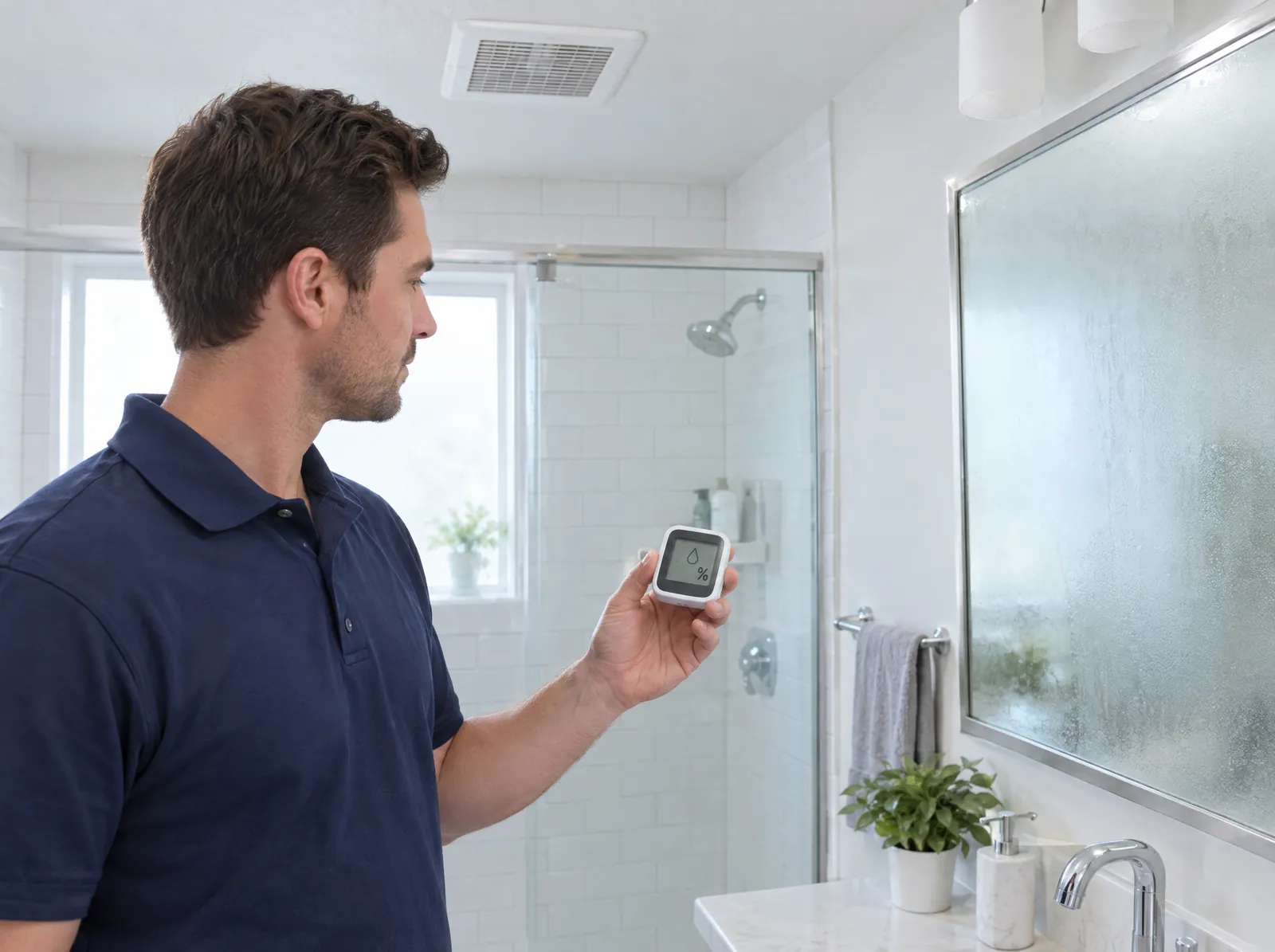
A small, inexpensive humidity monitor settles the question. If readings sit high, the fix may be a dehumidifier, better bath and kitchen exhaust, or correcting how the air conditioning runs. Our answer on what humidity level prevents mold covers the targets in more detail.
Breaking the cycle
- Find the water. Moisture meters, thermal imaging and a close look at the pattern above usually lead to it.
- Fix it for good. Repair the leak, improve ventilation or bring humidity down, and confirm the fix works.
- Look past the visible growth. Check wall cavities, flooring and the HVAC system near the problem area.
- Remove what can’t be cleaned. Porous materials with growth inside them come out.
- Clean the dust, not only the stain. Spores and fragments settle on surrounding surfaces.
- Confirm with testing. A clean result, with dry materials, is how you know it’s done.
If mold has come back after a professional job, the question changes slightly. Our answer on whether mold can grow back after remediation covers what to check and what to ask the company that did the work.
We're done when the lab says so.
Every remediation ends with clearance testing, and our work is backed by a complete-removal guarantee. We don't close a job on a failed result.
Talk to a specialistFind out why it keeps returning
Tell us where the mold shows up and how often. A specialist will explain how testing and moisture readings can track down the source.
- (833) 772-6653
- info@americanmoldexperts.com
- Open 7 days, 8am to 8pm