
Does painting over mold work?
Short answer
No. Painting over mold hides the stain for a while, but it doesn't kill or remove the growth underneath or fix the moisture feeding it. The EPA advises against painting or caulking moldy surfaces and notes that paint applied over mold is likely to peel. Mold-resistant paint is designed to discourage new growth on a clean, dry surface, not to seal in existing mold.
What happens behind the paint
Mold on a wall or ceiling is rarely just a surface stain. On drywall it grows into the paper facing, and on wood it reaches into the grain. A coat of paint covers the discoloration you can see, and for a few weeks or months the wall looks fixed.
Meanwhile nothing has changed underneath. The growth is still there, the moisture that caused it is still there, and the paint film can hold that moisture against the surface. Over time the familiar signs return:
- Spots or shadows bleeding back through the new paint
- Bubbling, blistering or peeling where the paint lost its grip
- A musty smell that the fresh paint smell only covered briefly
- Soft or crumbly drywall under the paint when pressed
The EPA’s guidance for homeowners is direct about this: don’t paint or caulk moldy surfaces, clean up the mold and dry the surface first, because paint over mold is likely to peel.
Mold-resistant paint and primers
Paints and primers labeled mold-resistant or mildew-resistant contain additives that discourage growth on the paint film itself. They are a sensible choice for bathrooms, laundry rooms and basements, applied to a clean, dry, repaired surface. They are not designed to kill mold already growing in the material underneath, and read closely, the product labels generally say so. Stain-blocking primers are made to stop discoloration from showing through, which is exactly why they can hide a problem instead of solving it.
Why painted-over mold matters when you sell or buy
Fresh paint in one spot of a basement, a ceiling patch or a single wall that looks newer than the rest is one of the things experienced home inspectors notice. Covering mold rather than fixing it can create problems when a house is sold, and disclosure rules vary by state. If you are on the selling side, our answer on whether you can sell a house with mold covers the better options.
The right order: fix, remove, dry, then paint
- Find and fix the moisture. A roof or plumbing leak, condensation, or a bath fan that doesn’t vent properly.
- Judge the material. Light growth on a sealed, painted surface can often be cleaned. Drywall with growth in the paper or on the back usually needs to be cut out. Our answer on whether you have to remove drywall with mold explains the call.
- Clean or remove it properly. For small areas, detergent and water with an N95, gloves and goggles. Larger areas belong behind containment.
- Let it dry completely. A moisture meter reading beats guessing.
- Then prime and paint, using a mold-resistant product in damp rooms if you like.
If it has already been painted over
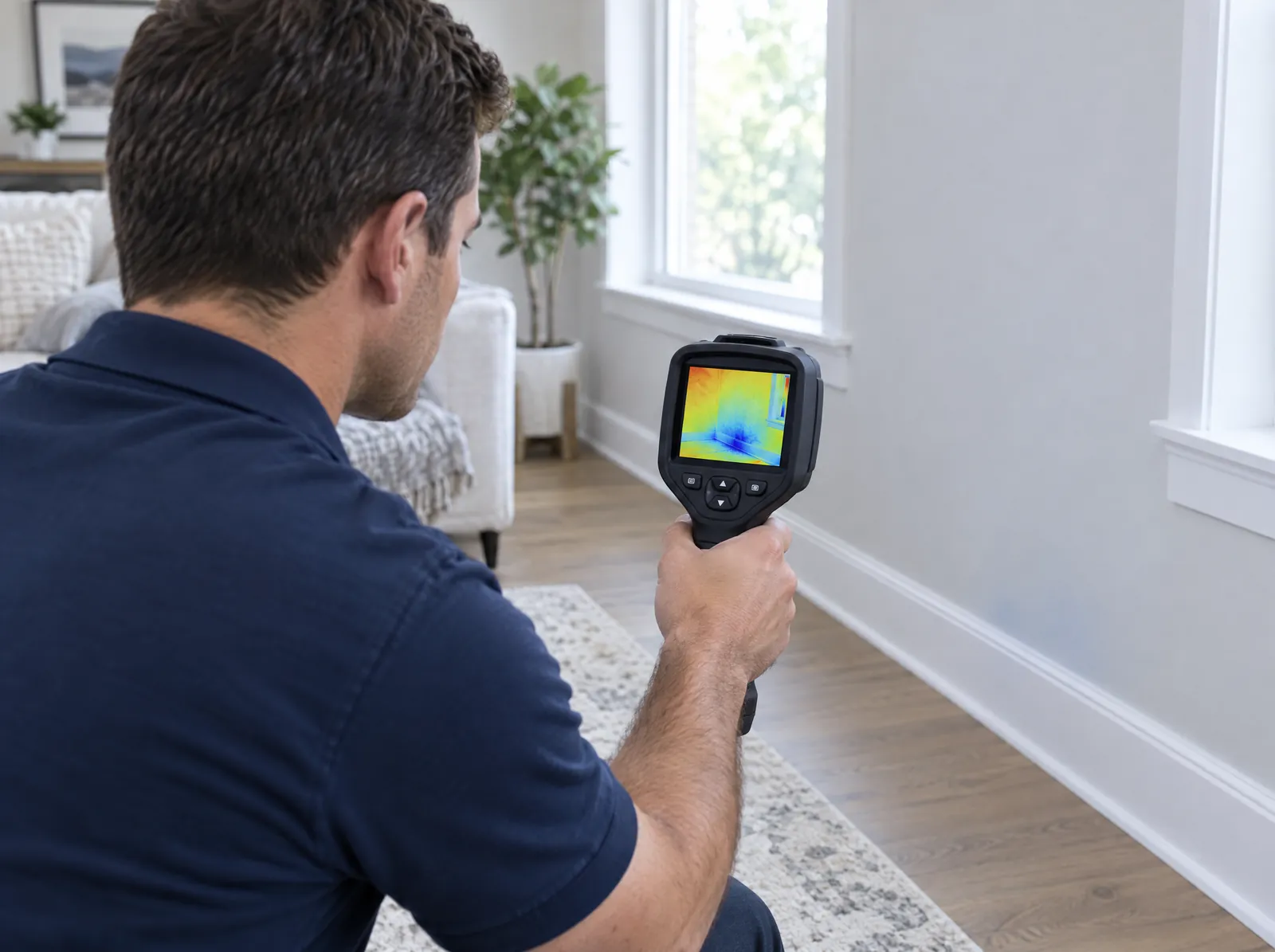
You don’t need to strip every wall. Start with where the stain has returned or the paint is failing, and find the moisture source. Moisture readings and thermal imaging can show whether the wall behind is still wet, and testing can show whether there is active growth before anyone cuts into it. If you are seeing the same spot come back again and again, our answer on why mold keeps coming back will help you read the pattern.
The same goes for caulk. Fresh caulk run over a moldy bead in a shower or around a tub traps growth and water in the joint. Cut the old caulk out, clean and dry the joint, and then re-caulk. It is a small job, and it is the one place where most people can do it right themselves.
We're done when the lab says so.
Every remediation ends with clearance testing, and our work is backed by a complete-removal guarantee. We don't close a job on a failed result.
Talk to a specialistStain coming back through the paint?
That usually means moisture or growth behind the surface. Tell us what you're seeing and a specialist will explain how to find out what's there before anything is opened up.
- (833) 772-6653
- info@americanmoldexperts.com
- Open 7 days, 8am to 8pm