
Do you have to remove drywall with mold?
Short answer
Usually, if the mold has grown into it. Drywall with growth in the paper facing, on the back side or in a board that stayed wet can't be reliably cleaned, so it's cut out under containment and replaced. Light surface growth on sealed, painted drywall that dried quickly can sometimes be cleaned. Moisture readings and inspection should decide, not the size of the stain.
How the decision gets made
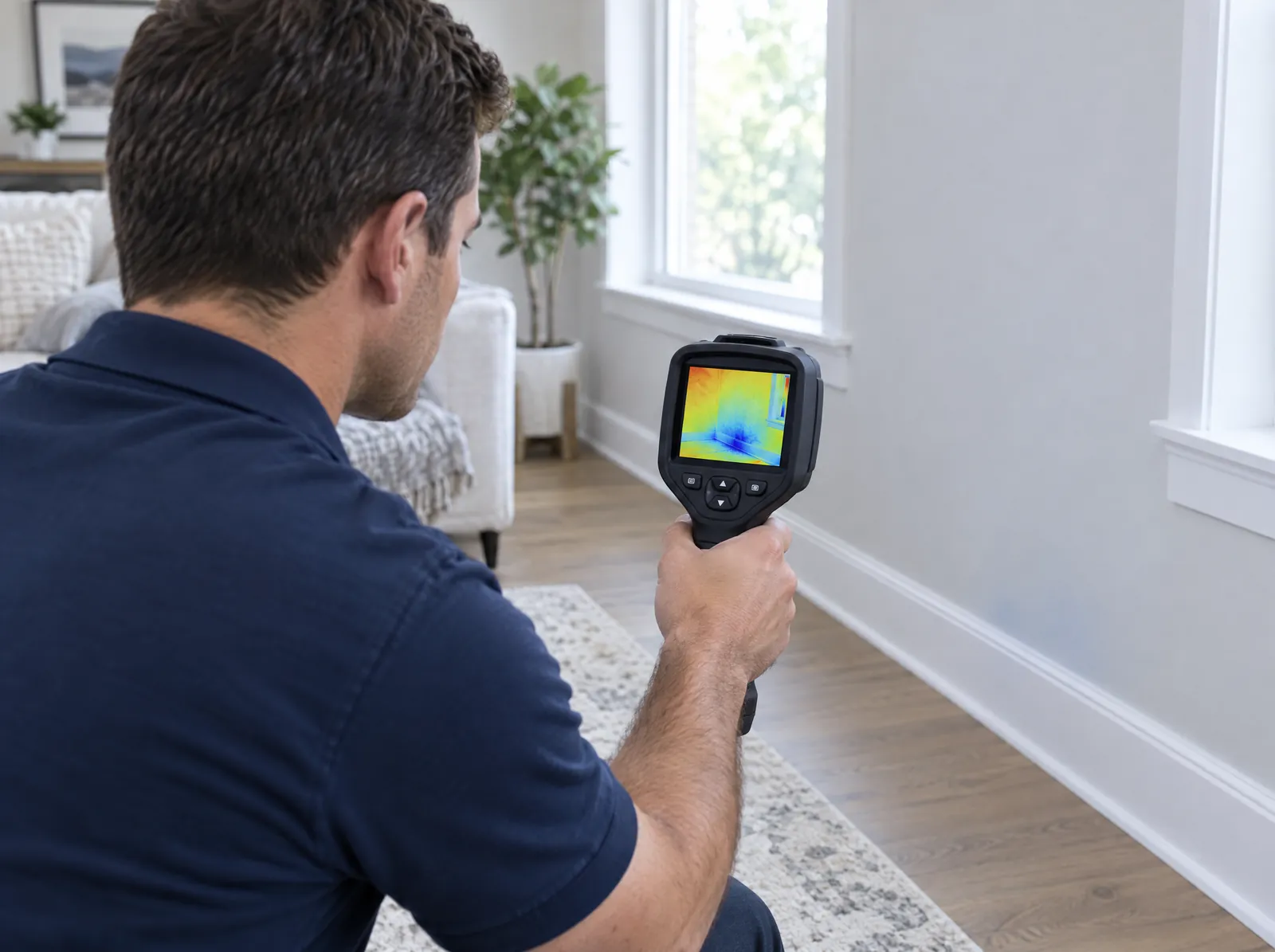
A good remediator doesn’t decide from the doorway. The answer comes from a few specific findings, and each one points a different way:
| Finding | Usual decision |
|---|---|
| Growth only on the painted surface, board dry and firm | Clean in place and fix the moisture source |
| Growth in the paper facing, or staining that bleeds back through paint | Remove and replace that section |
| Mold on the back of the board inside the cavity | Remove, even if the room side looks clean |
| Board soft, swollen or crumbling | Remove; it has lost its strength |
| Wet from contaminated water, like a sewer backup or floodwater | Remove the affected height of the wall |
| A past leak, but the board is dry and cavity testing is normal | Often left in place, with the leak fixed and the area monitored |
Drywall is inexpensive to replace and very hard to clean once mold is inside it. That’s why the default for growth in the board is removal, and why our answer on whether bleach kills mold on drywall comes out the way it does.
Why the cut is often bigger than the stain
Homeowners are sometimes surprised that the opening ends up larger than the mark on the wall. There are good reasons:
- Water spreads inside a wall before it shows on the surface, so growth on the back is often wider than what’s visible.
- Drywall wicks water upward after a leak or flood, so the wet zone can extend well above where water stood.
- Cuts are extended until clean, dry material shows on every side, rather than stopping at a line marked in advance.
- Cutting at a stud or a consistent height makes the patch sound and easier to rebuild.
The opposite is also true. The cut should be justified by what’s found. If a moisture meter and a look inside the cavity show dry, clean board, there’s no reason to keep going. Every extra foot of opened wall is more dust to control and more wall to rebuild.
What usually stays
Removing drywall rarely means removing the wall. Wood studs, plates and sheathing with surface growth can usually be HEPA vacuumed, wiped and treated rather than replaced, as long as they’re structurally sound. We treat framing with plant-based enzyme products from US Enzyme, designed to break down mold and mycotoxins. You can read more about enzyme mold remediation.
Insulation in the same cavity is a different story. Fiberglass and cellulose that got wet or moldy is almost always removed with the drywall, because it traps dust and can’t be cleaned.
Questions to ask if you’re told everything must go
Tear-out that isn’t needed costs money, spreads dust and adds rebuilding time. Before agreeing to a large demolition scope, ask:
- What moisture readings did you take, and where?
- Did you look inside the wall, with a borescope or a small inspection opening?
- Was a wall cavity air sample taken, and can I see the result?
- Where exactly will the cuts start and stop, and what decides that?
- What will be cleaned and treated rather than replaced?
Sampling inside a wall can often answer the question before a saw comes out. Our answer on testing for mold behind walls explains how, and mold inside walls covers how the opening is done safely under containment.
We're done when the lab says so.
Every remediation ends with clearance testing, and our work is backed by a complete-removal guarantee. We don't close a job on a failed result.
Talk to a specialistTold the whole wall has to go?
Testing can show how much drywall really needs to come out. Tell us what you've been told and what you're seeing, and we'll explain what we'd check.
- (833) 772-6653
- info@americanmoldexperts.com
- Open 7 days, 8am to 8pm