
What humidity level prevents mold?
Short answer
Keep indoor relative humidity below 60 percent, and ideally between 30 and 50 percent, as the EPA recommends. The CDC advises keeping it no higher than 50 percent. Humidity alone doesn't guarantee a mold-free house, though. Cold surfaces like basement walls, window glass and closets on exterior walls can stay damp even when the room reading looks fine, so check those spots too.
The numbers, and where they come from
Two public health agencies give nearly the same advice. The EPA recommends keeping indoor relative humidity below 60 percent, ideally between 30 and 50 percent. The CDC puts it more simply: keep humidity as low as you can, and no higher than 50 percent. Below about 30 percent, air starts to feel uncomfortably dry for many people, which is why 30 to 50 is the range most often recommended.
Relative humidity is a percentage of how much water the air is holding compared with the most it could hold at that temperature. That detail matters, because it changes as air warms and cools.
Why a good reading doesn’t always mean no mold
Mold grows on surfaces, not in the air. When room air touches something colder, such as a foundation wall, a window pane or the back of a closet on an outside wall, it cools and its relative humidity rises right at that surface. A room can read 45 percent while the air against a cold basement wall is much damper. That’s why condensation shows up on windows in winter and why basements grow mold in summer even with a dehumidifier running nearby.
Humidity is also only one source of moisture. A slow leak, groundwater seeping through a foundation or a clogged AC drain will feed mold no matter what the hygrometer says.
Measuring humidity at home
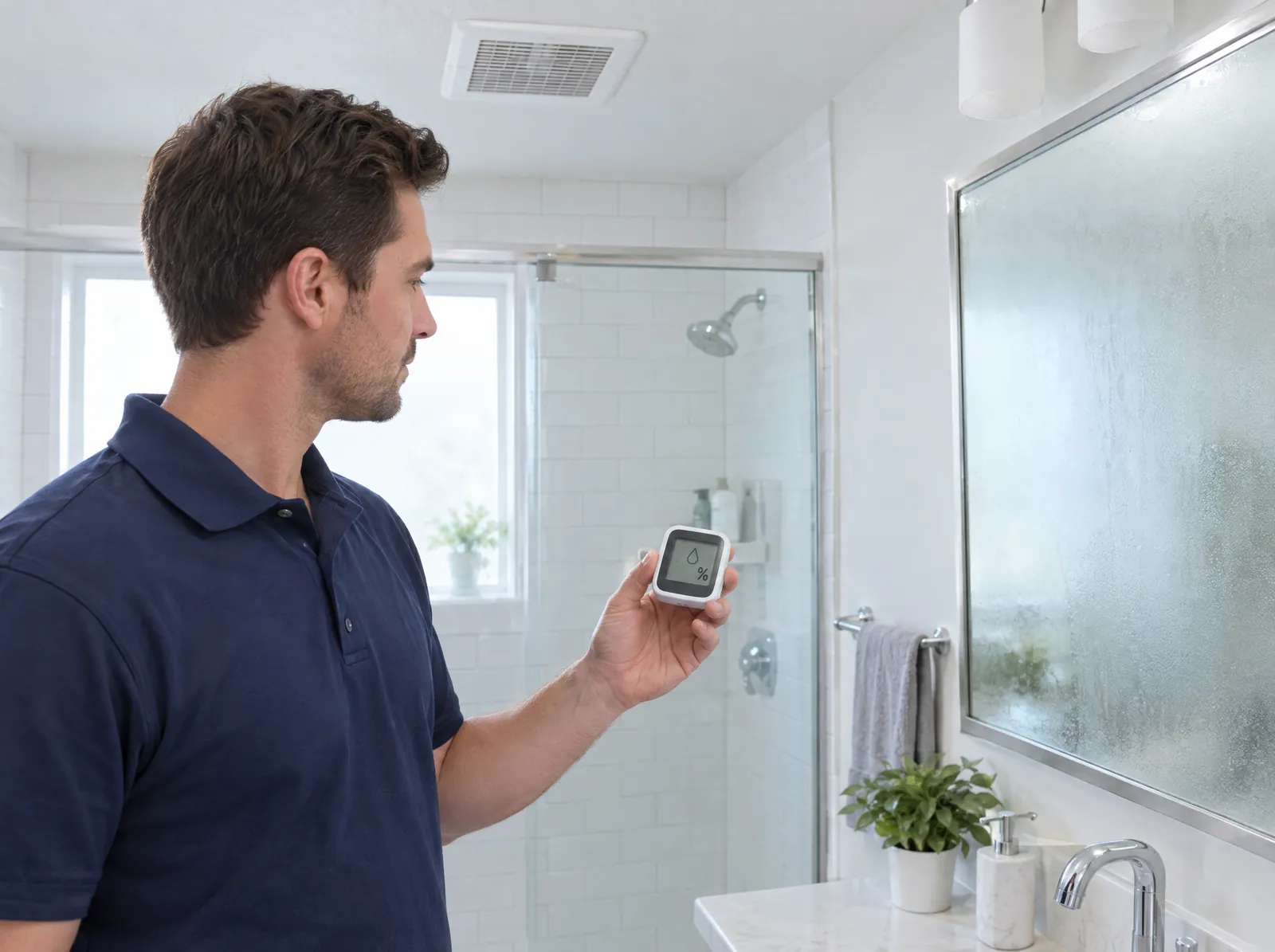
- Use a digital hygrometer. They’re inexpensive, but readings can be off by a few percent, so compare two units side by side if a number surprises you.
- Put one in the basement, one in a main living area and one in a bedroom.
- Check at different times of day and after showers, cooking and rain.
- Write the readings down for a few weeks. Trends tell you more than a single number.
- If one room runs consistently higher than the others, look for a reason in that room.
Bringing humidity down, room by room
| Area | Common cause of high humidity | What usually helps |
|---|---|---|
| Basement | Cool walls, ground moisture, summer air | A dehumidifier with a drain line, plus gutters and grading that move water away |
| Bathroom | Showers without ventilation | A fan that vents outdoors, run during and after every shower |
| Kitchen | Cooking steam | A range hood that vents outside |
| Bedrooms | Humidifiers, closed doors, furniture against outside walls | Check readings before running a humidifier, and leave space for air behind furniture |
| Whole house | An air conditioner that’s oversized or poorly maintained | An HVAC check of the coil, drain and settings |
In Midwest homes the problem often flips with the seasons: damp basements in humid summers, and window condensation when cold weather arrives and furnaces or humidifiers run. Our page on how humid an Indiana home should be goes into the seasonal pattern, and our answer on whether dehumidifiers reduce mycotoxins explains what a dehumidifier can and can’t do once mold has already grown.
When humidity isn’t the whole story
If readings stay in range and you still see growth or smell mustiness, look for liquid water: a leak in a wall, a failed sump pump, a drain pan that overflows. Controlling humidity prevents new growth. It doesn’t remove mold that’s already there. For the full prevention routine, see keeping a home low-mold.
We remove mold and mycotoxins from buildings. We don’t diagnose or treat medical conditions, and nothing on this page is medical advice. If anyone in your home has symptoms, please talk with a doctor. With your permission, we’re glad to share test results and our plan with them.
We're done when the lab says so.
Every remediation ends with clearance testing, and our work is backed by a complete-removal guarantee. We don't close a job on a failed result.
Talk to a specialistHumidity fine, but still smell mold?
A musty smell with normal readings often means a hidden moisture source. Tell us about the house and a specialist will call you back to talk it through.
- (833) 772-6653
- info@americanmoldexperts.com
- Open 7 days, 8am to 8pm