
Do dehumidifiers reduce mycotoxins?
Short answer
Not directly. A dehumidifier doesn't remove mycotoxins that are already in dust, building materials or ductwork. What it does is lower indoor humidity, so mold has a harder time growing and producing more. That makes it a prevention tool, useful during and after remediation. Toxins already in the house still have to be cleaned out and the result confirmed by testing.
What a dehumidifier does
A dehumidifier pulls air across a cold coil, condenses water vapor out of it and collects the water in a bucket or sends it to a drain. The result is drier air. Drier air means surfaces and materials in the room slowly give up some of their moisture too, which takes away what mold needs to grow.
The EPA recommends keeping indoor relative humidity below 60 percent, and ideally between 30 and 50 percent, to help prevent mold. Many basements and crawlspaces in humid summers sit well above that without help, which is why a dehumidifier is often one of the most useful appliances in a house that has had mold.
Portable units treat one room or area. Whole-house dehumidifiers tie into the HVAC system and treat the air it moves. Either can work if it’s sized for the space and the moisture load, and if the space is reasonably closed off from humid outdoor air.
Why drier air doesn’t clear out toxins
Mycotoxins are chemical compounds, not organisms. Drying out a room stops new growth, but it doesn’t break down toxins that are already on surfaces, in dust or inside porous materials. Dry, dark and undisturbed conditions may actually leave them sitting there for a long time, as our page on how long mycotoxins last on surfaces explains.
A dehumidifier also moves room air through its housing. Some models have a basic filter, but it’s there to protect the coil, not to capture fine particles. It shouldn’t be counted on as an air cleaner.
Where it helps most
| Space | Why it runs damp | What usually helps alongside a dehumidifier |
|---|---|---|
| Basement | Cool walls, ground moisture, summer humidity | Grading, gutters, sump maintenance, sealing cracks |
| Crawlspace | Exposed soil, outside air, plumbing leaks | Vapor barrier, drainage, sealed vents where appropriate |
| Bathroom and laundry | Showers and dryers add moisture fast | Exhaust fans vented outdoors, drying time |
| Whole house in summer | Air conditioner not removing enough moisture | HVAC service, correct system sizing |
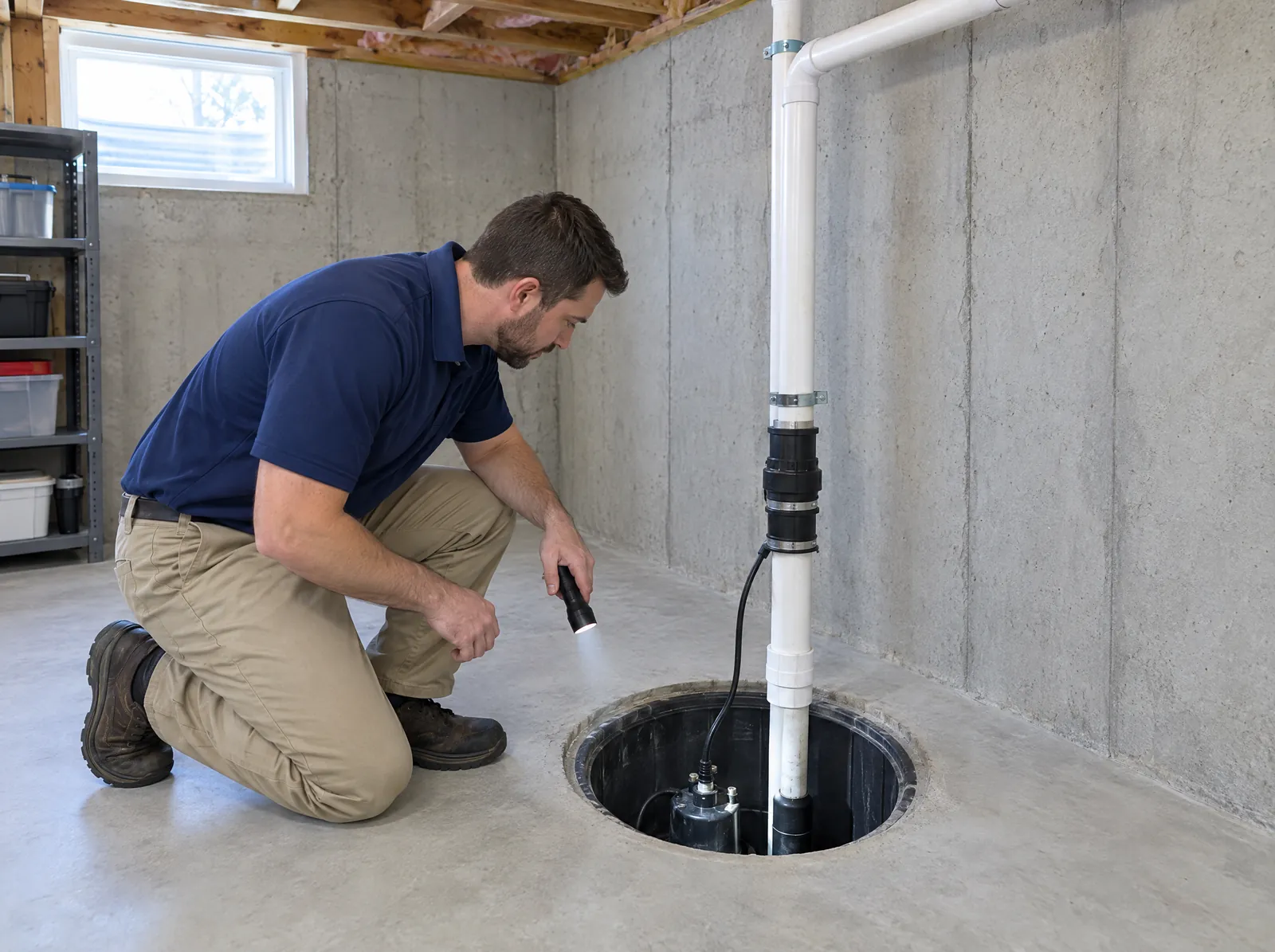
If your basement stays wet despite a dehumidifier, the water is probably coming in faster than the machine can remove it. Whether Indiana clay soil causes basement moisture covers one common reason, and our basement mold page covers what to do when growth has already started.
Getting the most from one
- Measure. A simple hygrometer tells you whether humidity is actually in range. Don’t rely on the dehumidifier’s own display alone.
- Size it for the space. An undersized unit runs constantly and still loses the battle.
- Drain it continuously if you can. A full bucket means the unit has stopped working.
- Keep it clean. The bucket, coil and filter stay wet and can grow mold themselves. Clean them on the schedule in the manual.
- Close the space. Windows and doors left open to humid outdoor air make the machine work against the weather.
Where it fits in a cleanup
During remediation, dehumidification helps dry materials so the source doesn’t come back. Afterward, it keeps conditions stable. Neither job removes what’s already there. That takes source removal, HEPA vacuuming and wiping, a treatment made for mycotoxins, and a dust test to confirm. Think of the dehumidifier as the thing that protects the result once the house is clean.
We remove mold and mycotoxins from buildings. We don’t diagnose or treat medical conditions. If anyone in the home has symptoms, please talk with a doctor, and with your permission we’ll share our test results with them.
We're done when the lab says so.
Every remediation ends with clearance testing, and our work is backed by a complete-removal guarantee. We don't close a job on a failed result.
Talk to a specialistKeeping a damp house dry?
Drying the air is a good start. Tell us about the space and we'll explain how testing can show whether toxins have already built up.
- (833) 772-6653
- info@americanmoldexperts.com
- Open 7 days, 8am to 8pm