
Does Indiana clay soil cause basement moisture?
Short answer
Yes, often. Much of central and northern Indiana sits on clay-rich glacial soil that drains slowly, so rain and snowmelt linger against foundation walls and build pressure under the slab. The looser backfill dug around a basement can collect water like a moat. Clay alone isn't the whole story, though. Grading, gutters, downspouts and drainage decide whether that water gets inside.
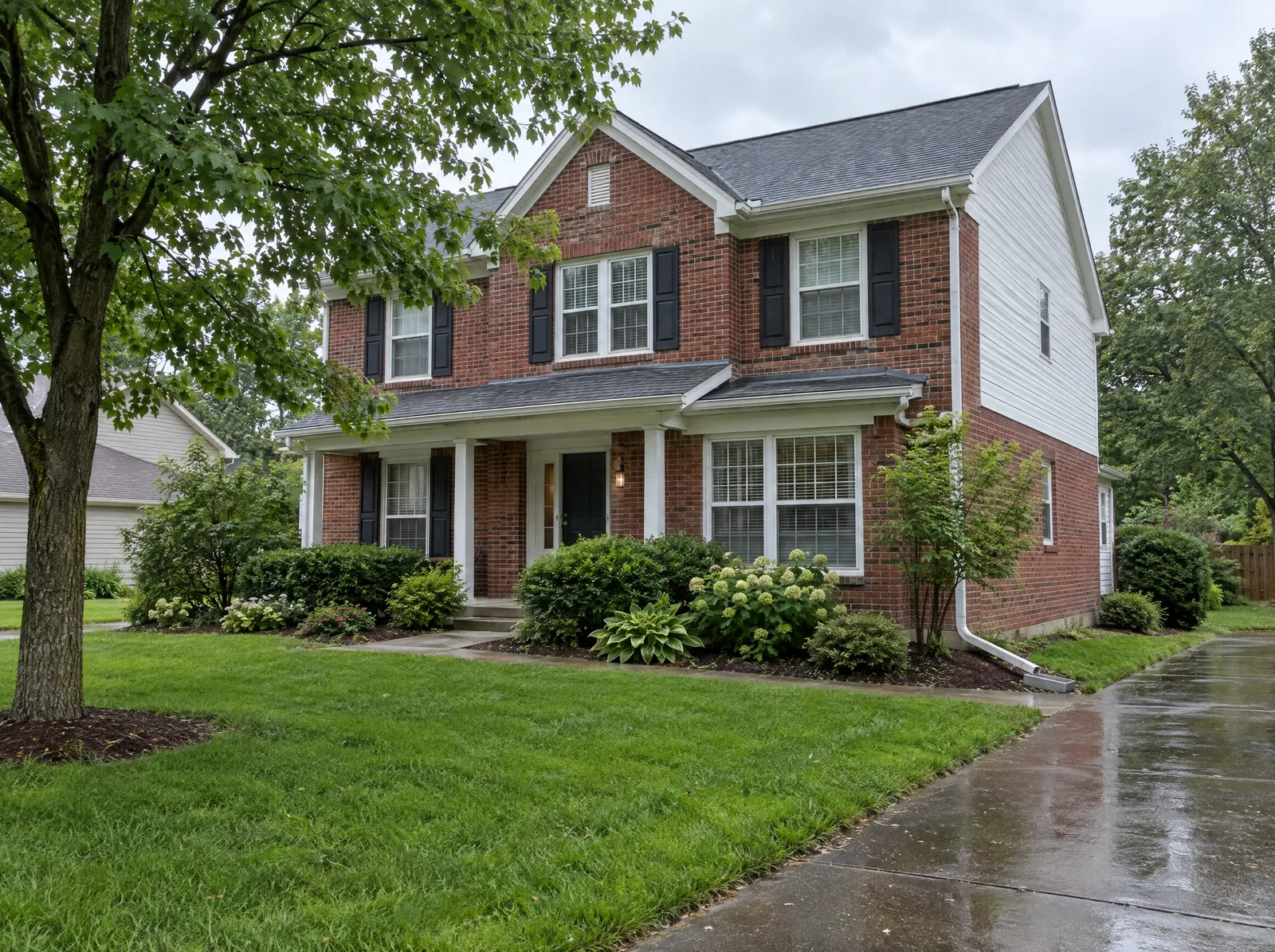
How clay handles water
Clay is made of extremely fine particles packed tightly together. Water gets into it slowly and leaves it even more slowly. Sandy soil lets rain soak down and away from a house within hours. Clay holds it near the surface, so after a wet week the ground around a foundation can stay saturated for days. Some clays also swell when wet and shrink when dry. Over a few seasons, that movement can open a gap between the soil and the foundation wall, which gives surface water a direct path down the side of the house.
The bathtub around your basement
When a basement is built, the hole is dug wider than the foundation, and the space around the walls is filled back in after they’re poured. That backfill is looser than the undisturbed clay around it. Water soaks into the loose backfill easily, then hits the dense clay beyond it and has nowhere to go. The result is a ring of wet soil pressed against the foundation, sometimes called the bathtub effect. As the water level in that ring rises, it pushes against the walls and up under the slab. That pressure, called hydrostatic pressure, drives water through any weakness: form tie holes, shrinkage cracks, the joint where the wall meets the floor, and gaps around pipes.
That’s also why a sump pit exists in so many Indiana basements. Drain tile around the footing collects water from the bathtub and delivers it to the pit, where the pump sends it out. When the tile clogs or the pump can’t keep up, the pressure comes back.
Soil water or summer humidity?
Not every damp basement is a soil problem. Humid summer air condensing on cool concrete produces moisture that looks a lot like seepage, as we explain in why Indiana basements get moldy. The fix is different, so it’s worth telling them apart.
| What you notice | Points to soil water | Points to humidity |
|---|---|---|
| When it happens | During or a day or two after heavy rain or snowmelt | Muggy summer weeks, even in dry spells |
| Where it shows up | Low on walls, at the wall-floor joint, at cracks | Spread across walls, ducts and cold pipes |
| White, chalky residue on concrete | Common: minerals left behind as water passes through | Less common |
| What a dehumidifier does | Helps the air, but water keeps coming in | Usually solves most of it |
A simple check: tape a square of plastic sheeting tightly to the wall for a couple of days. Moisture under the plastic means it’s coming through the wall. Moisture on the room side means it’s condensing from the air.
Fixes that work, cheapest first
- Clean gutters and extend downspouts. Roof runoff dumped at the foundation is the biggest single source we see. Carry it several feet away.
- Fix the grading. Soil should slope away from the house. Settled backfill often slopes toward it after a few years.
- Cover or drain window wells. They collect water right against the foundation.
- Seal cracks and pipe gaps from inside. Useful for small, isolated leaks, but not a fix for widespread pressure.
- Interior drain tile and a sump. Relieves pressure by giving water a path to the pit before it reaches the floor.
- Exterior waterproofing. Digging down to the footing to membrane the walls. The most disruptive option, and sometimes the right one.
Work from the top of the list down. Many Indiana basements stay dry after the first two steps.
Where mold comes into it
Clay soil doesn’t grow mold. It supplies the water. The mold grows on what’s been added to the basement: drywall against the foundation, carpet on the slab, wood framing and stored boxes. If seepage has been going on for a while, check the bottom of finished walls and the carpet edges along exterior walls. Once the water is under control, our basement mold removal service cleans up what it left behind and confirms the result with lab testing.
We're done when the lab says so.
Every remediation ends with clearance testing, and our work is backed by a complete-removal guarantee. We don't close a job on a failed result.
Talk to a specialistDamp basement, not sure why?
Moisture readings show whether the water is coming from the soil or the air. Tell us what you're seeing, and a specialist from our Avon office will call you back.
- (833) 772-6653
- info@americanmoldexperts.com
- Open 7 days, 8am to 8pm