
Indiana's most common mold problem
Basement mold removal in Indiana, from the source out
We find how water gets into your basement, fix it, remove the mold and test to prove it's gone.
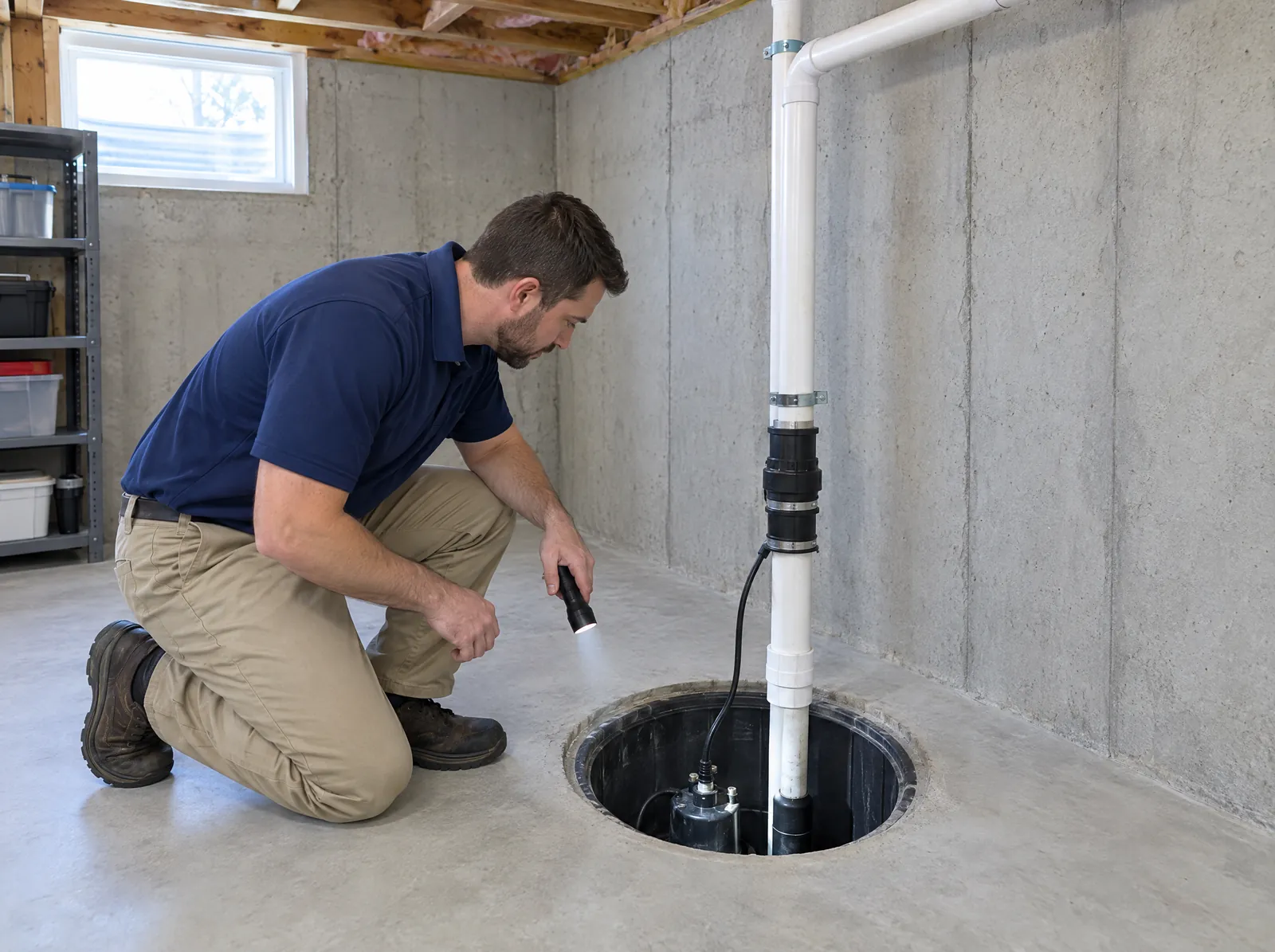
How does basement mold removal in Indiana work?
Basement mold removal in Indiana starts with the water, because a basement that stays damp will grow mold again. We trace moisture from the sump pit, window wells, foundation cracks and summer humidity, then contain the area, remove materials that can't be saved, HEPA clean and enzyme-treat what stays, and finish with clearance testing. In finished basements, testing keeps the tear-out to what's actually affected.
Why Indiana basements keep growing mold
Much of Indiana sits on clay-rich soil left by glaciers. Clay drains slowly, so after a heavy spring rain it stays saturated and presses water against foundation walls for days. Add a sump pump that can't keep up, a downspout emptying next to the house or a window well full of leaves, and water finds a way in. Even in a dry year, humid summer air condenses on cool concrete. A basement doesn't need to flood to grow mold. It only needs to stay damp.
Sound familiar?
- The basement smells musty every summer, no matter how much you clean.
- There are white or dark stains along the bottom of finished drywall.
- The sump pump failed once, and you're not sure what the water left behind.
- Someone quoted tearing out the whole finished basement, and you want a second opinion.
We do it differently.
| Typical basement mold cleanup | AME basement mold removal | |
|---|---|---|
| Water source | Assumed or ignored | Traced: sump, grading, window wells, walls, humidity |
| Finished walls | Cut out 2 or 4 feet all around | Removed only where moisture and testing show damage |
| Treatment | Bleach on the concrete | HEPA cleaning and enzymes on framing and sill plates |
| Humidity | Not addressed | Dehumidification plan to keep it in range |
| Proof | It looks clean | Clearance testing before walls go back up |

Why families trust us with their homes
-
Family-owned since 2008
A multigenerational family business. Not a franchise, not a private-equity rollup.
-
Credentialed where it isn't required
Indiana doesn't license mold remediators. We hold IICRC, CMR, CRMI and CCMI credentials anyway.
-
Called on as experts
Attorneys bring us into legal cases involving mold and mycotoxins.
-
Lab results in 24 to 48 hours
Every inspection comes with a written report, color photos and lab results.
- IICRC Certified Firm
- CMR
- CRMI
- CCMI
- BBB A+ Accredited
- NAMRI
- IAQA
- NORMI
- AMMA
- PMII
The AME Clearance Method
Basement mold removal, step by step
Water first, mold second, proof last. The order is what keeps the basement from needing this again.
Talk to a specialist-
Trace the water
Moisture readings on walls and slab, a look at the sump pit, discharge line, window wells, downspouts and grading, and humidity measurements.
-
Test what's growing
Air and dust samples show what mold is present and whether it has spread to the rest of the house through the stairwell or ductwork.
-
Contain the basement
The stairwell and any ductwork openings are sealed, and HEPA air scrubbers keep the basement under negative pressure.
-
Remove what's damaged
Wet drywall, insulation and carpet pad are removed only where readings and testing show damage. Framing, sill plates and joists are HEPA vacuumed and cleaned.
-
Treat and dry
Enzyme treatment on framing and concrete breaks down mold residue and mycotoxins. Dehumidifiers bring materials back to normal moisture.
-
Clear before you rebuild
Clearance testing happens with the walls still open, so any problem is caught before new drywall hides it again.
What basement mold removal includes
- A moisture source inspection inside and outside
- Air and dust testing before work starts
- A written scope and price
- Containment of the basement and stairwell
- Targeted removal of damaged finishes
- HEPA cleaning of framing, joists and concrete
- Enzyme treatment for mold residue and mycotoxins
- Drying and a humidity control plan
- Clearance testing before rebuild

Proof you can hold in your hands
When we finish, you don't get a handshake and a promise. You get the paperwork your family, your doctor, your insurer or your buyer can rely on.
Inspection report
What we found, where it is coming from, with color photos.
Written remediation plan
Scope, timeline and what will and won't be removed, before work starts.
Clearance lab report
Air, surface and mycotoxin results after the work is done.
A report for your doctor
With your permission, we share results directly with your care team.
Basement mold in Indiana, explained
Six ways water gets into an Indiana basement
Every basement mold job starts with the same question: where is the water coming from? In Indiana, the answer is usually one of these, and often more than one.
- Saturated clay soil. After heavy rain, clay stays wet and pushes water against the foundation. It seeps through cracks, tie holes and the joint where the wall meets the floor.
- Sump pump problems. A pump that’s undersized, failing, or without a backup during a power outage in a storm. A discharge line that dumps water right back beside the house.
- Gutters and grading. Downspouts that empty at the foundation and soil that slopes toward the house instead of away.
- Window wells. Wells without covers or drains fill with rain and leaves and leak around the window frame.
- Summer condensation. Humid air meets cool concrete, cold water lines and supply ducts, and water beads on the surface.
- Plumbing and appliances. Water heaters, washing machines and drain lines often live in the basement, and slow leaks there go unnoticed.
We explain the soil side of this in more detail in does Indiana clay soil cause basement moisture.
Finished basements hide it best
A finished basement puts drywall, carpet, pad and wood framing right against the coolest, dampest surfaces in the house. The bottom few inches of drywall wick moisture from the slab. Carpet pad holds it. The back side of the drywall facing the foundation can grow mold for a long time while the painted side looks fine.
That’s why we don’t start by cutting. A thermal camera and moisture meter show which walls are wet, and testing shows whether mold has taken hold. Only the sections with real damage come out, and framing is almost always cleaned and kept.
After a sump pump failure or basement flood
Speed matters most in the first day or two. Get standing water out, move wet belongings and cardboard boxes out of the basement, pull up soaked carpet and pad, and get fans and dehumidifiers running. Then have the finished walls checked, because water climbs inside drywall well above the visible waterline. Our guide on what to do after a basement flood in Indiana walks through it.
Keeping it dry afterward
The job isn’t finished when the mold is gone. Before we leave, you get a plan for the moisture: fixing grading and downspouts, adding a battery backup or a second sump pump if needed, window well covers, and a dehumidifier sized for the space with a drain line so it doesn’t depend on someone emptying a bucket. The EPA recommends keeping indoor humidity below 60 percent, and a basement in an Indiana summer needs help to stay there. If you have a crawlspace too, see crawlspace mold in Indiana.
We remove mold and mycotoxins from buildings. We don’t diagnose or treat medical conditions. If you have symptoms, please work with a doctor. With your permission, we’re glad to share test results and our plan with them.
Common questions
Have a question that isn't here? Call a specialist
Why do Indiana basements get moldy?
Clay-heavy soil that holds water against foundations, spring rains that push sump pumps to their limit, and humid summers that condense on cool concrete. Most basements only need to stay damp, not flood, for mold to grow.
Is the white stuff on my basement wall mold?
Sometimes. White, chalky crystals on concrete or block are often efflorescence, mineral salts left when water evaporates. It isn't mold, but it shows water is moving through the wall. White fuzzy growth on wood, drywall or stored items is more likely mold. A sample settles it.
Does a sump pump failure cause mold?
It can. Mold can start growing on wet drywall, carpet and cardboard within a day or two. After a failure, dry the space quickly and have wet finished materials checked, because moisture often wicks up inside walls where you can't see it.
Do I have to remove all the drywall in a finished basement?
Usually not. Moisture readings and testing show where the damage actually is. We remove affected sections and clean and keep the rest, including the framing in most cases.
Can I just run a dehumidifier?
A dehumidifier is part of the long-term fix, and it helps keep the space in range. It won't remove mold that's already growing, and it can't keep up with water coming through the wall or slab.
Will basement mold affect the rest of my house?
It can. Air moves up stairwells, and in many Indiana homes the furnace and return ducts sit in the basement. That's why we test upstairs as well as below grade.
We're done when the lab says so.
Every remediation ends with clearance testing, and our work is backed by a complete-removal guarantee. We don't close a job on a failed result.
Talk to a specialistGet your Indiana basement back
Tell us what you're seeing or smelling downstairs. A specialist will call you back.
- (833) 772-6653
- info@americanmoldexperts.com
- Open 7 days, 8am to 8pm