
Nationwide mycotoxin specialists
Mycotoxin remediation, verified by the lab
Mycotoxins survive bleach, biocides and fogging. We break them down, clean them out and test to prove they're gone.
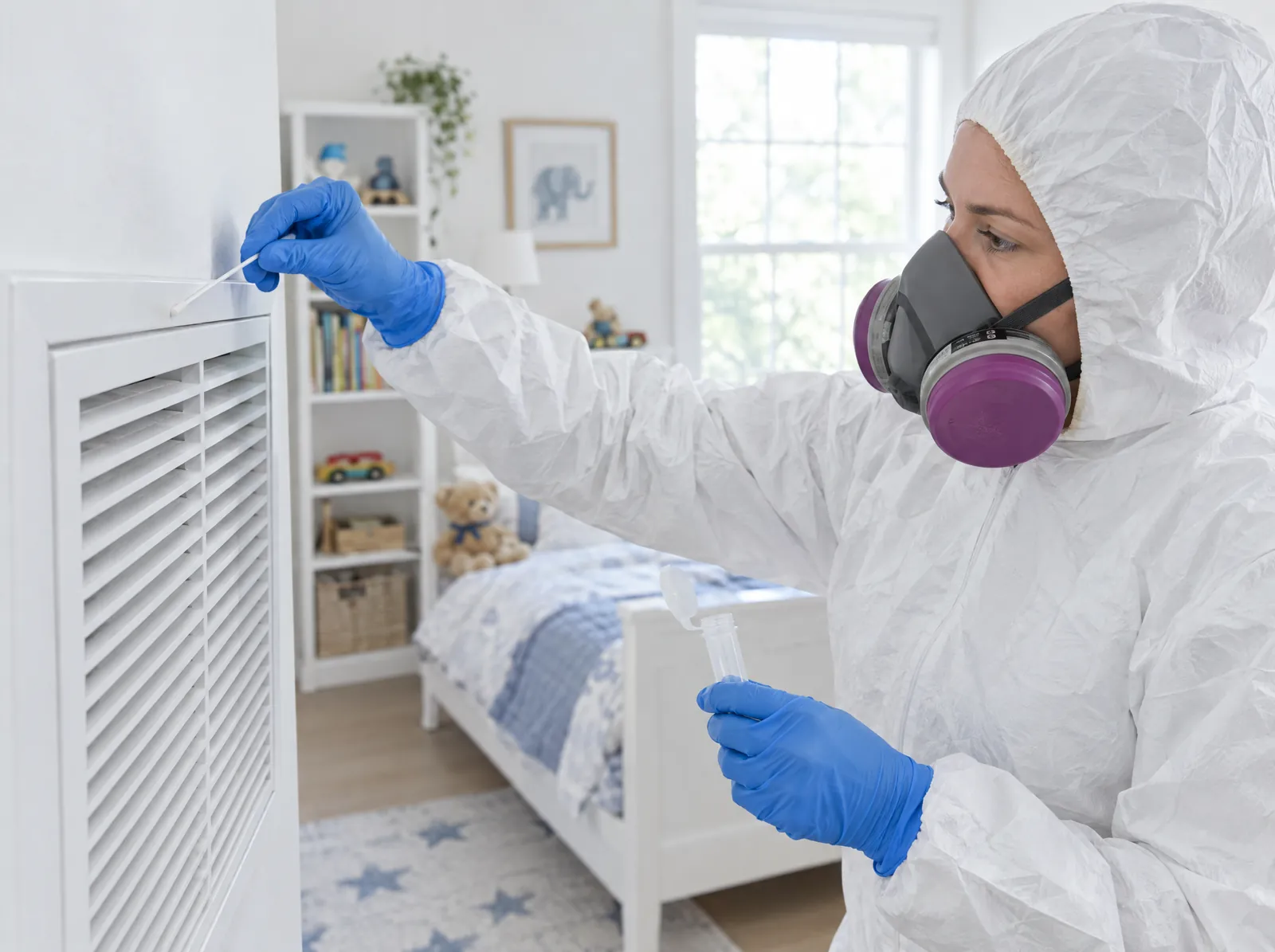
What is mycotoxin remediation?
Mycotoxin remediation removes the toxic compounds some molds produce, not just the mold itself. Mycotoxins are stable chemicals that cling to dust, building materials and belongings, and they stay toxic after the mold is dead. Done properly, it means fixing the moisture source, containing the area, removing contaminated materials, breaking down the remaining toxins, cleaning the air and HVAC system, and confirming the result with mycotoxin testing.
Why standard mold removal leaves mycotoxins behind
Most mold jobs are built to kill mold, and bleach, biocides and foggers do that well. But mycotoxins aren't alive, so they can't be killed. They ride on dust and on mold fragments far smaller than spores, and they settle into carpet, upholstery, ductwork and the gaps in a building.
Sound familiar?
- Your home passed a basic mold test, but you still feel worse inside it.
- You feel better when you travel and worse when you come home.
- A previous company killed the mold, but nobody tested for toxins.
- You don't know which of your belongings are safe to keep.
We do it differently.
| Standard mold removal | AME mycotoxin remediation | |
|---|---|---|
| Goal | Kill visible mold | Remove the mold and break down its toxins |
| Testing | Spore counts, if anything | Air, dust and mycotoxin panels, before and after |
| Treatment | Bleach, biocides, fogging | Enzymes designed to break mycotoxins down |
| Dust and HVAC | Rarely addressed | HEPA vacuuming, detailed wiping, duct cleaning |
| Belongings | Not included | A clear plan for what to clean, keep or replace |

Why families trust us with their homes
-
Family-owned since 2008
A multigenerational family business. Not a franchise, not a private-equity rollup.
-
Credentialed where it isn't required
Indiana doesn't license mold remediators. We hold IICRC, CMR, CRMI and CCMI credentials anyway.
-
Called on as experts
Attorneys bring us into legal cases involving mold and mycotoxins.
-
Lab results in 24 to 48 hours
Every inspection comes with a written report, color photos and lab results.
- IICRC Certified Firm
- CMR
- CRMI
- CCMI
- BBB A+ Accredited
- NAMRI
- IAQA
- NORMI
- AMMA
- PMII
The AME Clearance Method
How we remove mycotoxins, step by step
Seven steps, in this order, on every mycotoxin project. Skip one and toxins get left behind.
Talk to a specialist-
Test and map
We sample the air, settled dust and surfaces, including a mycotoxin panel, to learn which toxins are present, how much, and where they concentrate.
-
Stop the moisture
Mold makes mycotoxins when it has water. We find the leak, humidity or drainage problem and make sure it is corrected before cleaning starts.
-
Contain the work area
Sealed plastic barriers and negative air pressure keep contaminated dust from drifting into clean rooms while we work.
-
Remove what can't be saved
Heavily contaminated porous materials, such as some drywall, insulation or carpet pad, are bagged and removed. Everything we can clean, we keep.
-
Break down the toxins
Plant-based enzyme treatments go onto framing, subfloors and hard-to-reach cavities. They are made to break mycotoxins apart instead of covering them up.
-
Clean the air, dust and HVAC
HEPA vacuuming, detailed wipe-downs and air scrubbing capture the fine particles toxins travel on. Ducts and the air handler are cleaned so the system stops recirculating them.
-
Prove it
Clearance testing, including a repeat mycotoxin panel, confirms the result. You get the full lab report, and so can your doctor.
What every mycotoxin project includes
- Air, dust and mycotoxin testing before work begins
- A written scope and plan before anything is removed
- Moisture source identification
- Full containment with negative air
- Enzyme-based mycotoxin treatment
- HEPA vacuuming and detailed surface cleaning
- HVAC and ductwork cleaning where needed
- A plan for your belongings
- Clearance testing, mycotoxins included
- A results report you can share with your doctor

Proof you can hold in your hands
When we finish, you don't get a handshake and a promise. You get the paperwork your family, your doctor, your insurer or your buyer can rely on.
Inspection report
What we found, where it is coming from, with color photos.
Written remediation plan
Scope, timeline and what will and won't be removed, before work starts.
Clearance lab report
Air, surface and mycotoxin results after the work is done.
A report for your doctor
With your permission, we share results directly with your care team.
Mycotoxins, explained
What mycotoxins are
Mycotoxins are chemical compounds that certain molds produce, usually when they are growing on wet material and competing for space. They are not living things. They are stable molecules that stay behind in settled dust, in porous building materials and on belongings, and they can travel on mold fragments far smaller than a spore.
That stability is the whole problem. A mold colony can be killed in minutes. The toxins it produced can remain in a home for a long time afterward unless someone removes them on purpose.
Which household molds produce them
Not every mold makes mycotoxins, and the same mold doesn’t make them in every situation. These are the indoor molds most often linked to mycotoxins in water-damaged buildings:
| Mold | Mycotoxins commonly associated | Where we usually find it |
|---|---|---|
| Stachybotrys chartarum | Satratoxins and other trichothecenes | Drywall paper, ceiling tiles and other cellulose that stayed wet for a long time |
| Aspergillus species | Sterigmatocystin, ochratoxin A, gliotoxin, aflatoxins | Settled dust, HVAC systems, damp building materials |
| Penicillium species | Ochratoxin A, citrinin | Damp walls, carpet, stored belongings |
| Chaetomium species | Chaetoglobosins | Water-damaged drywall and wood |
| Fusarium species | Trichothecenes, zearalenone | Wet carpet and materials after flooding |
Why killing mold doesn’t remove mycotoxins
Bleach, quaternary biocides and foggers are designed to kill living mold. Mycotoxins aren’t alive, so “killing” doesn’t apply to them. Dead mold also breaks into fragments that are easier to breathe in than intact spores, and those fragments can still carry toxins.
Removing mycotoxins takes two things done together. First, physical removal: taking out contaminated porous materials and capturing the dust toxins ride on with HEPA vacuums, detailed wiping and air scrubbing. Second, breaking down what is left: treating surfaces and cavities with products made to split the toxin molecules apart. We use plant-based enzyme treatments for that step.
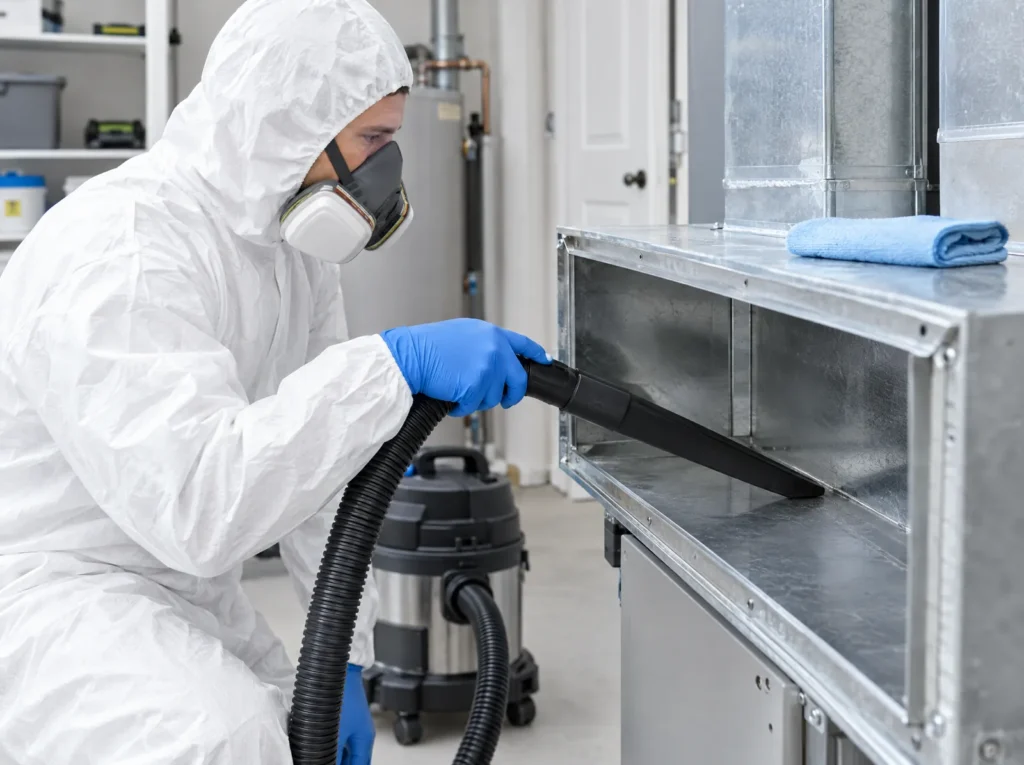
How a home is tested for mycotoxins
No single test tells the whole story, so we use three that answer different questions:
- Air sampling shows how many spores are in the air right now. It’s a snapshot, and it can miss toxins riding on dust and fragments.
- Dust-based mold testing (such as ERMI or HERTSMI-2) identifies which molds have been growing in the home over time by analyzing mold DNA in settled dust.
- Mycotoxin panels test settled dust or surfaces for specific toxins, such as trichothecenes, ochratoxin A, gliotoxin and aflatoxins.
We test before remediation to plan the work, and again afterward to confirm it. The clearance report is yours to keep and share.
What happens to your belongings
Families worry about this more than anything else, and the honest answer is that it depends on the material and how contaminated it is. Here is how we usually approach it:
- Hard, non-porous items like glass, metal, ceramics and hard plastic can almost always be cleaned with HEPA vacuuming and detailed wiping.
- Finished wood furniture is usually cleanable the same way.
- Clothing and washable fabrics can often be saved with repeated laundering.
- Soft, porous items such as mattresses, upholstered furniture, pillows and stuffed toys are decided case by case. Heavily contaminated pieces are often better replaced.
- Paper, books and electronics need individual judgment. We’ll tell you what testing supports and what it doesn’t.
When to call a mycotoxin specialist
- Your doctor suspects mold exposure and has asked you to check your home.
- You feel noticeably better away from home and worse when you return.
- Your home has a history of leaks, flooding or high humidity.
- A previous mold job killed the mold, but no one tested for mycotoxins afterward.
- You’re buying or selling a home with a history of water damage.
We remove mold and mycotoxins from buildings. We don’t diagnose or treat medical conditions. If you have symptoms, please work with a doctor. With your permission, we’re glad to share test results and our plan with them.
Common questions
Have a question that isn't here? Call a specialist
Can mycotoxins be removed from a house?
Yes. It takes more than killing mold. Mycotoxins have to be physically removed with contaminated materials and dust, and the rest broken down chemically, then confirmed with testing. That is why we test for mycotoxins before and after every project.
What deactivates mycotoxins?
Mycotoxins are deactivated when their molecular structure is broken apart. Bleach, ordinary biocides and household heat don't reliably do that. Remediators use treatments designed to break the molecules down, such as the plant-based enzyme products we use, together with HEPA cleaning to physically remove contaminated dust.
Do mycotoxins go away on their own?
Not quickly. Mycotoxins are very stable compounds and can stay in settled dust and building materials long after the mold that made them has died. Airing out a home or letting it dry does not remove them.
How is a home tested for mycotoxins?
We collect settled dust and surface samples and send them to a lab that runs a mycotoxin panel. We pair that with air sampling and dust-based mold testing, because each test answers a different question: what is in the air now, which molds have been growing, and which toxins are left behind.
How much does mycotoxin remediation cost?
It depends on how much of the home is affected, which materials have to be removed, and whether the HVAC system and belongings need treatment. After testing, we give you a written scope and price before any work begins.
Should my family stay in the house during remediation?
No one should be inside the work area. Many families stay in unaffected parts of the home behind containment. People who are sick from mold exposure often choose to stay elsewhere until clearance testing passes. We'll help you decide based on your test results and your doctor's advice.
Can you test for mycotoxins without doing the remediation?
Yes. Many clients start with testing only. You get the lab results and our written recommendations, with no obligation to hire us for the work.
Do you handle mycotoxin projects outside Indiana and Florida?
Yes. We have local crews in Indiana and Southwest Florida, and we travel for mycotoxin projects anywhere in the United States.
We're done when the lab says so.
Every remediation ends with clearance testing, and our work is backed by a complete-removal guarantee. We don't close a job on a failed result.
Talk to a specialistTalk to a mycotoxin specialist
Tell us what's happening at home. A specialist will call you back.
- (833) 772-6653
- info@americanmoldexperts.com
- Open 7 days, 8am to 8pm