
Do mycotoxins go away on their own?
Short answer
No, not in any way you can count on. Mycotoxins are stable chemical compounds, not living organisms, so they don't die off when mold dies or dries out. They stay in settled dust, porous materials and ductwork, and active growth keeps adding more. Getting rid of them means fixing the moisture, removing contaminated dust and materials, and testing to confirm.
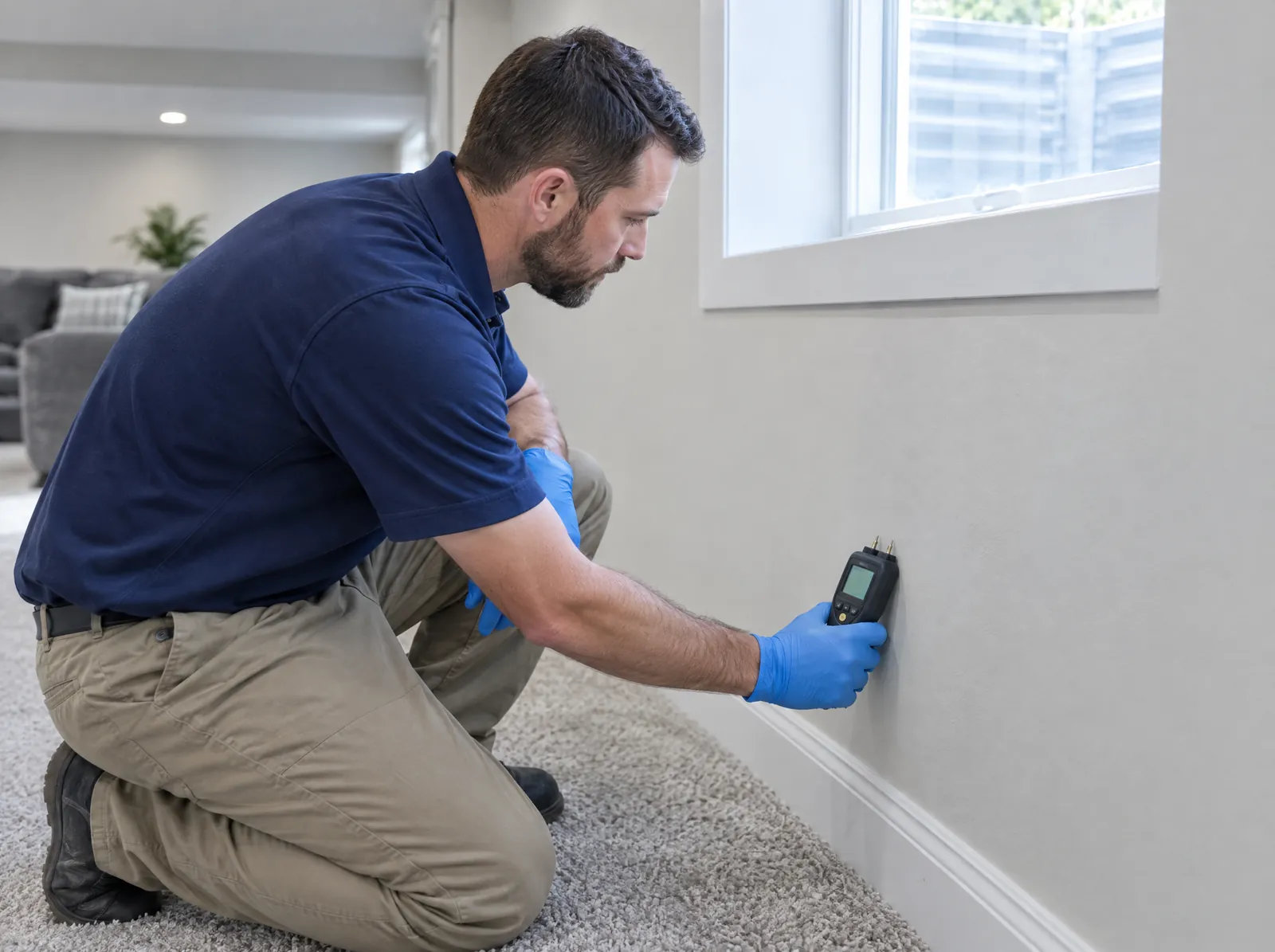
What happens to mycotoxins over time
Mycotoxins are molecules that certain molds make as they grow. Unlike the mold itself, they don’t need water, food or warmth to stick around. Strong heat, ultraviolet light and some chemicals can break down certain toxins, which is how researchers and food processors study them. Inside a house, those conditions mostly don’t exist. The top of a door frame, the back of a closet or the inside of a wall cavity is dark, dry and undisturbed, which is close to ideal storage.
Nobody has pinned down how long mycotoxins last in a typical home, and the answer likely differs by toxin, material and conditions. What is well established is that they’re chemically stable and outlast the mold that made them. Our page on how long mycotoxins last on surfaces covers what is and isn’t known.
Why waiting usually makes it worse
Slow breakdown isn’t the main problem. The bigger issue is that the source is often still active. If a leak, a damp basement or a wet crawlspace is feeding mold, new growth keeps producing spores, fragments and toxins while the older material stays put. Time works against you in a few other ways too:
- Dust travels. Foot traffic, the HVAC system and everyday cleaning move fine particles from the source into rooms that were never wet.
- Soft goods keep loading up. Mattresses, sofas, carpet and curtains collect dust for as long as they sit in the space.
- Dead mold still counts. Drying an area out stops growth, but the dead mold and whatever it produced stay where they were.
Things that feel like progress but aren’t
Opening windows, running fans and drying out a damp room are worth doing, because they cut the moisture mold needs. They don’t remove anything. Painting over a stain hides it without touching what’s in the dust or behind the paint. Household sprays act on living mold at the surface, which is why bleach doesn’t reliably break down mycotoxins either. A room can look and smell better while the toxin load barely changes.
What actually brings levels down
- Stop the water. Find the leak, drainage problem or humidity source and correct it, or everything after this step is temporary.
- Take out what can’t be cleaned. Heavily contaminated drywall, insulation and carpet come out under containment so dust doesn’t spread.
- Capture the dust. HEPA vacuuming and damp wiping from ceiling to floor, including the ductwork and the tops of things nobody looks at.
- Treat what remains. We use plant-based enzyme products from US Enzyme, designed to break down mycotoxins.
- Retest. A dust panel from the same kinds of locations, run by the same lab and method, shows whether the toxins are actually gone.
That combination is what mycotoxin remediation means in practice. Each step handles something the others can’t.
When it’s time to call a professional
If there’s been water damage, a musty smell that keeps coming back, or a dust test showing mycotoxins, time alone isn’t going to settle it. The same goes if the house was already remediated and the problem seems to have stayed. Our page on mycotoxins after remediation explains the usual reasons. A professional inspection finds the moisture source, and testing gives you numbers to measure progress against.
We remove mold and mycotoxins from buildings. We don’t diagnose or treat medical conditions. If you or someone in your home has symptoms, please work with a doctor, and with your permission we’ll gladly share our test results with them.
We're done when the lab says so.
Every remediation ends with clearance testing, and our work is backed by a complete-removal guarantee. We don't close a job on a failed result.
Talk to a specialistWaiting hasn't helped?
Tell us what's happened in the house so far, and we'll explain what testing would show and what removal would involve.
- (833) 772-6653
- info@americanmoldexperts.com
- Open 7 days, 8am to 8pm