
How long do mycotoxins last on surfaces?
Short answer
There's no reliable timeline for homes, but mycotoxins are chemically stable and can remain on surfaces long after the mold that made them has died. On dry, dark, undisturbed surfaces there's little to break them down. Rather than waiting them out, remove contaminated dust and materials, treat what remains, and test to confirm they're gone.
What’s known and what isn’t
Much of what we know about mycotoxin stability comes from food science. Several toxins, including aflatoxins and ochratoxin A, are known for surviving cooking and processing temperatures that would kill the mold itself. That’s a good sign of how tough the molecules are.
Research on how long they last on household surfaces is limited. Persistence likely varies by toxin, by material, and by light, temperature and humidity. So if someone gives you an exact number of months or years for your house, treat it as a guess. The honest answer is that they last a long time under normal indoor conditions, and you shouldn’t plan around them fading.
There’s a practical reason the question matters less than it seems. In a home with an active moisture problem, new toxins keep arriving, so the age of the old ones doesn’t change much. And even where growth has stopped, dust keeps moving contaminated particles from one surface to another, so a surface that was clean last year can pick up toxins again.
What speeds up or slows down breakdown
| Factor | Effect on mycotoxins |
|---|---|
| Direct sunlight or UV | Can degrade some toxins on exposed surfaces. Most indoor surfaces get little direct sun. |
| High heat | Breaks down some toxins, but others are notably heat-stable. Normal room temperatures do little. |
| Moisture | Doesn’t destroy toxins, and it lets mold keep making more. |
| Oxidizers such as bleach or ozone | Can degrade some toxins in lab conditions. Unreliable on real building surfaces. |
| Treatments designed for mycotoxins | Made to break specific molecules apart, and used during remediation. |
| Sitting undisturbed in dust | Close to ideal preservation. This is why old dust is used for testing. |
Surface type changes the picture
On non-porous surfaces such as glass, metal, tile and sealed counters, toxins sit on top with the dust, and a HEPA vacuum followed by damp wiping removes most of it. Porous materials are different. Drywall paper, unfinished wood, ceiling tile, carpet and upholstery take dust and toxins into their structure, where wiping can’t reach. That’s why heavily contaminated porous materials are often removed instead of cleaned. Our page on mycotoxins in dust explains where the biggest reservoirs tend to be.
Fabric falls in between. Washable items respond well to laundering, as covered in washing mycotoxins out of clothes, while thick, unwashable soft goods are harder.
What to do instead of waiting
- Correct the moisture problem so no new toxins are being made.
- Remove porous materials that are heavily contaminated, under containment.
- HEPA vacuum and damp wipe hard surfaces from top to bottom, including hidden ledges and the HVAC system.
- Treat remaining surfaces. We use plant-based enzyme products from US Enzyme for this.
- Retest with the same lab and method used before the work.
That sequence is the core of mycotoxin remediation.
When to call a professional
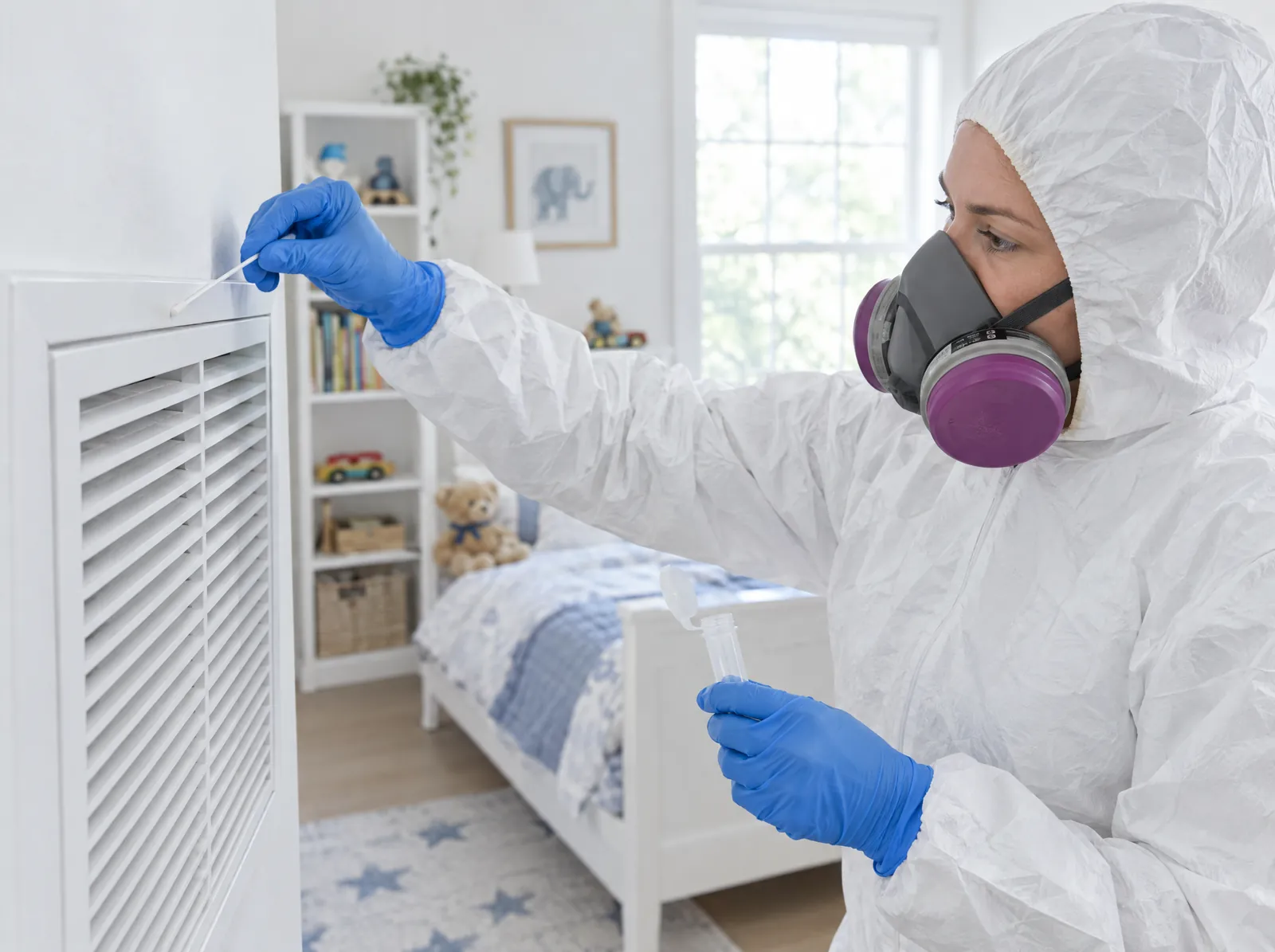
If mold was removed months or years ago and you’re wondering whether the surfaces are clean now, testing is the only way to know. The same applies before moving into a house with a known mold history. We collect dust from the right places and read the results against what the house has been through.
We remove mold and mycotoxins from buildings. We don’t diagnose or treat medical conditions. If you or a family member has symptoms, please work with a doctor, and with your permission we’re glad to share test results with them.
We're done when the lab says so.
Every remediation ends with clearance testing, and our work is backed by a complete-removal guarantee. We don't close a job on a failed result.
Talk to a specialistNeed to know what's still there?
A dust panel shows which toxins remain on the surfaces in your home, and we'll walk you through the results.
- (833) 772-6653
- info@americanmoldexperts.com
- Open 7 days, 8am to 8pm