
Contents and belongings
Cleaning mycotoxins on belongings, item by item
How to decide what to clean, what to keep and what to let go, with the reasoning behind each call.
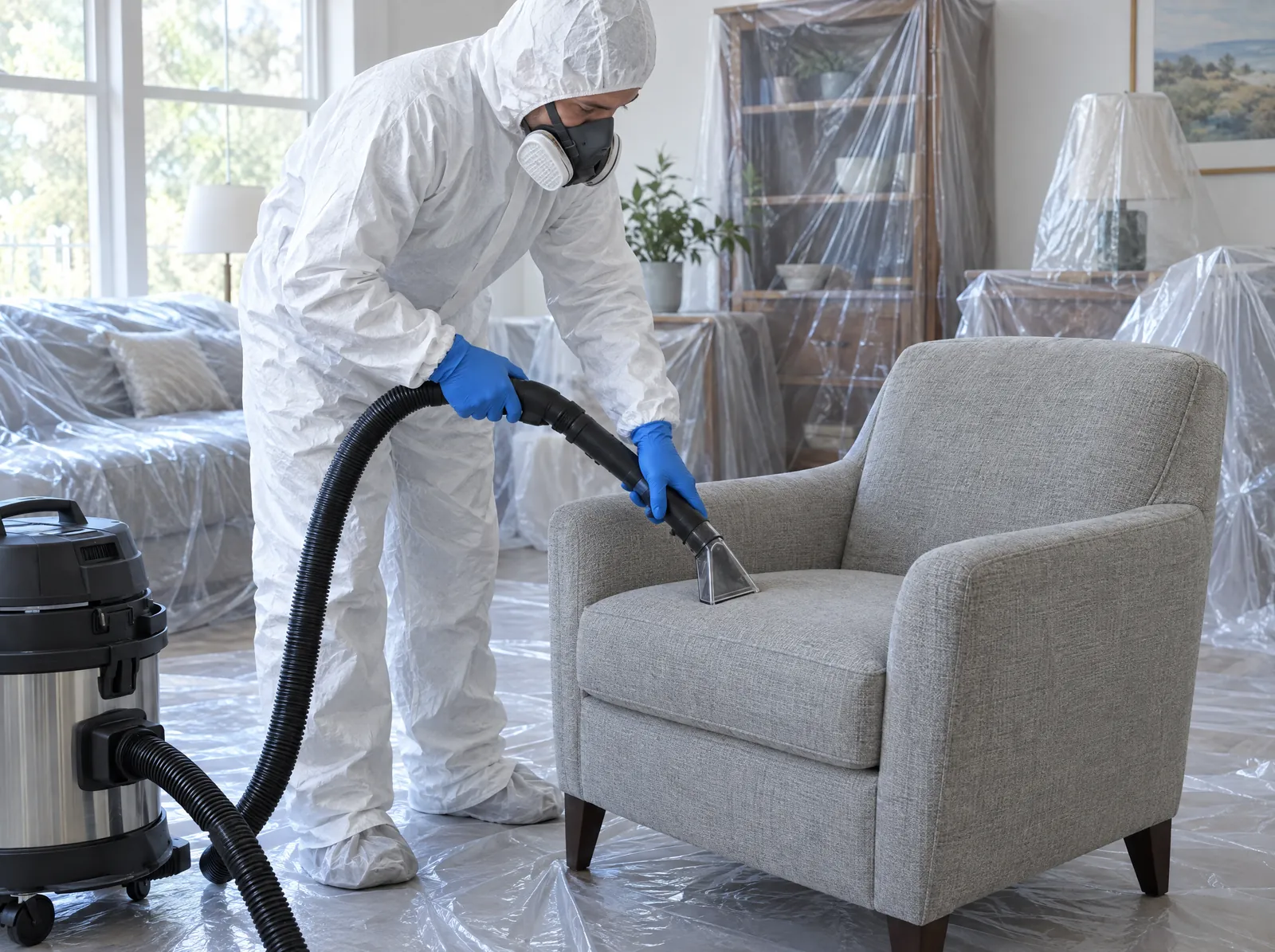
Can mycotoxins on belongings be cleaned?
Often, yes. Mycotoxins on belongings mostly sit in the dust that settled on and into them, so the job is removing that dust. Hard, non-porous items can nearly always be cleaned with HEPA vacuuming and damp wiping. Washable fabrics usually respond to repeated laundering. Porous items that can't be washed, like mattresses and upholstery, are the hard calls. There's no official standard for contents, so each decision weighs the material, contamination level, value and the household's sensitivity.
Why belongings are the hardest part of a mold project
Walls and ductwork are a construction problem. Belongings are personal. A couch might be replaceable. A grandmother's quilt or a child's artwork isn't. Families often get one of two bad answers: keep everything and carry the dust right back into a cleaned house, or throw everything away out of fear.
The better answer sits between those, and it depends on a process: sort, clean, stage and confirm, before anything goes back into a clean space.
Sound familiar?
- You don't know what's safe to keep.
- You're moving and worried about bringing contamination with you.
- Everything went back in after a past remediation without being cleaned.
- Some items matter too much to throw away.
We do it differently.
| All or nothing | A sorted plan | |
|---|---|---|
| Approach | Keep everything or toss everything | Sort by material, contamination and value |
| Cleaning | Wipe with a household spray | HEPA vacuuming, damp wiping and laundering, repeated as needed |
| Where cleaning happens | In the contaminated room | In a separate, clean staging area |
| Timing | Items come back whenever | After the house passes clearance |
| Hard calls | Guesswork | Informed by testing where it helps |

Why families trust us with their homes
-
Family-owned since 2008
A multigenerational family business. Not a franchise, not a private-equity rollup.
-
Credentialed where it isn't required
Indiana doesn't license mold remediators. We hold IICRC, CMR, CRMI and CCMI credentials anyway.
-
Called on as experts
Attorneys bring us into legal cases involving mold and mycotoxins.
-
Lab results in 24 to 48 hours
Every inspection comes with a written report, color photos and lab results.
- IICRC Certified Firm
- CMR
- CRMI
- CCMI
- BBB A+ Accredited
- NAMRI
- IAQA
- NORMI
- AMMA
- PMII
The AME Clearance Method
How we handle belongings during a mycotoxin project
Contents get their own workflow, so cleaned items never share space with contaminated ones.
Talk to a specialist-
Inventory and sort
Room by room, items are grouped into hard non-porous goods, finished furniture, washables, porous items that can't be washed, and irreplaceable pieces.
-
Set up a clean staging area
Cleaned items go to a separate space outside the work zone, or to storage, so they don't pick up dust again.
-
Remove loose dust first
Everything is HEPA vacuumed with a brush attachment before any wiping, so dust gets captured instead of smeared into seams and grain.
-
Damp wipe and launder
Hard and finished surfaces get damp microfiber wiping with a cleaning solution. Washable fabrics go through repeated laundering.
-
Make the hard calls together
Mattresses, upholstered furniture, books and electronics are decided with you, based on their condition, their value and who will use them.
-
Pack clean, return after clearance
Cleaned items are wrapped or boxed in new materials and come back only after the house passes clearance testing.
What contents handling includes
- A room-by-room contents inventory
- Sorting by material and contamination level
- A clean staging area separate from the work zone
- HEPA vacuuming of furniture, fabrics and hard goods
- Damp wiping of hard and finished surfaces
- Laundering guidance for clothing and bedding
- Individual advice on mattresses, upholstery, books and electronics
- Advice on when a conservator should handle art, documents or heirlooms
- Surface or dust testing of items when it helps a decision
- Return of belongings only after clearance

Proof you can hold in your hands
When we finish, you don't get a handshake and a promise. You get the paperwork your family, your doctor, your insurer or your buyer can rely on.
Inspection report
What we found, where it is coming from, with color photos.
Written remediation plan
Scope, timeline and what will and won't be removed, before work starts.
Clearance lab report
Air, surface and mycotoxin results after the work is done.
A report for your doctor
With your permission, we share results directly with your care team.
Cleaning belongings, in detail
How mycotoxins end up on belongings
Belongings rarely grow mold themselves unless they got wet. What they collect is dust. Spores and mold fragments drift out of the affected area, settle on every surface in the room, and work their way into fabric, foam, paper and the crevices of furniture. Soft items act like filters. The longer something sits in a contaminated space, the more dust it holds, and the deeper that dust goes.
That’s why the source has to be dealt with first. Cleaning belongings while mold is still growing, or putting them back into a house that hasn’t been cleaned, just starts the cycle again.
Four questions behind every decision
- What is it made of? Hard, non-porous surfaces release dust easily. Foam, batting and paper hold it.
- How contaminated is it? Something that got wet or sat next to the source is different from something across the house.
- Can it be replaced? Irreplaceable items justify more effort and sometimes a specialist.
- Who will use it? Families working with a doctor on mold-related illness often choose to be more conservative.
Cleaning by material
Hard goods: glass, metal, ceramic, hard plastic
HEPA vacuum, then damp wipe with a cleaning solution, then wipe again with a fresh cloth. Pay attention to seams, hinges and undersides. Dishwasher-safe items can go through the dishwasher. These are nearly always kept.
Finished wood furniture
HEPA vacuum all surfaces, including backs, undersides, drawer interiors and joints, then damp wipe. Unfinished wood, like the inside of a drawer box or the back panel of a dresser, absorbs more and deserves extra passes. Pieces that got wet and grew mold need a closer look.
Clothing, bedding and linens
Shake out outdoors if possible, then launder with detergent in the warmest water the fabric allows. Many families run items through more than once. Wash in small loads so there’s room for water to move, and run an empty cycle afterward to rinse the machine. Anything that still smells musty after several washes is usually retired.
Mattresses, upholstery and pillows
These are the hardest items to clean all the way through, because dust works into foam and batting where a vacuum can’t reach. Light contamination can sometimes be handled with thorough HEPA vacuuming and, for mattresses, a sealed encasement. Pieces that got wet, grew mold or sat for a long time in a heavily affected room are usually replaced. More on this in should you throw away a mattress after mold exposure?
Books, papers and photos
HEPA vacuum covers and edges with a soft brush attachment, holding the book closed. Page-by-page cleaning is slow and usually saved for items that truly matter. Photographs, documents and artwork of real value are worth a conservator’s opinion. See can books and papers hold mycotoxins?
Electronics
Wipe exteriors with a barely damp cloth and HEPA vacuum vents. Anything with a fan, like computers, game consoles and some TVs, pulls room air through and collects dust inside. Those may need to be opened and cleaned by someone qualified, or replaced if they aren’t worth the cost.
What doesn’t work
Sprays, foggers and ozone generators are often sold as a way to treat contents all at once. None of them remove dust, and dust is where the toxins are. Setting items in the sun or airing them out helps with odor but doesn’t remove fine particles from inside fabric or foam. An air purifier running in a room full of belongings catches only what’s floating, not what’s embedded.
Moving without bringing it with you
If you’re leaving a house rather than remediating it, clean belongings before they go into the new home, not after. Pack cleaned items in new boxes or bins, not the cardboard that sat in the old house. Our guide on moving without bringing mold covers the steps. Laundry specifics are in can mycotoxins be washed out of clothes?
We clean mold and mycotoxins from buildings and belongings. We don’t diagnose or treat medical conditions, and our contents advice isn’t medical advice. If you or a family member has symptoms, please work with a doctor on how cautious to be. With your permission, we’ll share our findings with them.
Common questions
Have a question that isn't here? Call a specialist
Can mycotoxins be washed out of clothes?
Repeated laundering with detergent removes much of the dust clothes collect, and most washable clothing can be kept. Heavily soiled items or ones that still smell musty after several washes are usually better replaced.
Should I throw away my mattress?
Not automatically. A mattress that got wet or sat for a long time in a heavily contaminated room is hard to clean all the way through and is often replaced. One from a lightly affected room may be HEPA vacuumed and encased. It's a judgment call worth making with test results.
Can I take my furniture if I move out of a moldy house?
Hard and finished pieces can usually be cleaned and moved. Upholstered furniture is harder. Clean everything before it goes into the new home, not after, or you risk bringing the problem with you.
Does dry cleaning remove mycotoxins?
There's very little research on it. Dry cleaning may help with items that can't go in a washing machine, but it hasn't been shown to remove mycotoxins reliably. For sensitive households, high-value dry-clean-only items are a judgment call.
Can books and papers be saved?
Often, with patience. Covers and edges can be HEPA vacuumed with a soft brush. Valuable or irreplaceable papers are worth a conservator's advice. Freezing can stop active mold growth on wet paper, but it doesn't remove toxins.
Can belongings be tested?
Surface swabs or dust wipes from items can be sent for a mycotoxin panel. There's no standard for what an acceptable result on an item looks like, so testing is most useful for comparing an item before and after cleaning, or against a clean reference.
We're done when the lab says so.
Every remediation ends with clearance testing, and our work is backed by a complete-removal guarantee. We don't close a job on a failed result.
Talk to a specialistGet a plan for your belongings
Tell us what's in the affected rooms and what matters most to you. A specialist will call you back to talk through what can be saved.
- (833) 772-6653
- info@americanmoldexperts.com
- Open 7 days, 8am to 8pm