
Can I take my furniture if I move out of a moldy house?
Short answer
Usually, yes, for most hard furniture. Solid wood, metal, glass and finished pieces can generally be HEPA-vacuumed and wiped clean before the move. Upholstered furniture and mattresses are harder, because dust settles deep into the padding, and many families dealing with mold illness replace them. Clean everything before it goes into the new home, never after it arrives.
Four questions to ask about each piece
Families often try to make one rule for everything they own. It works better to ask the same four questions about each piece and let the answers sort it:
- What is it made of? Sealed and non-porous surfaces clean well. Fabric, foam, unfinished wood and particleboard hold dust and moisture.
- Where did it sit? A dresser two floors above a small bathroom leak is a different case from a sofa in the finished basement where the mold was growing.
- Did it get wet? Anything that was soaked and stayed damp is much harder to recover than something that only collected dust.
- Who will live with it? A household where someone is working with a doctor on mold illness usually sets a stricter bar than one that isn’t.
Answering those honestly, one piece at a time, usually settles most of the list quickly. The rest go into a hold pile until you decide.
Upholstered furniture and mattresses
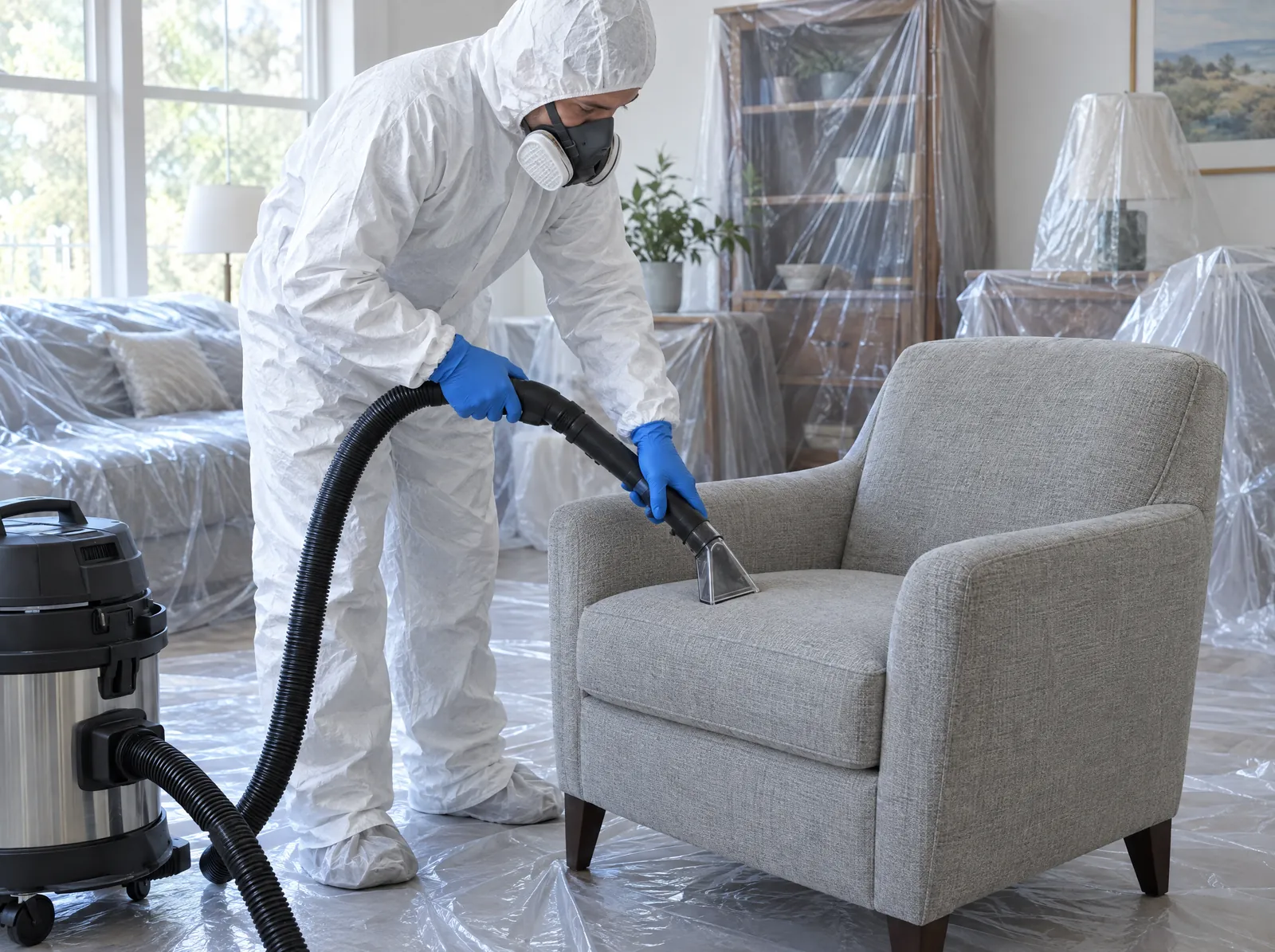
These are the hardest calls. Dust and mold fragments work into cushions, foam and the frame underneath the fabric, and surface vacuuming only reaches the outside. Professional upholstery cleaning can help with a piece that sat far from the problem, but it can’t promise to reach everything inside the padding. That’s why sensitive households often let these go, especially sofas, recliners and anything from the affected room.
Mattresses follow the same logic. Our answer on whether to throw away a mattress after mold exposure goes into the details, including when an encased mattress may be worth a second look.
How hard furniture gets cleaned
The method is simple. The discipline is doing it in the right place. Pieces are cleaned outside the moldy house if possible, or in a space away from the affected rooms, and then moved straight into a truck or a clean, dry storage space.
- HEPA-vacuum every surface, including the back, the underside and inside every drawer.
- Pull drawers out and clean the cavity they slide into.
- Damp-wipe with a microfiber cloth, rinsing or changing cloths often.
- Let each piece dry fully before it’s wrapped or loaded.
- Use clean moving pads, not ones that were stored in the old basement or garage.
If a piece has a musty smell after cleaning, don’t bring it inside yet. Set it aside and decide later. Our guide to cleaning belongings exposed to mycotoxins covers other materials, from electronics to books.
Keeping the new home clean
The new house is the one place you want to protect from the start. Test it before your things arrive, so you know it’s starting clean and have a baseline to compare against later. Move cleaned furniture in first, and keep uncertain pieces in the garage or a storage unit until you’ve made a decision. If you’re still weighing whether to leave at all, the remediate or move decision guide puts the costs of both paths side by side, including your contents.
It’s also fine to take this slowly. Replacing a sofa can wait a few weeks. Throwing away a family piece in a hurry is the kind of decision people regret, and a sealed hold pile gives you time.
We remove mold and mycotoxins from buildings and help families plan what to do with their belongings. We don’t diagnose or treat medical conditions, and nothing on this page is medical advice. If anyone in your home has symptoms, please make health decisions with your doctor. With your permission, we’re glad to share test results and our plan with them.
We're done when the lab says so.
Every remediation ends with clearance testing, and our work is backed by a complete-removal guarantee. We don't close a job on a failed result.
Talk to a specialistNot sure which pieces to keep?
Tell us what you own and where it sat in the house. A specialist will call you back to talk through cleaning, testing and what's worth the effort.
- (833) 772-6653
- info@americanmoldexperts.com
- Open 7 days, 8am to 8pm