
Attic mold, Indiana winters
Attic mold removal in Indiana
Most attic mold is a ventilation problem. We find it, fix the cause and verify the result with lab testing.
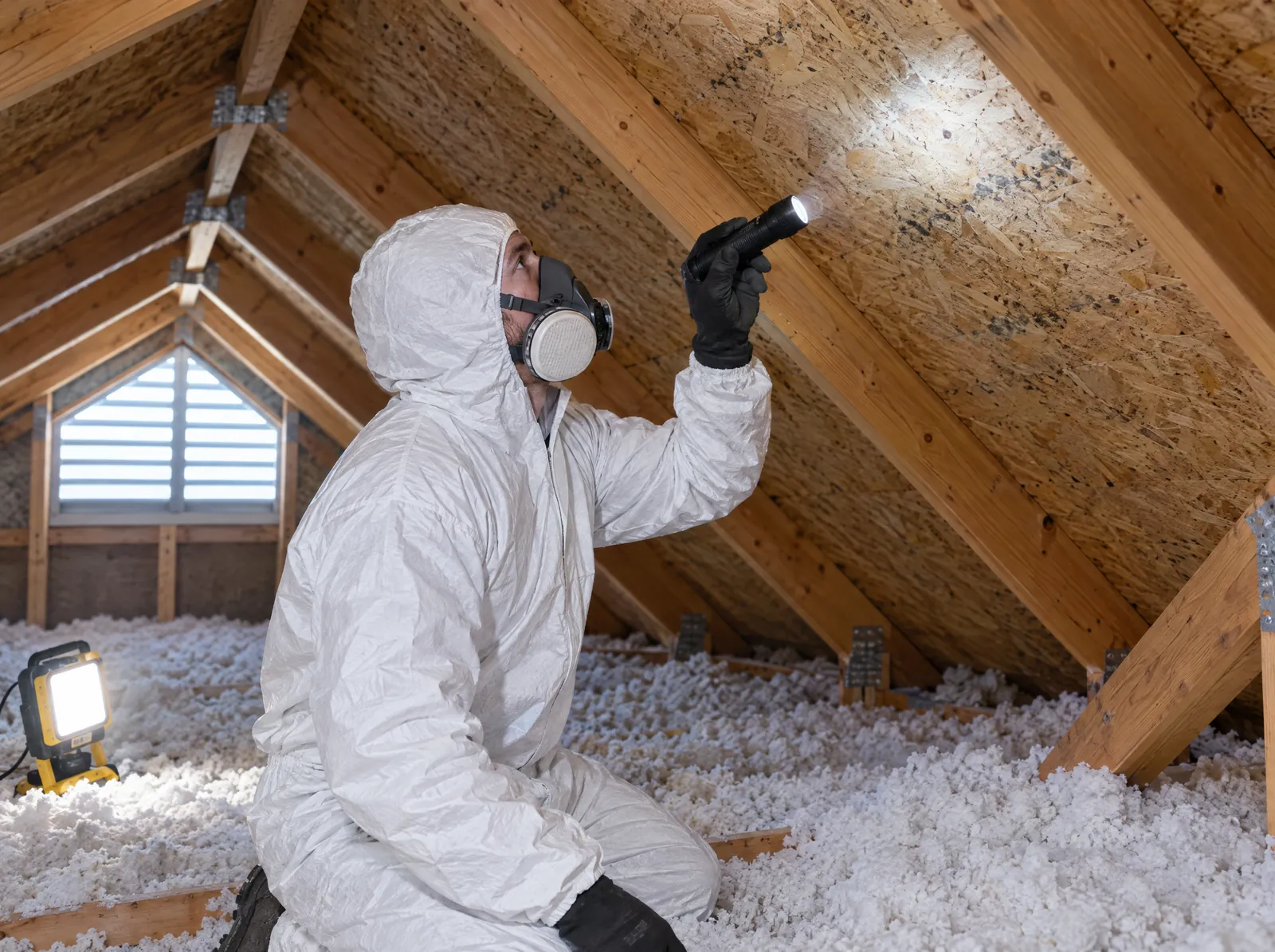
What causes attic mold in Indiana?
Attic mold in Indiana is usually caused by warm, damp air from the house condensing on cold roof sheathing in winter. Bathroom fans that vent into the attic, blocked soffit vents, gaps around lights and attic hatches, and ice dams at the eaves are the common culprits. Removing it means correcting the airflow first, then cleaning and treating the sheathing and framing, and confirming the result with clearance testing.
Why Indiana attics grow mold in the cold months
An attic is supposed to stay close to outdoor temperature and dry. When warm, humid air from showers, cooking and breathing leaks up through the ceiling, it hits roof boards that are well below freezing on a January night. Frost forms, melts on the next sunny day and soaks the wood. Repeat that all winter and you get dark staining across the underside of the roof, often worst on the north side.
Sound familiar?
- A home inspector flagged dark staining on the roof sheathing.
- You found a bathroom fan duct that ends in the attic insulation.
- Ice dams form along your eaves most winters.
- The roofer wants to replace the whole deck and you're not sure you need it.
We do it differently.
| Typical attic mold treatment | AME attic remediation | |
|---|---|---|
| Cause | Often ignored | Airflow and moisture sources traced and corrected |
| Treatment | Spray biocide, then white encapsulant paint | HEPA cleaning and enzyme treatment of the wood |
| Insulation | Left in place under the dust | Assessed, and replaced where contaminated |
| Containment | Rarely used | Attic isolated from the living space during work |
| Proof | Photos of white-painted boards | Lab clearance testing, mycotoxins included |

Why families trust us with their homes
-
Family-owned since 2008
A multigenerational family business. Not a franchise, not a private-equity rollup.
-
Credentialed where it isn't required
Indiana doesn't license mold remediators. We hold IICRC, CMR, CRMI and CCMI credentials anyway.
-
Called on as experts
Attorneys bring us into legal cases involving mold and mycotoxins.
-
Lab results in 24 to 48 hours
Every inspection comes with a written report, color photos and lab results.
- IICRC Certified Firm
- CMR
- CRMI
- CCMI
- BBB A+ Accredited
- NAMRI
- IAQA
- NORMI
- AMMA
- PMII
The AME Clearance Method
The AME Clearance Method, adapted for attics
Attic work happens directly above your bedrooms. These six steps keep the dust up there and the fix permanent.
Talk to a specialist-
Inspect and sample
We check sheathing, rafters, insulation and every vent, and sample the attic and the rooms below, including a mycotoxin panel when the situation calls for it.
-
Trace the airflow
Bath fan ducts, dryer vents, recessed lights, the attic hatch, plumbing stacks and soffit baffles all get checked, because each one can feed moisture into the attic.
-
Seal off the house
We protect the hatch and the rooms below and run HEPA air scrubbers, so dust from the attic stays out of your closets and bedrooms.
-
Clean the wood
Sheathing and rafters are HEPA-vacuumed and cleaned. Contaminated insulation is bagged and removed where testing or condition shows it can't stay.
-
Treat and correct
Wood is treated with a plant-based enzyme product that breaks down mold and mycotoxins. Venting problems are corrected or referred to the right trade.
-
Prove it
Clearance testing confirms the attic and the rooms below are clean. You get the full lab report.
What an attic project includes
- Visual inspection of sheathing, framing, insulation and vents
- Air and dust sampling in the attic and living space
- A written list of every moisture and airflow source we find
- Protection of the attic access and rooms below
- HEPA air scrubbing during the work
- HEPA vacuuming and cleaning of sheathing and rafters
- Insulation removal where it is contaminated
- Enzyme treatment of the wood
- Clearance testing, with lab results in 24 to 48 hours

Proof you can hold in your hands
When we finish, you don't get a handshake and a promise. You get the paperwork your family, your doctor, your insurer or your buyer can rely on.
Inspection report
What we found, where it is coming from, with color photos.
Written remediation plan
Scope, timeline and what will and won't be removed, before work starts.
Clearance lab report
Air, surface and mycotoxin results after the work is done.
A report for your doctor
With your permission, we share results directly with your care team.
Attic mold in Indiana homes, explained
How an attic is supposed to work
A healthy attic is cold in winter and dry year-round. Outside air comes in low through soffit vents, rises along the underside of the roof and leaves through ridge or gable vents. The ceiling below is supposed to be an air barrier, and the insulation on top of it keeps the house’s heat where it belongs. When all of that works, the roof boards stay close to outdoor temperature and nothing condenses on them.
Attic mold almost always means one of those pieces has failed. Air is leaking up from the house, airflow through the attic is blocked, or water is getting in from outside.
Bath fans that vent into the attic
This is one of the most common causes we find in Indiana homes. A bathroom exhaust fan is meant to carry shower steam all the way outdoors through a roof cap or wall vent. Sometimes the duct was never connected, came loose, or was simply aimed at a soffit or left lying in the insulation. Every shower then sends a plume of warm, wet air into the attic. The mold usually shows up in a ring around the spot where the duct ends. Dryer vents and kitchen range hoods can cause the same problem.
Ice dams and freeze-thaw winters
Indiana winters swing above and below freezing again and again. When heat leaks into the attic, it warms the roof deck enough to melt snow, and the water refreezes at the colder overhang to form an ice dam. Water pooled behind the dam can work under the shingles and wet the sheathing and insulation at the eaves. An ice dam is also a signal: the heat that caused it came with moisture, and that moisture is condensing somewhere in the attic. Read more about how Indiana ice dams cause attic mold.
Blocked soffits and air leaks
Blown-in insulation often gets packed into the eaves and blocks the soffit vents, which stops fresh air from entering low. Without that intake, a ridge vent can’t do its job. Meanwhile, recessed lights, attic hatches without weatherstripping, gaps around plumbing stacks and chimney chases let house air leak straight up. Fixing these usually involves baffles, air sealing and sometimes vent changes. We identify them in writing so your roofer or insulation contractor can correct them, and we’ll tell you if a problem needs to be fixed before we clean.
Why painting over attic mold isn’t enough
A common attic treatment is to spray a biocide and then coat the wood in white encapsulating paint. It looks clean in photos. But killing mold doesn’t remove it, and the mycotoxins it produced stay on the wood under the paint. If the venting wasn’t fixed, new growth can form on top. We clean the surface, treat it with an enzyme product designed to break mold and mycotoxins down from US Enzyme, and let clearance testing decide when the job is finished.
We remove mold and mycotoxins from buildings. We don’t diagnose or treat medical conditions. If you have symptoms, please work with a doctor. With your permission, we’re glad to share test results and our plan with them.
Common questions
Have a question that isn't here? Call a specialist
Is attic mold dangerous?
Attic mold usually affects the living space less than basement or crawl space mold, because attic air tends to move up and out. But dust from the attic can reach the house through ceiling gaps, recessed lights and ductwork in the attic. We test below the attic, not just in it, to find out.
Can ice dams cause attic mold?
Yes. Ice dams form when heat escaping into the attic melts snow on the roof and the water refreezes at the cold eaves. The same warm, damp air that creates ice dams causes condensation on the sheathing, and backed-up meltwater can leak in at the eaves.
Do I need a new roof if my attic has mold?
Usually not. Most attic mold is on the surface of the sheathing and can be cleaned and treated. Replacement makes sense when the wood is soft, delaminating or rotted. We'll tell you which situation you have.
How much does attic mold removal cost in Indiana?
It depends on the attic's size, how much insulation must come out and what ventilation fixes are needed. For a local reference point, Angi reports Indianapolis mold remediation averages about $1,999, with most jobs from $1,026 to $3,005. We price your job in writing after testing.
Will homeowners insurance pay for attic mold?
Coverage usually depends on the cause. Mold from a sudden roof leak after a storm may be treated differently from mold caused by years of poor ventilation, which many policies exclude. Check with your agent before work starts.
Can I just spray the attic myself?
You can kill surface mold with a spray, but that won't fix the airflow causing it, and the dead mold and its mycotoxins stay on the wood. If you tackle a small area, wear a respirator and correct the venting first, or it will return next winter.
Why is the mold only on one side of my roof?
The north side of a roof gets the least sun, so it stays colder and dries out more slowly. Condensation lingers there longest, which is why staining is often heavier on the north-facing sheathing.
We're done when the lab says so.
Every remediation ends with clearance testing, and our work is backed by a complete-removal guarantee. We don't close a job on a failed result.
Talk to a specialistTalk to us about your attic
Send us what the inspector or roofer told you. A specialist will call you back and explain your options.
- (833) 772-6653
- info@americanmoldexperts.com
- Open 7 days, 8am to 8pm