
Can Indiana ice dams cause attic mold?
Short answer
Yes. Ice dams cause attic mold in two ways. Meltwater backs up under the shingles and soaks the roof sheathing and insulation at the eaves, and the heat loss that creates the dam usually carries moist house air into the attic, where it condenses on cold wood. Indiana's repeated freeze-thaw cycles make both more likely. Fixing air leaks, insulation and ventilation deals with the cause.
How an ice dam forms
An ice dam needs three things: snow on the roof, a roof deck warm enough to melt it, and eaves cold enough to refreeze the water. The warmth almost always comes from the house. Heat leaks through gaps around recessed lights, attic hatches, plumbing stacks and thin spots in the insulation, and warms the upper part of the roof. Snow melts there, runs down to the overhang, which sits outside the heated space, and freezes again. Each day adds to the ridge of ice, and water pools behind it.
Indiana weather is built for this. Winter temperatures swing above and below freezing again and again, so the melt and refreeze cycle can repeat for weeks. Northern Indiana, around South Bend and Elkhart, also gets lake-effect snow off Lake Michigan, which can leave deep snow on roofs. Central and southern Indiana see less snow, but the freeze-thaw swings still produce ice dams on houses that leak heat.
Two routes from ice dam to mold
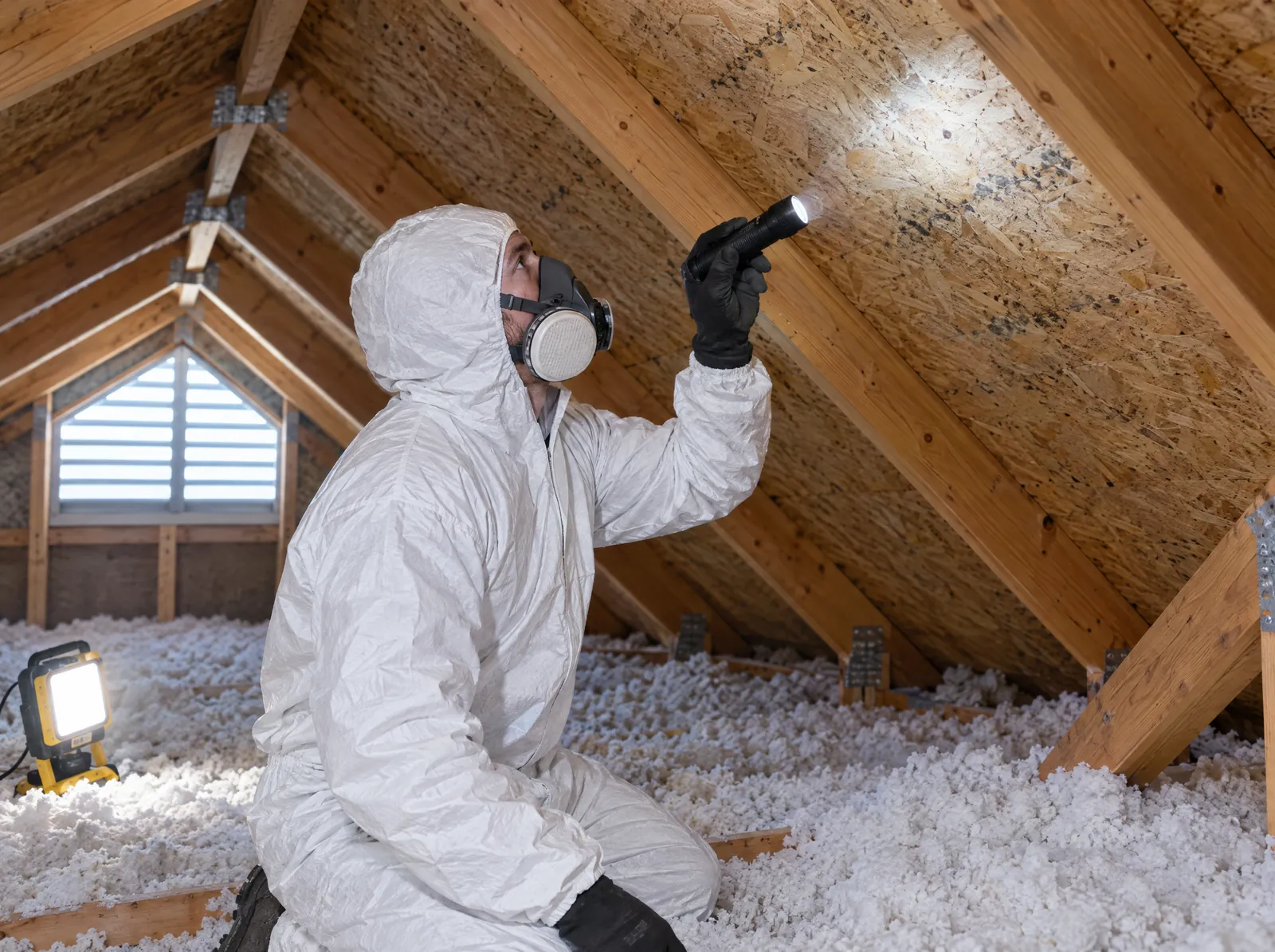
The first route is direct. Water trapped behind the dam works its way under shingles, which are designed to shed water running downhill, not to hold back standing water. It soaks the roof sheathing at the eaves, runs onto the top plate of the wall, and wets the insulation. That area is hard to reach and slow to dry, which gives mold time.
The second route is less obvious and often bigger. The heat escaping into the attic carries moisture with it: air from showers, cooking and breathing. When that warm, damp air reaches the cold underside of the roof deck, it condenses or even forms frost, which melts on the next mild day. So an ice dam is a symptom as well as a cause. If a roof is making ice dams, the attic is probably taking on moisture across a much wider area. Our page on attic mold in Indiana covers the other causes that often travel with this one.
Signs to look for after a thaw
- Water stains or peeling paint on the ceiling near exterior walls, or at the top of an exterior wall.
- Damp, matted or discolored insulation at the eaves.
- Dark staining on the roof sheathing just above the soffits.
- Frost on roofing nail tips in the attic on cold mornings, or rusty drips below them.
- Icicles that are heaviest in the same spots every winter.
- A musty smell in upstairs closets that share a wall with the eaves.
What helps, and what doesn’t
The lasting fix is keeping heat and moisture out of the attic. That usually means air sealing the ceiling, adding insulation where it’s thin, installing baffles so insulation doesn’t block the soffit vents, and making sure bath fans vent outdoors. Heat cables along the eaves can reduce dams on a problem stretch of roof, but they treat the ice, not the heat loss behind it. Chipping ice off with a hammer or chisel risks damaging the shingles. A roof rake used from the ground to pull snow off the lower few feet is safer.
Moisture control inside the house matters too. A whole-house humidifier set too high in January puts more water into the air that’s leaking into the attic. Our page on how humid an Indiana home should be gives the winter target.
When the mold is already there
Once the attic dries out in spring, mold on the sheathing stops growing, but it doesn’t go away. Dead growth and the mycotoxins some molds leave behind stay on the wood. Painting over it with a sealer hides it without removing it. We clean the affected sheathing and framing, treat it with plant-based enzyme products designed to break down mold and mycotoxins, and confirm the result with clearance testing. We also put the air leaks and venting problems in writing so your roofer or insulation contractor can fix what caused the dams.
We remove mold and mycotoxins from buildings. We don’t diagnose or treat medical conditions. If you have symptoms, please work with a doctor.
We're done when the lab says so.
Every remediation ends with clearance testing, and our work is backed by a complete-removal guarantee. We don't close a job on a failed result.
Talk to a specialistSeeing stains after the thaw?
An attic inspection shows whether the wood is wet, moldy or both, and why. Tell us what you're seeing, and a specialist from our Avon office will call you back.
- (833) 772-6653
- info@americanmoldexperts.com
- Open 7 days, 8am to 8pm