
Can mold grow back after remediation?
Short answer
Yes, it can. Remediation removes existing growth, but mold spores are always in outdoor air and settle indoors, so mold can grow back after remediation whenever a surface stays damp long enough. Regrowth usually means one of two things: the moisture source was never fully corrected, or growth was missed in a hidden area. Clearance testing and dry materials at the end lower the odds.
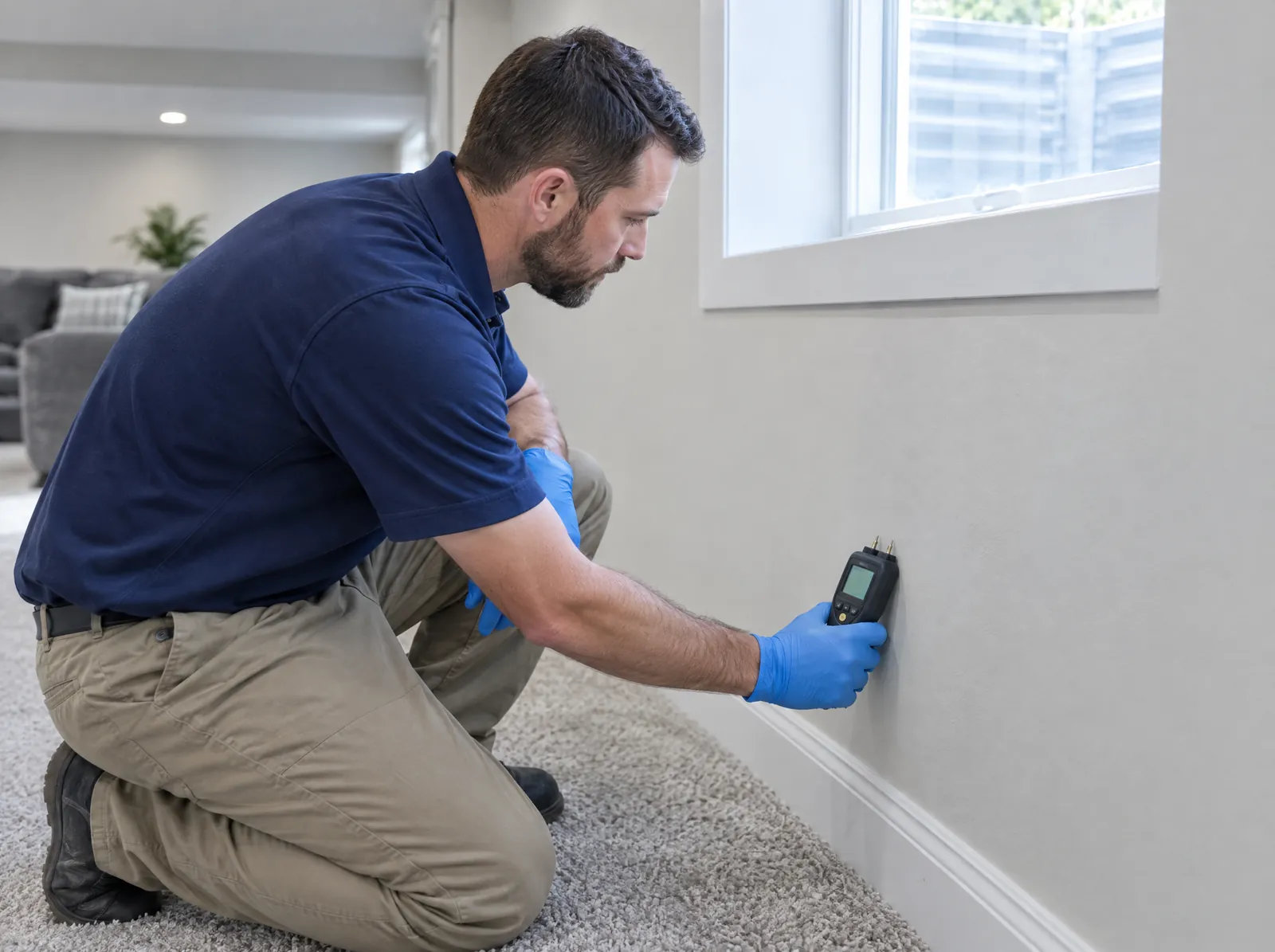
Remediation resets the house. It doesn’t make it mold-proof
No company can leave a home with zero mold spores. They drift in through doors, windows and on clothing every day, and they are part of normal outdoor air. What remediation does is remove the growth that was there, clean up the spores and fragments it shed, and bring indoor levels back in line with what you would expect in a healthy building. After that, the house behaves like any other: keep it dry and mold has nothing to work with. Let a surface stay wet and growth can start again.
That is why the question to ask isn’t “did they kill everything?” but “is anything still wet, and did they reach all of it?”
New problem or unfinished job?
The timing and location of regrowth usually tell you which one you are dealing with.
| What you notice | More likely cause |
|---|---|
| Growth in the exact area that was treated, within weeks or a few months | Moisture source not fully fixed, or material with growth inside it was cleaned instead of removed |
| A musty smell that never really left | A hidden area outside the work zone, such as an adjoining wall cavity, subfloor or the HVAC system |
| Growth in a new room, long after the job | A new leak, a humidity problem or a failed repair |
| Growth after a storm or heavy rain | Water getting in from outside: grading, gutters, flashing or a foundation crack |
| Spotting on surfaces all over the house | Indoor humidity running high, or dust from the job that was never cleaned from the rest of the home |
Returning mold is not always the remediator’s fault. A plumber’s repair can fail, a new roof leak can appear, and a basement can take on water in a wet spring. But regrowth in the same spot soon after the work deserves a close look at what was done.
What to check before you call anyone
- Find your paperwork. The scope of work, the moisture readings and the clearance results should show what was removed and what the conditions were at the end.
- Check humidity. A simple monitor tells you whether indoor air is staying below the 60 percent the EPA recommends, ideally 30 to 50 percent.
- Look for water. Stains, soft spots, condensation on pipes or windows, and damp carpet near the regrowth are all clues.
- Photograph it and leave it alone. Don’t scrub or spray it before someone looks. Disturbing it spreads spores and destroys the evidence of where it started.
What to ask the company that did the work
A reputable remediator will want to know. Ask whether they found and confirmed the moisture source, whether the areas that regrew were inside their scope, and what their guarantee or warranty covers. Terms differ widely between companies, so read the written terms rather than relying on what was said at the sale. If the original job had no clearance testing, that is often where the trouble started. Our page on post-remediation verification explains what that testing should include.
If you have lost confidence in the first company, an independent assessment can separate a new moisture problem from an incomplete job. We do this often as a second opinion after failed remediation, and testing settled dust for mycotoxins after remediation can show whether the cleanup reached the fine dust as well as the visible growth.
Keeping it from coming back
- Run bath and kitchen exhaust fans during and after use, vented outdoors.
- Keep gutters clear and downspouts discharging well away from the foundation.
- Use a dehumidifier in basements through humid months and empty or drain it reliably.
- Fix drips and slow leaks the week you find them, not the season.
- Have the HVAC coil and drain pan checked as part of routine service.
None of these steps is complicated. Together they remove the one thing mold needs to return.
We remove mold and mycotoxins from buildings. We don’t diagnose or treat medical conditions. If you or anyone in your home has symptoms, please talk with a doctor. With your permission, we’re glad to share test results with them.
We're done when the lab says so.
Every remediation ends with clearance testing, and our work is backed by a complete-removal guarantee. We don't close a job on a failed result.
Talk to a specialistMold back after a remediation job?
Tell us when the work was done, what was removed and where the growth has returned. We'll help you work out whether it's new moisture or a missed area, and what testing would settle it.
- (833) 772-6653
- info@americanmoldexperts.com
- Open 7 days, 8am to 8pm