
How do I know mold remediation was successful?
Short answer
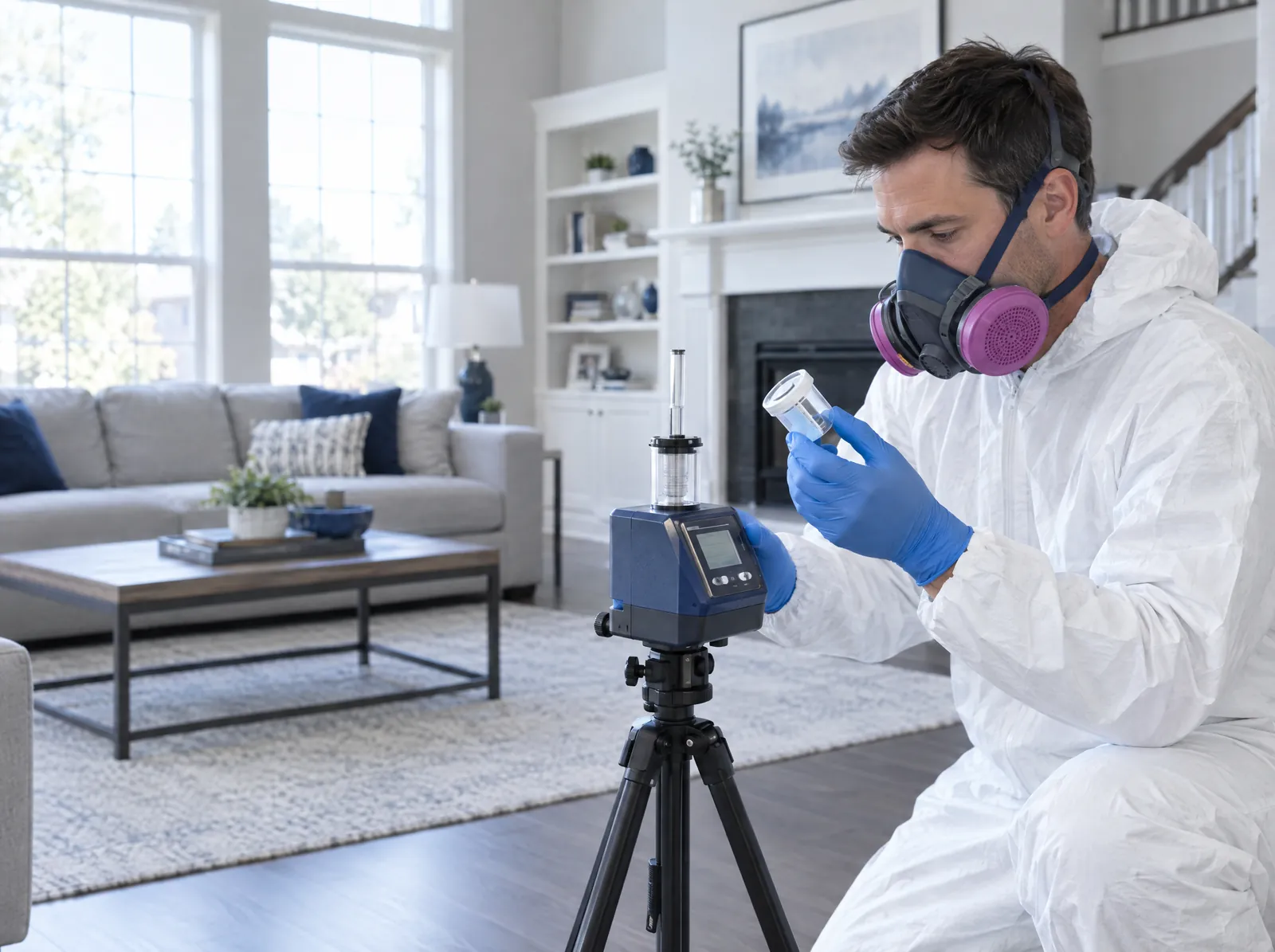
Ask for the clearance results. A successful job leaves no visible growth, debris or dust in the work area, materials that read dry on a moisture meter, air and surface samples comparable to outdoor air and unaffected rooms, and a moisture source that has been repaired. If no one tested after the work, there's no way to know. You're taking it on faith.
The walk-through you can do yourself
Before containment comes down, ask to see the work area. You don’t need training to spot most problems:
- No visible mold on framing, subfloor, concrete or remaining drywall
- No dust or debris on horizontal surfaces, including the tops of studs and window sills
- No musty smell inside the work area
- Plastic barriers still sealed, with no tears or loose seams
- The leak, vent or drainage problem that caused the mold visibly repaired
- Moisture readings shown to you, not only described
If you can’t be there in person, ask for dated photos of each item on this list, taken the same day clearance samples are collected. A company that does this work properly will already have them.
A walk-through is necessary but not enough. Fine dust and spores are invisible, which is why the lab result matters.
What the paperwork should show
At the end of a properly documented job, you should have:
| Document | What to look for |
|---|---|
| Pre-remediation test results | A baseline showing what was growing and where |
| Written scope | What was removed, what was cleaned, and how containment was set up |
| Moisture readings | Final readings showing materials are dry |
| Clearance lab report | Air and surface samples from the work area, plus an outdoor sample and an unaffected room for comparison |
| Photos | Before, during and after, especially of anything that was opened up and closed again |
| Mycotoxin results, when used | Settled-dust results for projects where toxins were a concern |
Reading a lab report takes a little practice. The comparisons matter more than any single number. Our answer on what mold spore counts mean goes through one line by line, and post-remediation verification explains how passing is judged.
Red flags
- No testing after the work, or testing done only after containment was removed
- A summary letter saying the job “passed” without the underlying lab report
- No explanation of what caused the mold or how it was fixed
- Drywall closed up before anyone confirmed the cavity was clean and dry
- Fogging or spraying as the only treatment, with nothing removed or HEPA cleaned
- A musty smell that returns once the house is closed up again
If you recognize several of these, the job may need a second look. Our page on second opinions after a failed remediation explains how that works.
The months after
Clearance testing tells you the work area was clean on the day it was sampled. The following months tell you whether the moisture fix held. Watch the repaired area after heavy rain, in humid summer weeks and when the heat first comes on. A humidity monitor in basements and bathrooms is inexpensive and catches drift early. Stains, odors or new spots near the old work area are worth reporting right away.
For households with someone sensitive to mold, clearance on spores isn’t the whole picture. Toxins can remain in settled dust after mold is gone, and our answer on mycotoxins after remediation explains when dust testing is worth adding. Some families also choose a whole-home dust test a few months later to see how the house looks as a whole.
We remove mold and mycotoxins from buildings. We don’t diagnose or treat medical conditions. If you or anyone in your home has symptoms, please talk with a doctor. With your permission, we’re glad to share test results with them.
We're done when the lab says so.
Every remediation ends with clearance testing, and our work is backed by a complete-removal guarantee. We don't close a job on a failed result.
Talk to a specialistNot sure the last job worked?
We can test a home after someone else's remediation and walk you through the results. Tell us what was done and what you're noticing.
- (833) 772-6653
- info@americanmoldexperts.com
- Open 7 days, 8am to 8pm