
Nationwide projects
A second opinion after a failed mold remediation
You paid once and the house still didn't pass. Fresh testing shows what was missed, and a plan fixes it.
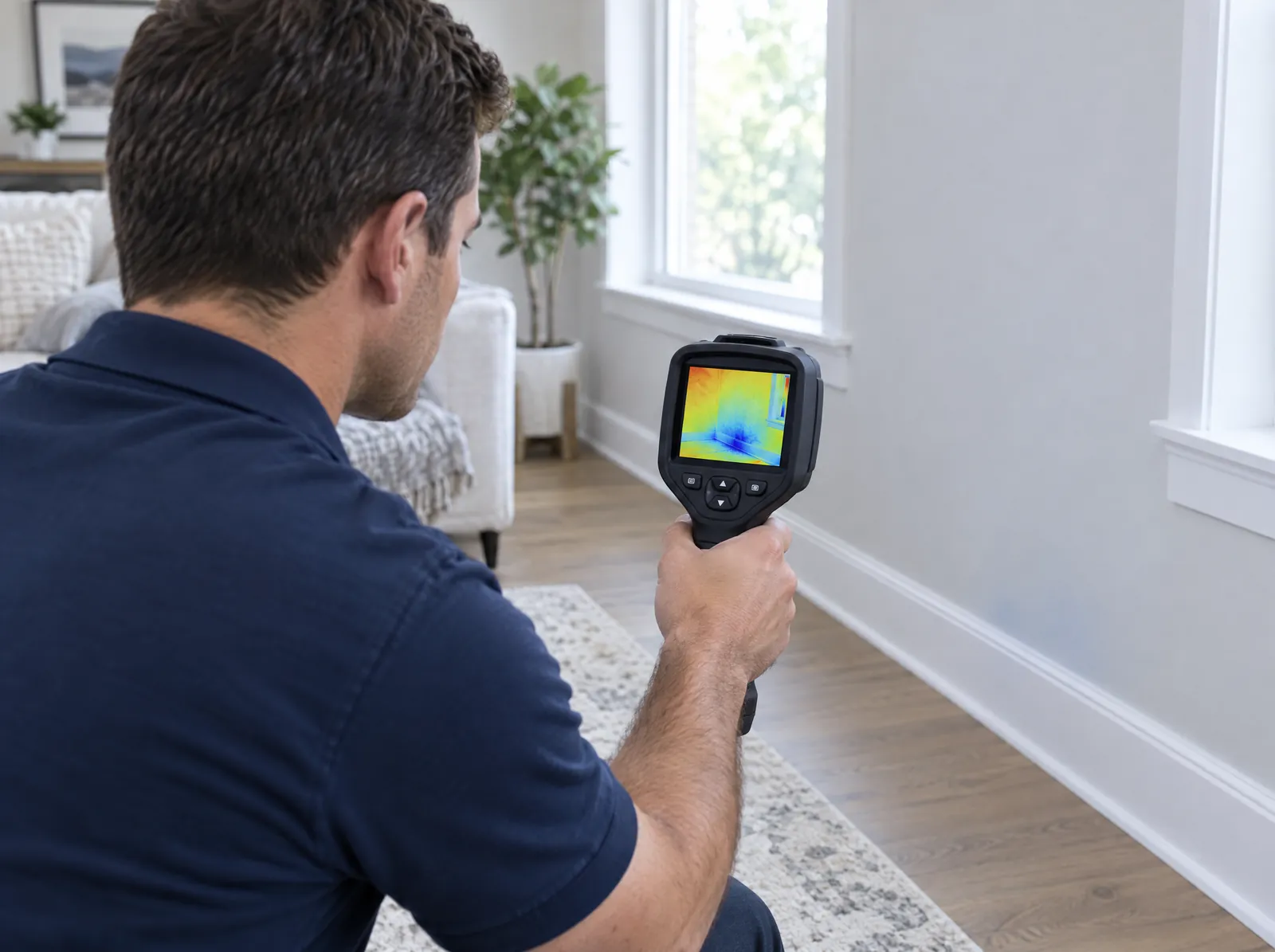
What does a second opinion after a failed mold remediation involve?
A second opinion after a failed mold remediation starts with fresh testing and a new moisture inspection, not with the old paperwork alone. The goal is to find what was missed: a second moisture source, the HVAC system, dust in rooms outside the original scope, mycotoxins nobody tested for, or belongings that went back in uncleaned. From there, a written corrective scope targets the gap, and clearance testing confirms it's closed.
Why remediations fail
A failed remediation is rarely about one bad day on the job. It usually comes from a scope that was too narrow from the start: the moldy room was treated, but the moisture source wasn't found, the ductwork wasn't touched, or clearance measured something different from what the family's doctor was watching.
That's frustrating, and it's also good news in a way. A specific gap can be found and closed. Starting over from nothing is rarely necessary.
Sound familiar?
- The job passed the contractor's clearance but failed your doctor's dust test.
- A musty smell or visible growth came back months later.
- The original company says the job is done and won't look again.
- You don't want to pay for the same mistake twice.
We do it differently.
| Doing the same job again | A second opinion first | |
|---|---|---|
| Starting point | The original scope | Fresh testing and inspection |
| Moisture | Assumed fixed | Checked again, including second sources |
| Scope | Repeats the same area | Targets the specific gap |
| Mycotoxins | Often still untested | Tested before and after |
| Finish line | The same clearance that passed before | A target agreed with you in writing |

Why families trust us with their homes
-
Family-owned since 2008
A multigenerational family business. Not a franchise, not a private-equity rollup.
-
Credentialed where it isn't required
Indiana doesn't license mold remediators. We hold IICRC, CMR, CRMI and CCMI credentials anyway.
-
Called on as experts
Attorneys bring us into legal cases involving mold and mycotoxins.
-
Lab results in 24 to 48 hours
Every inspection comes with a written report, color photos and lab results.
- IICRC Certified Firm
- CMR
- CRMI
- CCMI
- BBB A+ Accredited
- NAMRI
- IAQA
- NORMI
- AMMA
- PMII
The AME Clearance Method
How we approach a failed remediation
The first half of the work is diagnosis. We don't write a corrective scope until we know why the first one fell short.
Talk to a specialist-
Review the history
The original scope, invoices, photos and lab reports tell us what was done and where. We use them for context, then test for ourselves.
-
Inspect for moisture again
Moisture meters and thermal imaging throughout the house, including areas outside the original work, to find any source that was missed or has returned.
-
Retest the whole house
Dust DNA testing, a mycotoxin panel and air sampling, room by room where it matters, to see where contamination remains.
-
Name the gap in writing
A plain-language finding of what was missed and why, whether that's a source, the HVAC, untouched rooms, toxins or contents.
-
Write a corrective scope
Only the work needed to close the gap, with containment, cleaning, treatment and clearance targets spelled out and priced before anything starts.
-
Correct and clear
We carry out the corrective scope, then run clearance testing against the agreed target and give you the complete lab reports.
What a second-opinion project includes
- A review of the original scope and reports
- A new whole-house moisture inspection
- Fresh air, dust DNA and mycotoxin testing
- A written finding of what was missed
- A corrective scope and price before work begins
- Containment and HEPA cleaning where needed
- HVAC cleaning if testing points to it
- Clearance testing with complete lab reports

Proof you can hold in your hands
When we finish, you don't get a handshake and a promise. You get the paperwork your family, your doctor, your insurer or your buyer can rely on.
Inspection report
What we found, where it is coming from, with color photos.
Written remediation plan
Scope, timeline and what will and won't be removed, before work starts.
Clearance lab report
Air, surface and mycotoxin results after the work is done.
A report for your doctor
With your permission, we share results directly with your care team.
Getting a failed remediation back on track
The usual reasons, and what fixes them
When we reassess a home after a remediation that didn’t hold, the cause almost always falls into one of a few categories. Fresh testing usually points to which one:
| What went wrong | What testing may show | What fixing it involves |
|---|---|---|
| The moisture source wasn’t fixed | Wet readings near the original area, new growth | Correcting the source, then remediating what regrew |
| A second source was missed | Contamination in a different part of the house | Inspecting and remediating the second area |
| The HVAC system wasn’t cleaned | Elevated results spread across many rooms | Cleaning the air handler, coil and ducts, then the rooms they serve |
| Cleaning stopped at the moldy room | Good results in the work area, poor results elsewhere | HEPA cleaning in the rooms outside the original scope |
| Mycotoxins were never addressed | Mold numbers improved, toxins still present | Enzyme treatment and detailed cleaning, then a mycotoxin panel |
| Belongings went back in uncleaned | Results that worsen after move-back | Cleaning contents and re-cleaning the rooms they returned to |
“It passed clearance” and still failed
This is one of the most common stories we hear. The contractor ran an air test, the spore counts looked normal, and the job was signed off. Then a dust DNA test or mycotoxin panel, often the one the family’s doctor asked for, came back poor. Both results can be accurate. Air tests measure what’s floating at that moment. Dust tests measure what has settled over time. A home can pass one and fail the other. Our page on how to know if mold remediation was successful explains the difference, and mycotoxins after remediation covers why toxins so often get left behind.
What to gather before you call
- The original contract and written scope
- Invoices showing what was actually billed
- All lab reports, before and after
- Photos from during the work, if you have them
- Any warranty or guarantee terms
- Records of moisture repairs, such as roofing or plumbing
- New test results, if you’ve had any since
These help us understand the history. We still run our own testing before writing a corrective scope, because we need a baseline we can stand behind at clearance.
Dealing with the original company
Before you move on, read your contract. Some include follow-up visits or warranty terms, and it’s reasonable to ask the original company to honor them. Put your concern in writing, attach the new results and keep copies of everything. If they won’t respond, or you no longer trust the work, a second opinion gives you a clear picture either way. If the situation becomes a legal dispute, talk with an attorney. Attorneys do bring us into legal cases involving mold and mycotoxins, and you can read about that work on our expert witness page.
Setting a finish line that holds
The best protection against a second failure is agreeing on the target before corrective work begins. If someone in the household is working with a doctor, ask which test and result they want to see, and make sure clearance measures exactly that. We put the target in the written scope so there’s no question later about what “done” means.
We remove mold and mycotoxins from buildings. We don’t diagnose or treat medical conditions, and nothing on this page is medical advice. Please make health decisions, including whether and when to return to a home, with your doctor. With your permission, we’re glad to share test results and our plan with them.
Common questions
Have a question that isn't here? Call a specialist
How do I know if my mold remediation failed?
The clearest sign is a test result: a follow-up dust, air or mycotoxin test that doesn't meet the target. Returning musty smells, new visible growth or a new water stain are also reasons to have the house checked.
Why do mold remediations fail?
The most common reasons are an unfixed or second moisture source, an HVAC system that wasn't cleaned, dust left in rooms outside the scope, mycotoxins that were never tested for, and belongings returned before they were cleaned.
Should I call the original company back first?
It's often worth it. Read your contract for any follow-up or warranty terms, and put your concern and the new results in writing. If they won't address it, a second opinion shows what's needed.
Will you use the previous company's test results?
We read them for history, since they show what was found and where. We run our own testing to plan the corrective work and to set a baseline for clearance.
Does a failed remediation mean starting over?
Usually not. Most failures come from a specific gap, and the corrective scope targets that gap. Areas that are genuinely clean don't need to be redone.
Can you help if there's a legal dispute?
Attorneys do bring us into legal cases involving mold and mycotoxins. If you're considering legal action, talk with an attorney first, and keep all your records in one place.
Do you travel for second-opinion projects?
Yes. We have local crews in Indiana and Southwest Florida and travel for projects anywhere in the United States, including assessments and corrective work after failed remediations.
We're done when the lab says so.
Every remediation ends with clearance testing, and our work is backed by a complete-removal guarantee. We don't close a job on a failed result.
Talk to a specialistGet a second opinion
Tell us what was done, what the testing shows now and where the home is. A specialist will call you back to talk about next steps.
- (833) 772-6653
- info@americanmoldexperts.com
- Open 7 days, 8am to 8pm