
Can mold grow on concrete?
Short answer
Yes, mold can grow on concrete, though not on the concrete itself. Concrete isn't food for mold, but the dust, dirt, paint, adhesives and organic films that settle on it are, and concrete wicks and holds moisture from the ground. Basement walls, slab floors and foundation surfaces that stay damp can support growth. The fix is cleaning the surface and dealing with the moisture moving through it.
Why damp concrete supports mold
Concrete is mostly cement, sand and stone, none of which mold can eat. But concrete is porous. Water from the soil moves through foundation walls and slabs by capillary action, and humid summer air condenses on cool concrete surfaces. A basement wall can feel dry to the touch and still carry enough moisture at the surface for growth.
Add the thin layer of dust, soil, skin flakes, spider webs, paint or old carpet adhesive that every basement collects, and mold has both the food and the water it needs.
Where it shows up
- The lower few feet of foundation walls, where soil moisture is highest
- Behind stored boxes, shelving and furniture pushed against walls, where air doesn’t move
- On slab floors under rugs, carpet or plastic totes
- Around floor cracks, the cove joint where wall meets floor, and sump pits
- On the back of drywall or framing installed directly against concrete in finished basements
That last spot is often the bigger problem. In a finished basement, the concrete may be clean on the face you can see while the drywall and bottom plate against it are not. Our knowledge page on basement mold remediation covers finished spaces in detail.
Mold or efflorescence?
White deposits on concrete are often efflorescence, mineral salts left behind as water moves through the concrete and evaporates. It isn’t mold, but it tells you the same thing: water is coming through the wall.
| Check | Efflorescence | Mold |
|---|---|---|
| Texture | Crystalline, powdery or crusty | Fuzzy, cottony or slimy |
| Drop of water | Dissolves | Doesn’t dissolve |
| Crushed between gloved fingers | Turns to powder | Smears |
| Color | White or gray | White, green, gray, black and others |
| Smell | None | Often musty |
When you are not sure, a surface sample sent to a lab settles it.
Cleaning mold off concrete
For a small area on bare concrete, the EPA’s approach for hard surfaces works: wear an N95 respirator, gloves and goggles, scrub with detergent and water and a stiff brush, wipe up the residue, and dry the area thoroughly with fans and a dehumidifier. Avoid soaking the concrete, since it will hold the water. Don’t pressure wash indoors, which drives spores into the air and water into the wall.
Cleaning only lasts if the moisture is dealt with. Keeping basement humidity in check with a dehumidifier, clearing gutters, extending downspouts and correcting grading that slopes toward the house all reduce the water reaching the concrete. Sealers and waterproof coatings can help on the right wall, but applied over mold or over active seepage they tend to peel, the same way paint does. In the Midwest, clay soils and wet springs make this a common problem; our answer on why Indiana basements get moldy explains the local pattern.
When concrete mold needs more than a scrub brush
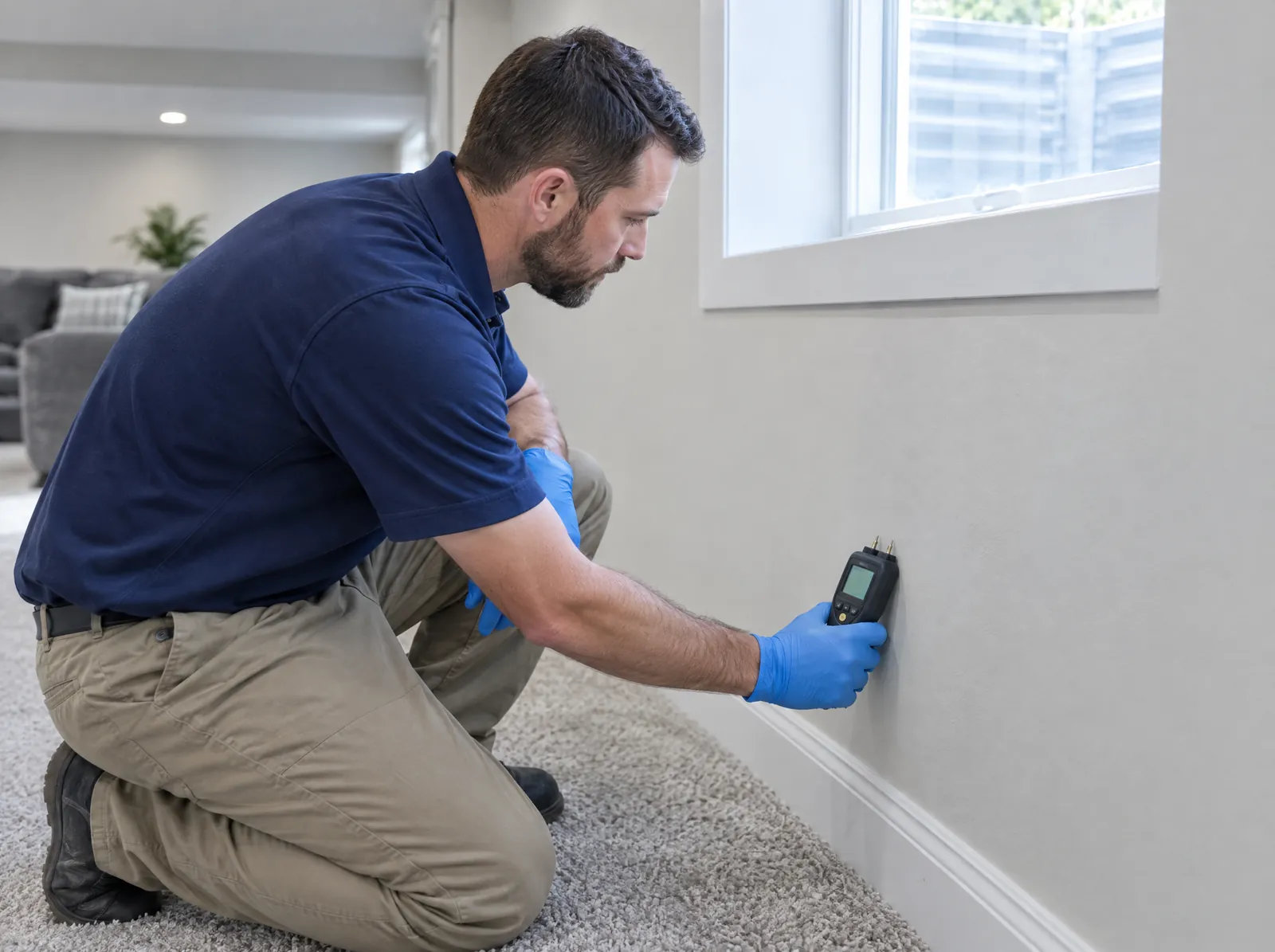
Surface growth on bare concrete is rarely the whole story in a basement that stays damp. Call for an assessment when growth covers a large area, when the space is finished and the smell is stronger than what you can see, when the basement has flooded, or when mold returns within a season of cleaning. Those signs usually point to wet drywall, framing, carpet or stored belongings nearby, or to water moving through the foundation that a dehumidifier alone won’t keep up with. Moisture readings along the base of the walls and a look at the sump, gutters and grading usually show where it is coming from. If you plan to finish a basement, that is also the moment to confirm the concrete stays dry through a wet season before any framing goes up.
We're done when the lab says so.
Every remediation ends with clearance testing, and our work is backed by a complete-removal guarantee. We don't close a job on a failed result.
Talk to a specialistGrowth on your basement walls or floor?
Tell us where it is and whether the space is finished. A specialist will help you work out whether it's mold, efflorescence or a moisture problem that needs attention first.
- (833) 772-6653
- info@americanmoldexperts.com
- Open 7 days, 8am to 8pm