
Can mold grow in carpet?
Short answer
Yes. Mold can grow in carpet, usually in the backing and pad rather than on the fibers you walk on, so it often goes unseen. Carpet traps dust, skin cells and moisture, which gives mold food and water. Carpet that gets wet and isn't dried within 24 to 48 hours, or sits on damp concrete, is at the highest risk and often needs to be removed rather than cleaned.
Why carpet is a good home for mold
Carpet is a filter you walk on. It collects dust, skin flakes, pet dander, food crumbs and soil, all of which mold can feed on. Underneath the fibers are a backing and usually a foam or fiber pad, both of which hold water well and dry slowly. When moisture reaches that layer, growth can start on the underside long before anything shows on top.
The moisture can come from obvious events, like a leak, overflow or flood, or from slow ones: basement humidity, water vapor rising through a concrete slab, a pet accident in the same spot, or wet carpet cleaning that wasn’t dried properly.
Signs of mold in carpet
- A musty smell that is stronger near the floor, or when the room has been closed up
- Discoloration or dark patches, often near walls, doors or exterior corners
- Carpet that feels damp or cool to the touch
- Staining or spotting on the back of the carpet or on the pad when a corner is lifted
- Mold on the tack strip, baseboards or bottom of the drywall along the edge
If you pull back a corner to check, do it gently, wear an N95, and put it back rather than tearing it up. Disturbing moldy carpet releases a lot of dust.
Clean it or replace it?
| Situation | Usual outcome |
|---|---|
| Clean-water spill dried quickly with extraction and fans | Often salvageable |
| Wet longer than about 24 to 48 hours | Pad usually replaced; carpet often replaced |
| Visible growth on the backing or pad | Removed |
| Flooding from outside, sewage or a backed-up drain | Removed and discarded |
| Carpet on a basement slab that stays damp | Often better replaced with a hard, moisture-tolerant floor |
EPA guidance for water-damaged materials treats carpet that can’t be dried within 24 to 48 hours as a likely candidate for removal, and floodwater guidance from the CDC and EPA is stricter still. Shampooing, steam cleaning and spraying don’t reach growth in the pad, and the added moisture can make it worse. Our knowledge page on basement mold discusses flooring choices for below-grade rooms.
Carpet and the dust it holds
Even when carpet isn’t moldy, it can hold spores and fragments that settled from mold elsewhere in the house. A regular vacuum can put some of that back into the air, while a HEPA vacuum captures more of it. For families concerned about mold-related illness, carpet is one of the reservoirs we pay close attention to, because dust in carpet can also carry mycotoxins. Our page on mycotoxins in dust explains why that settled dust matters.
If you’re replacing moldy carpet
- Fix the moisture source and confirm the subfloor or slab is dry before anything new goes down.
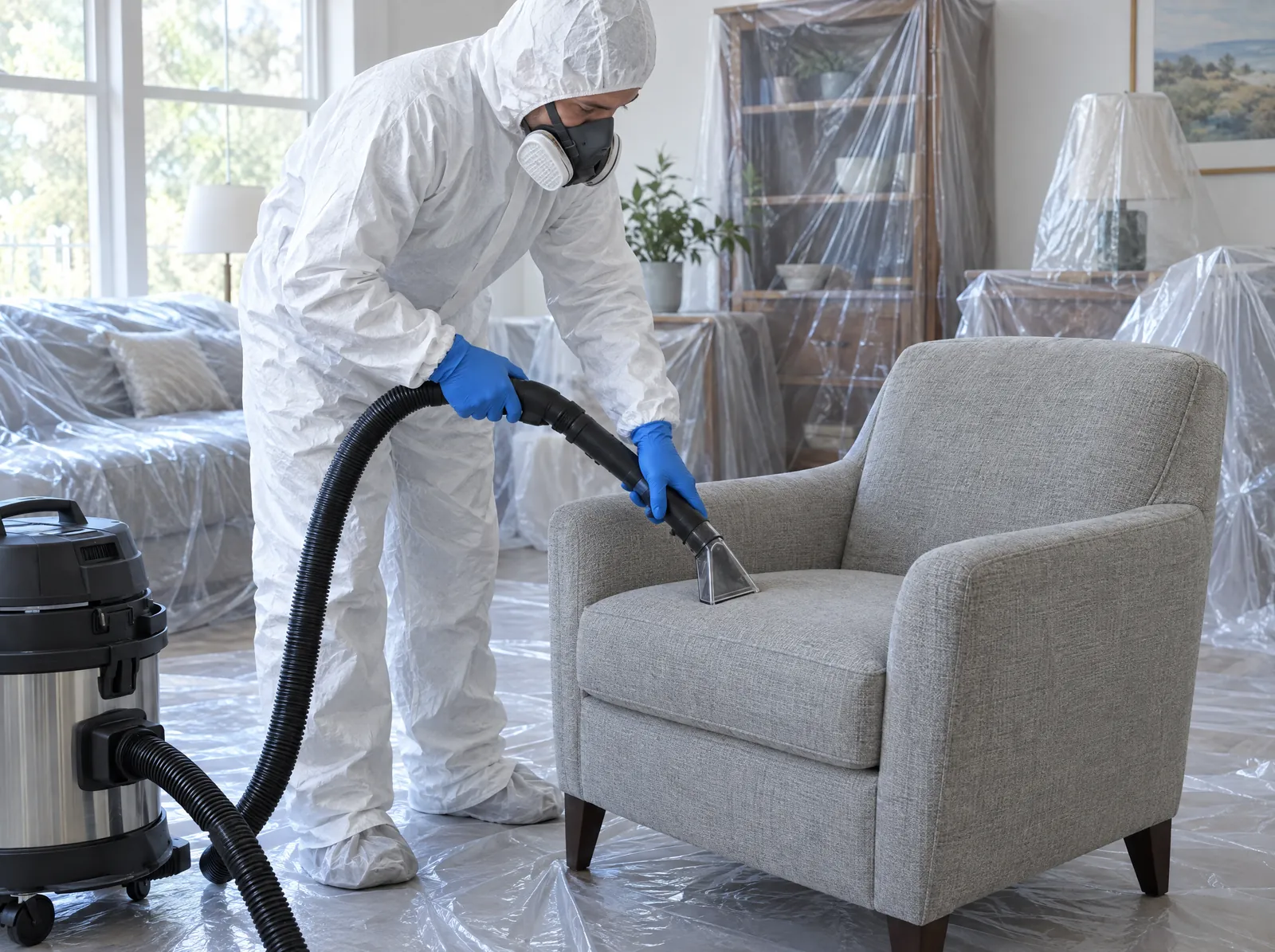
- Remove the carpet, pad and tack strip with the area isolated, and bag them before carrying them through the house.
- HEPA vacuum and clean the subfloor, and check the bottom of the walls and baseboards.
- Clean or replace other items in the room that collected dust.
- In below-grade rooms, consider a flooring that tolerates moisture.
Larger areas, carpet over a finished basement slab, or carpet in a home where someone is sensitive to mold are best handled with containment and testing.
We remove mold and mycotoxins from buildings. We don’t diagnose or treat medical conditions. If you or anyone in your home has symptoms, please talk with a doctor. With your permission, we’re glad to share test results with them.
We're done when the lab says so.
Every remediation ends with clearance testing, and our work is backed by a complete-removal guarantee. We don't close a job on a failed result.
Talk to a specialistMusty carpet you can't explain?
Tell us where the carpet is, whether it has been wet, and what's under it. A specialist will explain how to find out what's going on without pulling up the whole floor.
- (833) 772-6653
- info@americanmoldexperts.com
- Open 7 days, 8am to 8pm