
For practice administrators and facility managers
Healthcare facility mold remediation
Planned with your infection prevention team, scheduled around patients, and cleared by the lab before rooms return to use.
How is healthcare facility mold remediation different?
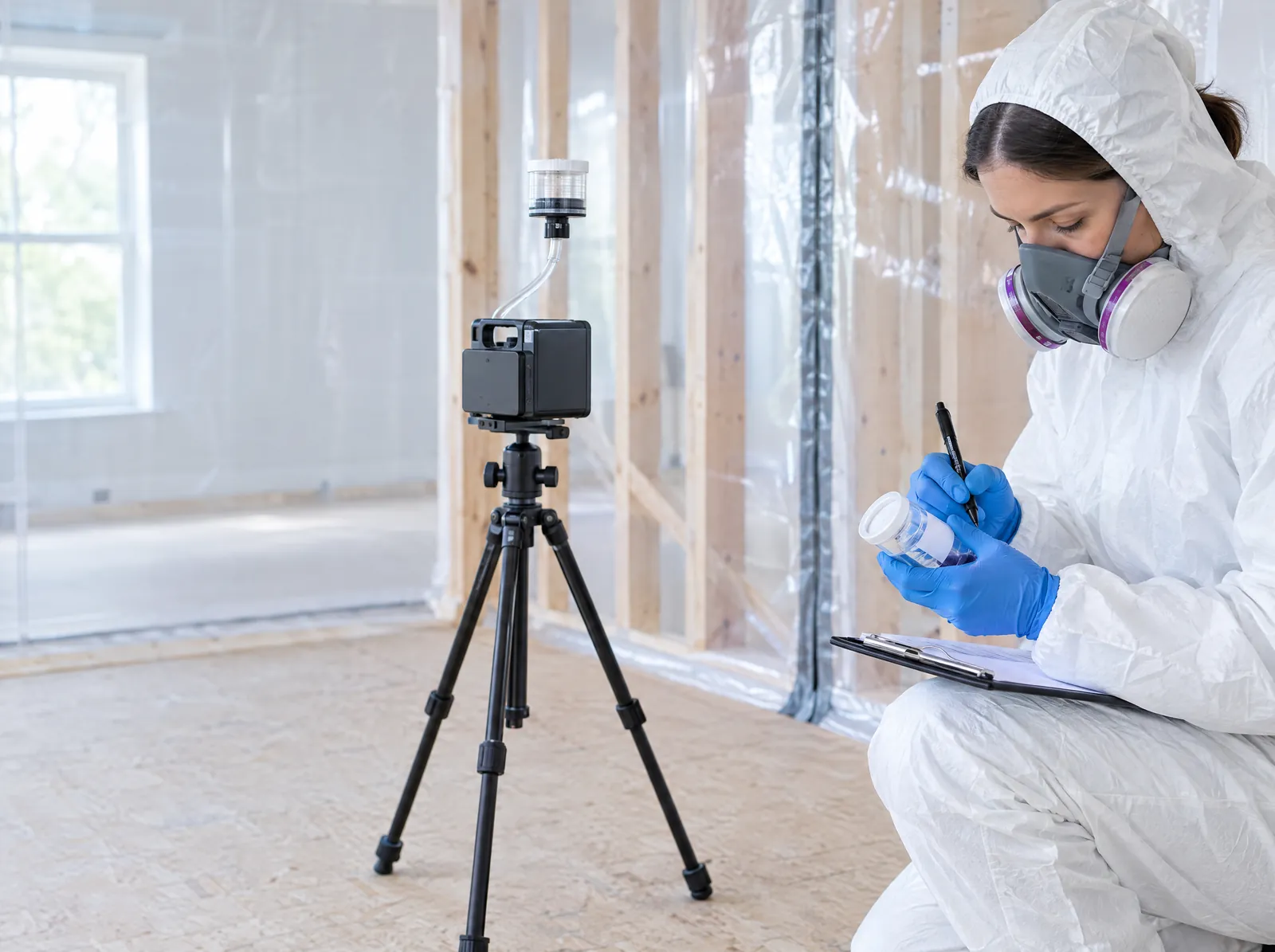
Healthcare facility mold remediation removes mold from clinics, medical and dental offices, therapy practices and senior living communities under tighter controls than an ordinary commercial job. The facility's infection prevention team usually sets the precautions through an infection control risk assessment, and the remediation plan is built to match it. Work is scheduled around patient hours, contained with negative air and HVAC isolation, and cleared by testing before any room returns to patient use.
Your patients can't always wait, and some can't be exposed
A healthcare setting adds two constraints most buildings don't have. The people inside may be older, recovering or medically fragile, so the tolerance for dust escaping a work area is lower. And the facility usually has its own rules: an infection prevention lead, a documented risk assessment for construction and renovation, and administrators who answer to surveyors, owners or a parent organization. A contractor who shows up with a standard commercial plan and no interest in those rules creates more work for your staff, not less.
Sound familiar?
- A leak reached an exam room, a sterilization area or a resident hallway.
- Your infection prevention lead needs to approve the precautions before work starts.
- Closing rooms means rescheduling patients or moving residents.
- You'll need records showing what was done and how the space was cleared.
We do it differently.
| A standard commercial crew | AME healthcare remediation | |
|---|---|---|
| Precautions | The contractor's default | Matched to the facility's infection control risk assessment |
| Approval | Owner signs the bid | Infection prevention and facilities review the plan |
| Scheduling | Business hours | Built around patient hours, procedures and resident routines |
| Containment | Plastic and a fan | Sealed barriers, HEPA negative air, HVAC isolation and sticky mats |
| Return to use | Visual check | Clearance results reviewed with your team before patients return |

Why families trust us with their homes
-
Family-owned since 2008
A multigenerational family business. Not a franchise, not a private-equity rollup.
-
Credentialed where it isn't required
Indiana doesn't license mold remediators. We hold IICRC, CMR, CRMI and CCMI credentials anyway.
-
Called on as experts
Attorneys bring us into legal cases involving mold and mycotoxins.
-
Lab results in 24 to 48 hours
Every inspection comes with a written report, color photos and lab results.
- IICRC Certified Firm
- CMR
- CRMI
- CCMI
- BBB A+ Accredited
- NAMRI
- IAQA
- NORMI
- AMMA
- PMII
The AME Clearance Method
The AME Clearance Method for healthcare settings
Seven steps, with your infection prevention team involved from the first one.
Talk to a specialist-
Meet infection prevention and facilities
Before sampling, we meet the infection prevention lead and facility manager to learn the patient population near the area, the facility's rules and who approves what.
-
Assess and test
Moisture mapping and air, surface and dust sampling define the extent. Comparison samples come from similar rooms elsewhere in the building.
-
Align the plan with the risk assessment
The written scope matches the precautions your team assigns, including barrier type, pressure, entry routes, waste paths and cleaning between phases.
-
Schedule around patients
Work is planned for closed hours, low-volume days or rooms your staff can take out of service, with routes that keep debris away from patient areas.
-
Contain and isolate
Barriers are sealed floor to deck, held under HEPA negative air and isolated from the HVAC zones serving patient space. Sticky mats and covered carts keep dust in.
-
Remove and clean
Affected materials are bagged inside containment, and structure and surfaces are HEPA vacuumed and wiped. Final cleaning and disinfection for patient use follow your facility's protocol.
-
Clear and hand back
Clearance testing confirms the area, with lab results in 24 to 48 hours. We review results with your team, and the room returns to service on their sign-off.
What a healthcare project includes
- A planning meeting with infection prevention and facilities
- Moisture mapping and pre-work sampling with comparison rooms
- A written scope matched to the facility's risk assessment
- A schedule built around patient hours
- Floor-to-deck containment with HEPA negative air
- HVAC isolation for zones serving patient areas
- Controlled debris and waste routes
- Clearance testing before return to patient use
- A closeout file with lab results, photos and scope

Proof you can hold in your hands
When we finish, you don't get a handshake and a promise. You get the paperwork your family, your doctor, your insurer or your buyer can rely on.
Inspection report
What we found, where it is coming from, with color photos.
Written remediation plan
Scope, timeline and what will and won't be removed, before work starts.
Clearance lab report
Air, surface and mycotoxin results after the work is done.
A report for your doctor
With your permission, we share results directly with your care team.
Mold in healthcare facilities, explained
Working under your infection control rules
Healthcare settings often follow infection control risk assessment (ICRA) practices, set by the facility’s infection prevention team. In general terms, the team weighs how much dust the work will create against how vulnerable the nearby patients are, and assigns precautions to match: the type of barrier, whether negative pressure is required, how workers and waste move through the building, and how the area is cleaned before it reopens.
We don’t write your facility’s risk assessment, and we don’t override it. We coordinate with the people who do. Our job is to build a mold remediation plan that meets their precautions and to give them the test data they need to decide. If your facility has no formal process, we’ll walk your administrator through the same questions so the decision is documented.
Where healthcare buildings get wet
Clinics and care communities use a lot of water in small rooms. Hand sinks in every exam room, sterilization and lab areas, dental water lines, ice machines, laundry rooms and resident bathrooms all sit next to drywall and cabinets. Rooftop units and ceiling-mounted fan coils add condensate lines above patient rooms. Senior living buildings also have many individual units, each with its own bathroom and HVAC, so a problem in one apartment can go unreported for a long time.
Pressure, air and dust
The most important thing in an occupied healthcare building is where the air goes. Containment is held under negative pressure so air flows into the work area, never out of it, and the supply and return serving that zone are sealed off. Dust control at the entry, covered carts for debris and routes away from patient corridors do the rest. Our mold containment page explains the setup in more detail, and HVAC mold in Indiana covers system cleaning.
What we test for
Air sampling shows what’s airborne during and after the work. Surface and settled dust samples show what’s been growing and what was left behind. Where complaints continue after earlier cleanup, a mycotoxin panel on settled dust can show whether toxins remain after the mold is gone. Lab results come back in 24 to 48 hours, and we walk your team through them rather than handing over a stack of numbers.
We remove mold and mycotoxins from buildings. We don’t diagnose or treat medical conditions, and we don’t set clinical or infection control policy. Patients, residents or staff with symptoms should work with their doctor, and with the facility’s permission we’re glad to share test results.
Common questions
Have a question that isn't here? Call a specialist
What is an infection control risk assessment?
It's a documented process many healthcare facilities use before construction, renovation or repairs. The facility's infection prevention team looks at the type of work and the patients nearby, then sets the precautions required. We plan the mold work to meet whatever precautions your team assigns.
What kinds of facilities is this page for?
Outpatient clinics, medical and dental practices, therapy offices, and assisted living or long-term care communities. In hospitals, the facility's own infection prevention and construction teams set the protocol, and any contractor works under it.
Can the practice stay open during the work?
Often, if the affected area can be contained and isolated from patient air. Your infection prevention team makes that call. Small areas can often be worked after hours; larger ones may mean closing a wing or rooms for a period.
Who decides when a room can be used again?
Your facility does. We provide clearance results and explain them, and your infection prevention lead or administrator signs off on returning the room to patient use.
Do you coordinate with our HVAC contractor?
Yes. Isolating air zones, cleaning coils and drain pans, and changing filters often involve your mechanical contractor. We set the sequence together so the system is never pulling air from an open work area.
What records will we get?
Pre-work lab results, the written scope, containment details, photos, clearance results and a summary report, organized so they can be added to your facility's files.
We're done when the lab says so.
Every remediation ends with clearance testing, and our work is backed by a complete-removal guarantee. We don't close a job on a failed result.
Talk to a specialistBring us into the planning early
Tell us about the facility, the affected area and who needs to approve the work. A specialist will call you back to set up a planning conversation.
- (833) 772-6653
- info@americanmoldexperts.com
- Open 7 days, 8am to 8pm