
For pastors, trustees and property committees
Church mold remediation in Indiana
Scheduled around worship, written so your trustees can decide, and cleared by the lab before the space is used.
What should a church expect from mold remediation?
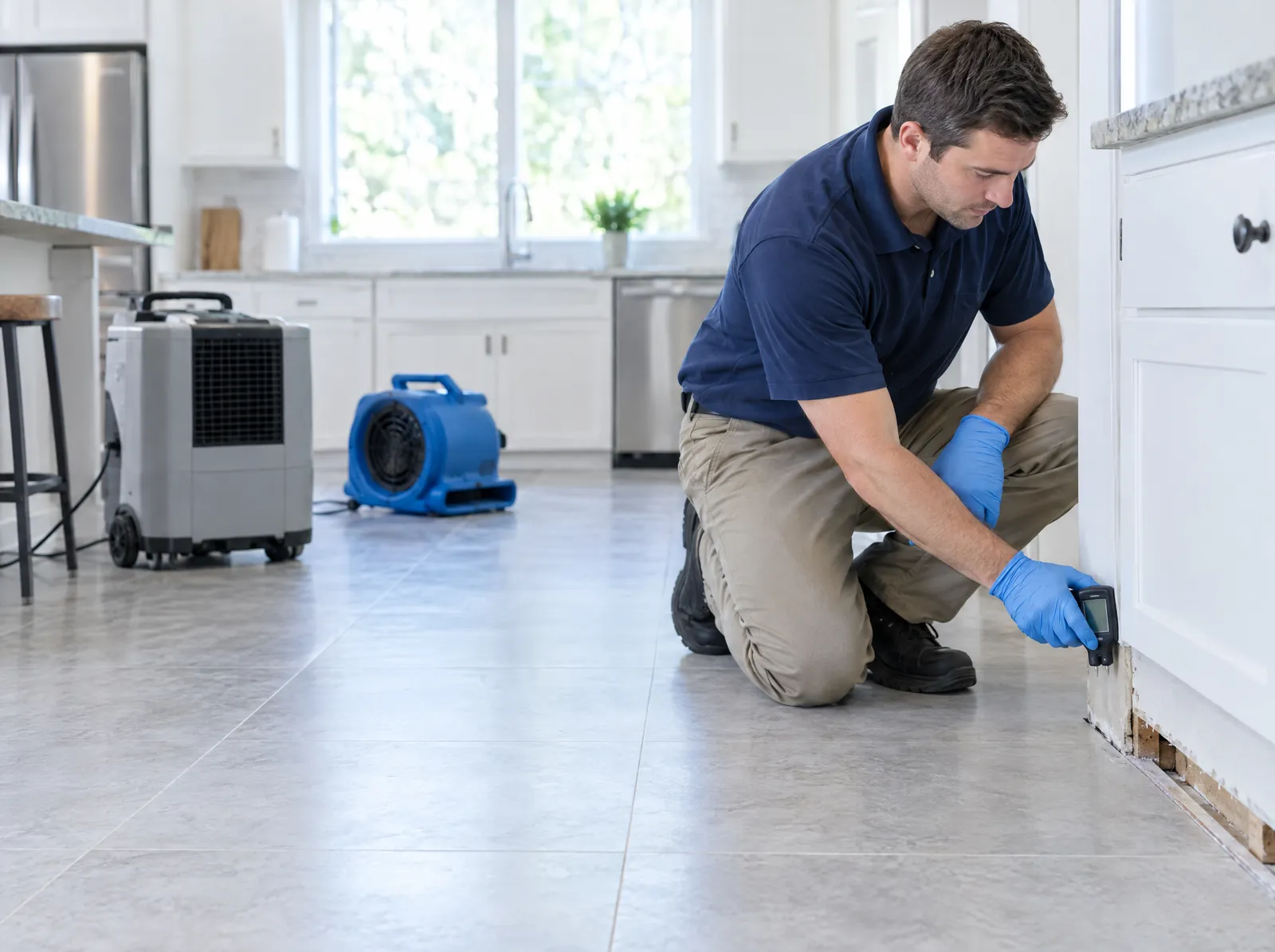
Church mold remediation in Indiana removes mold from sanctuaries, basements, fellowship halls, classrooms and offices while worship and ministry continue wherever it's safe. It begins with testing to show how far the problem reaches, followed by a written scope with phases and options a board or trustees can vote on. Work is contained and scheduled around services and events, and clearance testing confirms each space before the congregation uses it again.
Churches have the building problems and the decision problems
Many Indiana churches are older masonry buildings with additions from several decades, a basement or undercroft, and rooms that sit empty most of the week. Moisture builds up quietly in those spaces. When someone finally notices the smell in the fellowship hall, the decision doesn't belong to one person. A pastor, a trustee board, sometimes a denominational office and an insurer all need to understand what's wrong before anyone signs, and the building still has to be ready for Sunday.
Sound familiar?
- The basement or fellowship hall smells musty, and people have started to mention it.
- Any spending has to go through trustees or a committee first.
- Services, weddings, funerals and weekday ministries can't all be moved.
- The building holds things that can't simply be replaced.
We do it differently.
| A quick cleanup bid | AME church remediation | |
|---|---|---|
| Proposal | One price, one page | Written scope with phases and options for the board |
| Schedule | Crew's availability | Planned around worship and the ministry calendar |
| Hidden spaces | Visible areas only | Basements, closets, crawlspaces and HVAC checked |
| Belongings | Thrown out or ignored | Hymnals, textiles and furnishings assessed case by case |
| Reopening | The crew says it's fine | Clearance results trustees can file and share |

Why families trust us with their homes
-
Family-owned since 2008
A multigenerational family business. Not a franchise, not a private-equity rollup.
-
Credentialed where it isn't required
Indiana doesn't license mold remediators. We hold IICRC, CMR, CRMI and CCMI credentials anyway.
-
Called on as experts
Attorneys bring us into legal cases involving mold and mycotoxins.
-
Lab results in 24 to 48 hours
Every inspection comes with a written report, color photos and lab results.
- IICRC Certified Firm
- CMR
- CRMI
- CCMI
- BBB A+ Accredited
- NAMRI
- IAQA
- NORMI
- AMMA
- PMII
The AME Clearance Method
The AME Clearance Method for churches
Six steps, sized to a volunteer-led decision process and a weekly calendar.
Talk to a specialist-
Walk the building with your contact
A trustee, facilities volunteer or staff member shows us complaint areas and known leaks. We test air, dust and surfaces, including rooms nobody uses much.
-
Write a plan the board can vote on
The scope explains findings in plain language, separates what must be done now from what can be phased, and states what clearance will look like.
-
Schedule around worship
Work is fitted between services, weddings, funerals and weekday programs. Spaces needed for Sunday are cleared or kept outside containment.
-
Contain and protect what matters
Work zones are sealed under HEPA negative air. Pews, pianos, textiles, books and items of meaning nearby are moved, covered or cleaned first.
-
Remove, clean and treat
Damaged drywall, carpet and paneling come out, and masonry, framing and contents are HEPA cleaned and treated with a plant-based enzyme product.
-
Clear the space and report
Clearance testing confirms each area, with lab results in 24 to 48 hours. Trustees receive a report for the church's records and insurer.
What a church project includes
- A walk-through with your pastor, trustee or facilities contact
- Air, dust and surface testing, with mycotoxin panels where warranted
- A plain-language scope with phases and options
- A schedule built around your worship and ministry calendar
- Contained work with HEPA negative air
- Care and cleaning plans for books, textiles and furnishings
- Moisture source findings for the property committee
- Clearance testing before each space returns to use
- A report for church records and insurance

Proof you can hold in your hands
When we finish, you don't get a handshake and a promise. You get the paperwork your family, your doctor, your insurer or your buyer can rely on.
Inspection report
What we found, where it is coming from, with color photos.
Written remediation plan
Scope, timeline and what will and won't be removed, before work starts.
Clearance lab report
Air, surface and mycotoxin results after the work is done.
A report for your doctor
With your permission, we share results directly with your care team.
Mold in church buildings, explained
Why church buildings hold moisture
Church buildings are used in bursts. The sanctuary is full on Sunday morning, the fellowship hall hosts a dinner once a week, and the lower level may sit closed for days. Heating and cooling are often set back between uses to save money, which is sensible for the budget but lets humidity climb in summer. Add older brick and stone walls that wick ground moisture, basements and undercrofts below grade, and additions built at different times with different roofs, and you have a building that stays damp in places nobody visits.
The places we check first: basement classrooms and storage rooms, kitchens, restrooms, closets holding choir robes or seasonal decorations, the space behind the baptistry, and any crawlspace under an addition. Our pages on basement mold in Indiana and crawlspace mold in Indiana go deeper on those areas.
Planning around the church calendar
We ask for the full calendar up front, not just Sunday. Midweek Bible studies, youth nights, recovery groups, food pantries, weddings and funerals all need rooms and restrooms. Most churches find that Monday through Thursday gives the longest work window, with containment sealed and signed during any events that happen nearby. Funerals are the one thing nobody can schedule in advance, so the plan includes how the site will be closed up quickly if one is called.
Belongings with meaning
- Books and hymnals: covers and page edges can usually be HEPA vacuumed; soft paperbacks with visible growth are often better replaced.
- Robes, paraments and banners: many can be laundered or professionally cleaned; delicate or historic pieces need a textile conservator’s advice.
- Wood pews and furniture: finished wood cleans well with HEPA vacuuming and wiping.
- Upholstered pew cushions: decided case by case, based on exposure and testing.
- Records and photographs: kept dry, sealed and handled individually.
When the building hosts a preschool
Many churches share space with a preschool, daycare or weekday program, and those rooms are often on the lower level. If children use the affected area, the project follows the stricter planning on our daycare mold remediation page, including a conversation with the program’s licensing consultant before work begins.
We remove mold and mycotoxins from buildings. We don’t diagnose or treat medical conditions. Members or staff with symptoms should see a doctor, and with the church’s permission we’re glad to share test results with them.
Common questions
Have a question that isn't here? Call a specialist
Can we keep holding services during the work?
Usually, yes. Most church projects involve a basement, hall or classroom wing rather than the sanctuary, and those can be contained while worship continues elsewhere. If the sanctuary or its air system is affected, we plan around your service times and may suggest a short move to another room.
Our budget has to go through the board. Can the work be phased?
Yes. The written scope separates what should happen now, because it's active or spreading, from work that can wait for the next budget cycle without making things worse. Boards find that easier to approve than a single number.
Can hymnals, vestments and paraments be saved?
Often. Hard-bound books and many textiles can be HEPA cleaned or professionally laundered. Heavily contaminated paper and fabric may not be worth saving. Items with historical or personal meaning get individual attention, and we'll tell you what testing supports.
What about the pipe organ or piano?
We protect instruments in and near the work area, but we don't service them. If testing points to an organ chamber or the inside of an instrument, bring in your organ technician or piano technician and we'll coordinate with them.
Should we tell the congregation?
That's your leadership's call. Many churches share a short note about what was found, what's being done and when rooms will reopen. We can write a plain-language summary for the bulletin or a members' meeting.
The basement only takes on water now and then. Is that a problem?
It can be. Occasional water in a rarely used basement is how most church mold starts, because nobody is there to dry it out quickly. Testing tells you whether it has become a mold problem yet.
We're done when the lab says so.
Every remediation ends with clearance testing, and our work is backed by a complete-removal guarantee. We don't close a job on a failed result.
Talk to a specialistTalk it through before your next board meeting
Tell us about the building, what people have noticed and when it's used. A specialist will call you back to plan testing around your calendar.
- (833) 772-6653
- info@americanmoldexperts.com
- Open 7 days, 8am to 8pm