
For buyers, sellers and their agents
Mold inspection for Indiana home buyers
Lab-backed answers inside your inspection window, so you can negotiate, plan or walk away with the facts.
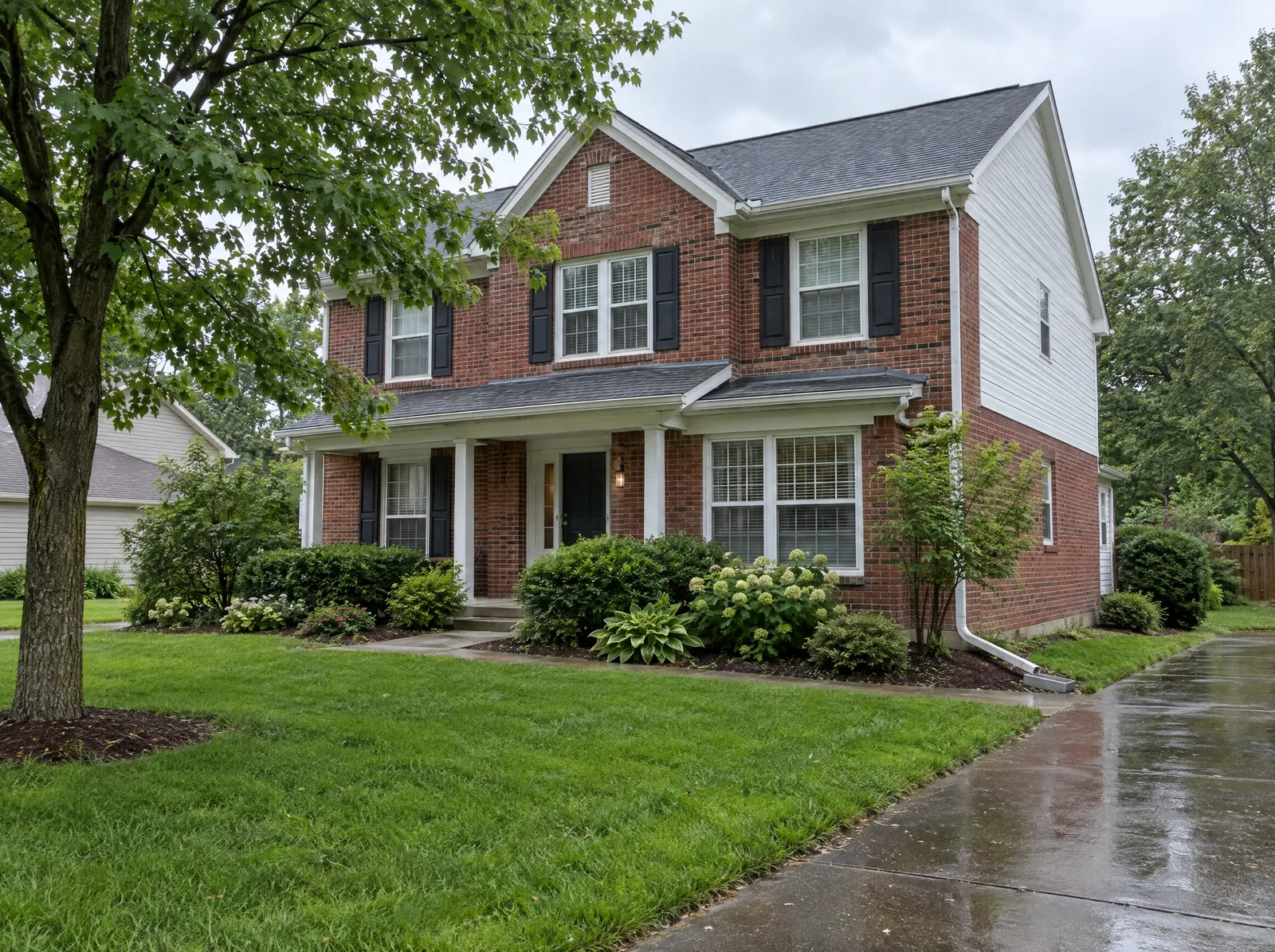
Should an Indiana home buyer get a mold inspection?
A mold inspection is worth it for an Indiana home buyer when the house has a basement or crawl space, a history of leaks, a musty smell, fresh paint in odd places, or a family member sensitive to mold. A standard home inspection is visual and usually excludes mold testing. We inspect for moisture, sample air and dust, and deliver lab results in 24 to 48 hours, inside most inspection periods.
What a regular home inspection can miss
Home inspectors do valuable work, but their job is to look at the whole house in a few hours. Most don't sample for mold, and a finished basement, fresh paint or a running dehumidifier can hide a problem well. Indiana buyers often find out after closing, when the first humid summer brings back the smell, and by then the repair is theirs to pay for.
Sound familiar?
- The basement smells musty, but the seller says it's always been dry.
- The inspector noted "possible microbial growth" and recommended a specialist.
- Someone in your family is sensitive to mold and you can't risk it.
- Your inspection period is short and you need answers you can act on.
We do it differently.
| Standard home inspection | AME real estate mold inspection | |
|---|---|---|
| Focus | The whole house, briefly | Moisture and mold, in depth |
| Moisture | Visual signs | Moisture meter and thermal checks in likely problem areas |
| Sampling | Usually none | Air, surface and optional dust or mycotoxin testing |
| Hidden areas | Noted if visible | Wall cavities, crawl spaces, attics and HVAC checked for signs |
| What you get | A line item in a long report | Lab results and a written scope you can negotiate with |

Why families trust us with their homes
-
Family-owned since 2008
A multigenerational family business. Not a franchise, not a private-equity rollup.
-
Credentialed where it isn't required
Indiana doesn't license mold remediators. We hold IICRC, CMR, CRMI and CCMI credentials anyway.
-
Called on as experts
Attorneys bring us into legal cases involving mold and mycotoxins.
-
Lab results in 24 to 48 hours
Every inspection comes with a written report, color photos and lab results.
- IICRC Certified Firm
- CMR
- CRMI
- CCMI
- BBB A+ Accredited
- NAMRI
- IAQA
- NORMI
- AMMA
- PMII
The AME Clearance Method
How our real estate mold inspection works
Built around your contract timeline. Six steps from the first call to a report your agent can use.
Talk to a specialist-
Review the history
Share the seller's disclosure and the home inspection report if you have them. We look for past leaks, flooding, repairs and anything flagged for follow-up.
-
Inspect for moisture
We check the basement or crawl space, attic, bathrooms, windows, HVAC and exterior walls with moisture meters, looking for water where it shouldn't be.
-
Sample the air
Indoor air samples are compared against an outdoor sample, so elevated or unusual indoor mold stands out clearly.
-
Test surfaces and dust
Suspect growth gets a surface sample. For sensitive buyers, we add dust-based testing such as ERMI or a mycotoxin panel.
-
Get lab results fast
Samples go to an independent lab, and results come back in 24 to 48 hours.
-
Report and scope
You get the results in plain English, and if remediation is needed, a written scope you and your agent can use in negotiations.
What your inspection includes
- Review of the disclosure and home inspection report
- Moisture inspection of basement or crawl space, attic, bathrooms and HVAC
- Indoor air samples with an outdoor comparison sample
- Surface sampling of suspect growth
- Optional ERMI or mycotoxin dust testing
- Independent lab analysis in 24 to 48 hours
- A plain-English results report
- A written remediation scope if one is needed

Proof you can hold in your hands
When we finish, you don't get a handshake and a promise. You get the paperwork your family, your doctor, your insurer or your buyer can rely on.
Inspection report
What we found, where it is coming from, with color photos.
Written remediation plan
Scope, timeline and what will and won't be removed, before work starts.
Clearance lab report
Air, surface and mycotoxin results after the work is done.
A report for your doctor
With your permission, we share results directly with your care team.
Mold inspections in Indiana real estate, explained
When a mold inspection makes sense
Not every home purchase needs mold testing. These are the situations where we’d recommend it to a friend buying in Indiana:
- The home has a finished basement, especially one finished by a previous owner.
- There’s a crawl space, and nobody has been in it recently.
- You notice a musty smell, or the seller is running a dehumidifier or air fresheners.
- Fresh paint or new drywall appears in just one area, like one basement wall or a single ceiling patch.
- The disclosure or inspection mentions past leaks, a sump pump, flooding or roof repairs.
- The house has been vacant, especially through a humid summer with the air conditioning off.
- Someone in your family has asthma, allergies or a mold-related illness.
Once you’ve decided to test, the calendar is the next problem. Here’s how to fit a mold test into an Indiana inspection period.
Disclosure is a starting point, not an answer
Indiana sellers generally complete a residential disclosure form describing what they know about the property’s condition. It’s useful reading, and we ask for it. But a seller can only disclose what they know about, and mold behind finished walls is easy to miss even for an honest owner. Questions about what a seller was required to disclose, or what to do if something was left off, belong with your agent or a real estate attorney. Our page on whether Indiana sellers have to disclose mold covers the general picture.
Making the timeline work
Inspection periods in purchase agreements can be short. Call us as soon as your offer is accepted, or as soon as your home inspector flags something. Tell us your deadline when you call. Lab results come back in 24 to 48 hours after sampling, which leaves time to review the report with your agent and respond to the seller. If the home is vacant, your agent will coordinate access with the listing agent, and we can walk you through the results by phone.
If the test finds mold
Finding mold doesn’t automatically mean walking away. What you need to know is how much there is, what caused it, and what fixing it involves. Our report answers those questions and, when remediation is needed, includes a written scope. That gives you something concrete to negotiate with: a price reduction, a credit at closing, or remediation by the seller before closing. If the seller handles it, ask for independent clearance testing afterward rather than a contractor’s word that it’s done.
For buyers with mold sensitivities
If someone in your family has been affected by mold before, a standard air test may not be enough. Air samples are a snapshot. Dust-based testing like ERMI reflects which molds have grown in the home over time, and a mycotoxin panel shows whether toxins are present in settled dust. Many of our buyers with sensitivities add both, then share the results with their doctor before deciding.
We inspect and test buildings for mold and mycotoxins. We don’t diagnose or treat medical conditions, and we don’t give legal advice. For health questions, please work with a doctor. For disclosure or contract questions, talk with your agent or an attorney.
Common questions
Have a question that isn't here? Call a specialist
Do Indiana sellers have to disclose mold?
Indiana uses a seller's residential real estate disclosure form that asks about known problems with the property's condition. Whether and how mold has to be disclosed, and what counts as known, is a legal question. Confirm the details with your real estate agent or an attorney.
How much does a mold inspection cost for a home purchase?
It depends on the size of the home and how many samples are needed. Dust-based and mycotoxin testing add cost but give a longer-term picture. We quote the inspection before we schedule it.
Can a mold inspection kill a home sale?
Rarely on its own. More often it changes the terms: a price reduction, a seller credit, or remediation completed before closing with clearance testing to prove it. Walking away is an option if the problem is large or the seller won't address it.
Can the seller just have the mold cleaned before closing?
Yes, and it's common. Ask for the remediation scope and, most importantly, independent clearance testing after the work. A receipt shows someone was paid. A clearance report shows the work passed.
Is it safe to buy a house that had mold remediation?
It can be, if the moisture source was fixed and clearance testing passed. Ask for the paperwork. If there isn't any, testing before closing tells you where things stand now.
Do you inspect for sellers too?
Yes. A pre-listing inspection lets sellers find and fix problems on their own schedule instead of during a buyer's inspection period, and a clean report can be shared with buyers.
Can you test for mycotoxins before I buy?
Yes. Buyers with mold sensitivities often add a mycotoxin panel to the air and surface testing. Results come back from the lab in 24 to 48 hours.
We're done when the lab says so.
Every remediation ends with clearance testing, and our work is backed by a complete-removal guarantee. We don't close a job on a failed result.
Talk to a specialistSchedule an inspection before your deadline
Tell us the address and your inspection deadline. A specialist will call you back and find the earliest time we can be there.
- (833) 772-6653
- info@americanmoldexperts.com
- Open 7 days, 8am to 8pm