
Showers, subfloors and exhaust fans
Bathroom mold removal: when to clean, when to call
Most bathroom mold is a cleaning job. Some of it is a sign of water behind the tile.
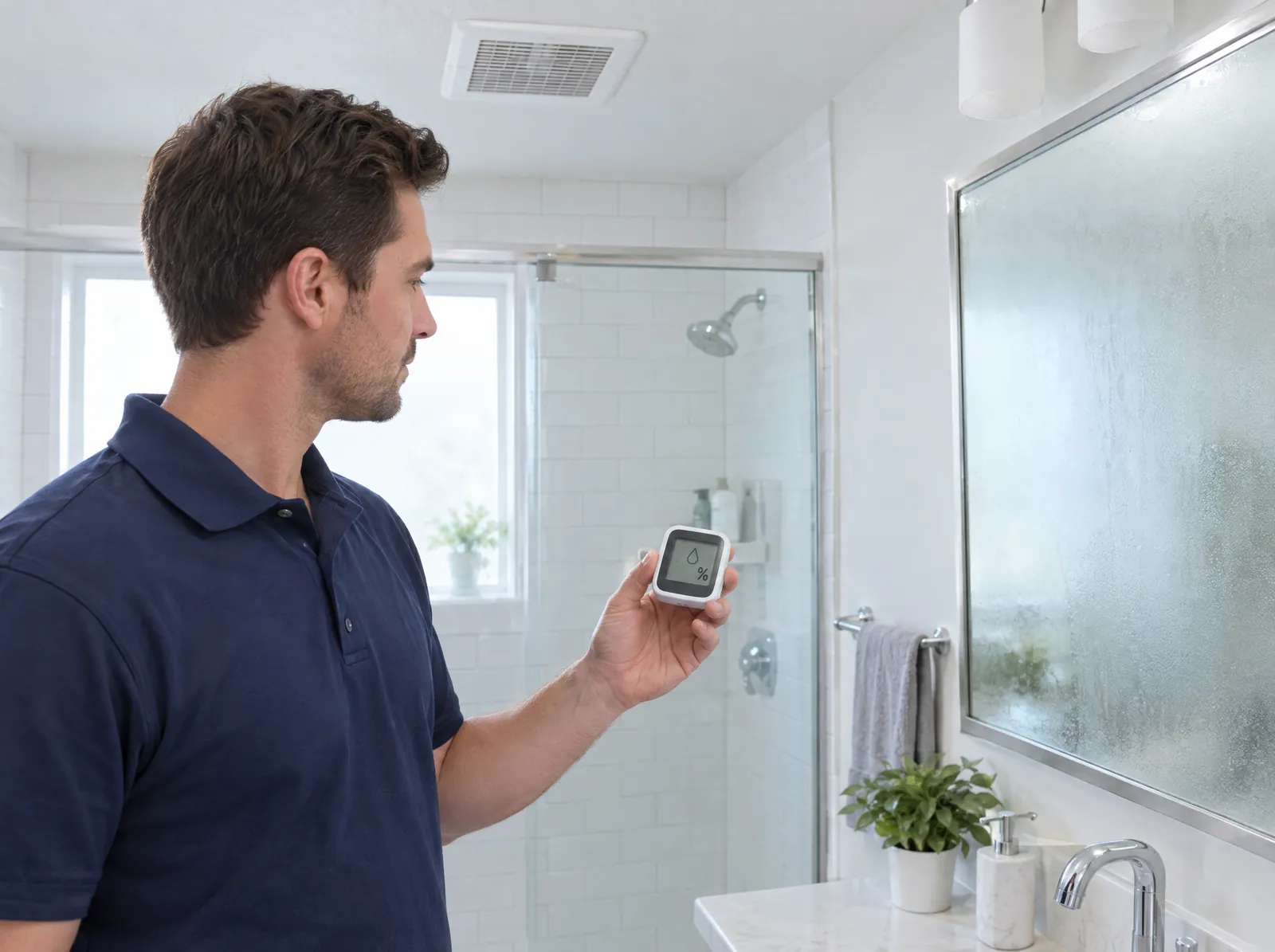
How do you handle bathroom mold removal?
Bathroom mold removal depends on where the mold is. Surface mold on grout, tile, glass and painted ceilings can usually be cleaned by a homeowner with detergent, water and good ventilation, and moldy caulk should be cut out and replaced. Mold that returns quickly, sits behind tile, or shows up as soft flooring or ceiling stains below points to a leak, and needs contained removal, repair of the water source and testing.
Is it mildew, or is it the tip of a leak?
Every bathroom gets wet several times a day, so some surface mold is almost inevitable. That makes bathroom mold easy to dismiss, and occasionally that's a mistake. The same spots in the grout can be a ventilation issue you can scrub away, or the only visible sign of a shower pan leak that has been soaking the subfloor for a year. The job is telling the two apart.
Sound familiar?
- You scrub the grout and the spots are back within weeks.
- The floor near the toilet or tub feels soft or has a slight give.
- There's a stain on the ceiling of the room below the bathroom.
- Tiles are loose, or grout keeps cracking along the same line.
We do it differently.
| Bleach and re-caulk | AME bathroom remediation | |
|---|---|---|
| First question | How do we make it look clean? | Is water getting behind the surface? |
| Hidden areas | Not checked | Moisture readings at walls, floor and ceiling below |
| Behind the tile | Grout sealed over | Opened under containment when readings show water |
| Ventilation | Not considered | Fan checked for airflow and exterior venting |
| Proof | Fresh caulk | Clearance testing when remediation is done |

Why families trust us with their homes
-
Family-owned since 2008
A multigenerational family business. Not a franchise, not a private-equity rollup.
-
Credentialed where it isn't required
Indiana doesn't license mold remediators. We hold IICRC, CMR, CRMI and CCMI credentials anyway.
-
Called on as experts
Attorneys bring us into legal cases involving mold and mycotoxins.
-
Lab results in 24 to 48 hours
Every inspection comes with a written report, color photos and lab results.
- IICRC Certified Firm
- CMR
- CRMI
- CCMI
- BBB A+ Accredited
- NAMRI
- IAQA
- NORMI
- AMMA
- PMII
The AME Clearance Method
How we approach a bathroom with mold
Most bathrooms stop at step two. The rest are for the ones where the water is somewhere you can't see.
Talk to a specialist-
Check what's behind it
Moisture readings around the tub, shower, toilet and vanity, on the floor, and on the ceiling below the bathroom show whether water has gone past the surface.
-
Check the ventilation
We confirm the exhaust fan moves air, is sized for the room, and actually vents outdoors rather than into the attic or a wall.
-
Contain the room
When materials need to come out, the bathroom is sealed off and put under negative air so dust doesn't spread down the hallway.
-
Remove what's wet
Wet drywall, backer board, insulation or subfloor with growth is removed, and the leak at the pan, valve, drain or wax ring is identified for repair.
-
Clean and treat
Framing and subfloor are HEPA vacuumed, cleaned and treated with plant-based enzyme products before anything is rebuilt.
-
Test before rebuilding
Once dry, clearance testing confirms the area is clean so the new tile goes over sound, clean materials.
What a bathroom remediation includes
- Moisture readings at fixtures, floor and ceiling below
- An exhaust fan and venting check
- A written scope that separates cleaning from removal
- Containment with negative air when materials come out
- Removal of wet drywall, backer board or subfloor
- HEPA cleaning and enzyme treatment of framing
- Identification of the leak for your plumber or contractor
- Clearance testing before rebuilding

Proof you can hold in your hands
When we finish, you don't get a handshake and a promise. You get the paperwork your family, your doctor, your insurer or your buyer can rely on.
Inspection report
What we found, where it is coming from, with color photos.
Written remediation plan
Scope, timeline and what will and won't be removed, before work starts.
Clearance lab report
Air, surface and mycotoxin results after the work is done.
A report for your doctor
With your permission, we share results directly with your care team.
Bathroom mold, explained
Surface mold vs. mold in the materials
The deciding question in a bathroom is whether the mold is sitting on a surface that sheds water or growing in something that soaks it up. That tells you whether you’re looking at a cleaning job or a remediation job.
| Where it is | Usually | What to do |
|---|---|---|
| Grout, tile, tub, glass | Surface growth on soap film and moisture | Clean it; improve ventilation |
| Silicone caulk | Growing into the caulk | Cut it out and re-caulk |
| Painted ceiling above the shower | Surface growth from steam | Clean it; check the fan |
| Drywall that’s soft, bubbled or stained | Growth in the paper and core | Remove under containment |
| Floor around the toilet or tub that flexes | A leak soaking the subfloor | Investigate and remediate |
| Ceiling stain in the room below | A leak in the bathroom above | Investigate before it spreads |
Cleaning surface mold safely
For the everyday kind, the EPA’s advice for hard surfaces is simple: scrub it off with detergent and water, and dry the surface completely. A few practical points make it work better:
- Protect yourself. Gloves, goggles and an N95 respirator, with the fan running and a window open if there is one.
- Remove, don’t just kill. Scrubbing lifts the growth off. Spraying a product and walking away leaves the residue on the surface.
- Never mix cleaners. Bleach combined with ammonia or with acidic cleaners, vinegar included, gives off toxic gas.
- Replace caulk that stays stained. Mold grows into it and cleaning won’t reach it.
- Dry everything. A squeegee on tile and glass after showers does more than any spray.
Our answer on whether vinegar kills mold covers the bleach versus vinegar question, and can I remediate mold myself? explains where do-it-yourself cleanup should stop.
Signs the water is behind the tile
Tile and grout are not waterproof on their own. The waterproofing is underneath: a shower pan, a membrane or a properly sealed backer board. When that layer fails, water gets through the grout and into the wall or floor, and the tile keeps looking fine for a long time. Watch for grout that cracks along the same line again and again, tiles that sound hollow when tapped or start to loosen, a floor that flexes near the tub or toilet, a musty odor that returns right after cleaning, and any staining on the ceiling or walls of the room below. A leaking wax ring under a toilet often shows up as a soft floor and darkened grout around the base.
Ventilation is the long-term fix
A bathroom that dries out quickly after showers rarely grows much mold. The exhaust fan is what makes that happen, and many don’t do their job. Hold a single square of toilet paper to the grille with the fan running; if it doesn’t cling, the fan isn’t moving much air. The Home Ventilating Institute’s general guideline for typical bathrooms is about 1 cubic foot per minute of fan capacity per square foot of floor area. Just as important, the duct has to end outdoors. Fans that vent into the attic move the moisture problem upstairs, which is a common cause of attic mold. Keeping indoor humidity below 60 percent, as the EPA recommends, helps the whole house.
When a bathroom needs remediation
If readings show water behind the tile or under the floor, the bathroom is treated like any other remediation: sealed off under negative air, wet materials removed and bagged, framing and subfloor HEPA cleaned and treated, and the leak identified so your plumber or contractor can fix it before rebuilding. We use plant-based enzyme products from US Enzyme on the framing. Testing comes before the new tile, not after. In Indiana, see our Midwest remediation team.
We remove mold and mycotoxins from buildings. We don’t diagnose or treat medical conditions. If anyone in your home has symptoms, please work with a doctor. With your permission, we’re glad to share test results and our plan with them.
Common questions
Have a question that isn't here? Call a specialist
Can I remove bathroom mold myself?
Usually, if it's on hard surfaces like tile, grout, glass, a tub or painted drywall that's still firm, and the area is small. Use detergent and water, a scrub brush, gloves, goggles and an N95, and keep the fan running. If it comes back quickly or you find soft materials, get it checked.
Should I use bleach or vinegar on bathroom mold?
On hard, non-porous surfaces, either can kill surface mold, though plain detergent and scrubbing removes it, which is the goal. Never mix bleach with ammonia or acidic cleaners, including vinegar, because it releases toxic gas. On porous materials neither reaches growth inside the material.
Why does mold keep growing in my shower caulk?
Mold grows into silicone caulk, not just onto it, so cleaning rarely gets it all. Cut the old caulk out, clean and dry the joint thoroughly, and re-caulk. If it returns fast, the room isn't drying out between showers.
How do I know if there's mold behind my shower tile?
Loose or hollow-sounding tiles, grout that keeps cracking, a soft floor near the tub or shower, a musty smell that cleaning doesn't fix, and stains on the ceiling below are the main signs. Moisture readings can confirm water behind the tile before anything is removed.
How long should a bathroom fan run after a shower?
Long enough to clear the moisture, and a common rule of thumb is about 20 minutes after the shower ends. A timer switch or humidity-sensing fan makes that automatic. The fan also has to vent to the outdoors to do any good.
Is black mold in the bathroom dangerous?
Most dark spots in bathrooms are common molds such as Cladosporium or Alternaria growing on soap scum and moisture. Stachybotrys is less common on tile and more likely on wet drywall or paper behind it. All indoor mold growth should be cleaned or removed, and testing identifies what it is.
We're done when the lab says so.
Every remediation ends with clearance testing, and our work is backed by a complete-removal guarantee. We don't close a job on a failed result.
Talk to a specialistNot sure if it's more than mildew?
Tell us what you're seeing and how fast it comes back. A specialist will call you back.
- (833) 772-6653
- info@americanmoldexperts.com
- Open 7 days, 8am to 8pm