
How humid should an Indiana home be?
Short answer
An Indiana home should stay below 60 percent relative humidity, and ideally between 30 and 50 percent, the range the EPA recommends to limit mold growth. Summer is the hard part: basements and crawlspaces often run well above that range, so a dehumidifier and a working air conditioner matter. In winter, aim for the lower end, because humid indoor air condenses on cold windows and attic surfaces.
The target, and why it moves with the seasons
Relative humidity is how much moisture the air holds compared with the most it could hold at that temperature. Mold growth on building materials picks up when indoor humidity stays high for long stretches, which is why the EPA recommends keeping it below 60 percent and ideally between 30 and 50.
Indiana puts that range under pressure from both sides. Summers are humid, with dew points that often sit in the 60s and sometimes reach the 70s. Winters are cold enough that any extra moisture indoors ends up on the coldest surfaces. So the practical goal shifts: fight moisture in summer, avoid adding too much in winter.
Measure first
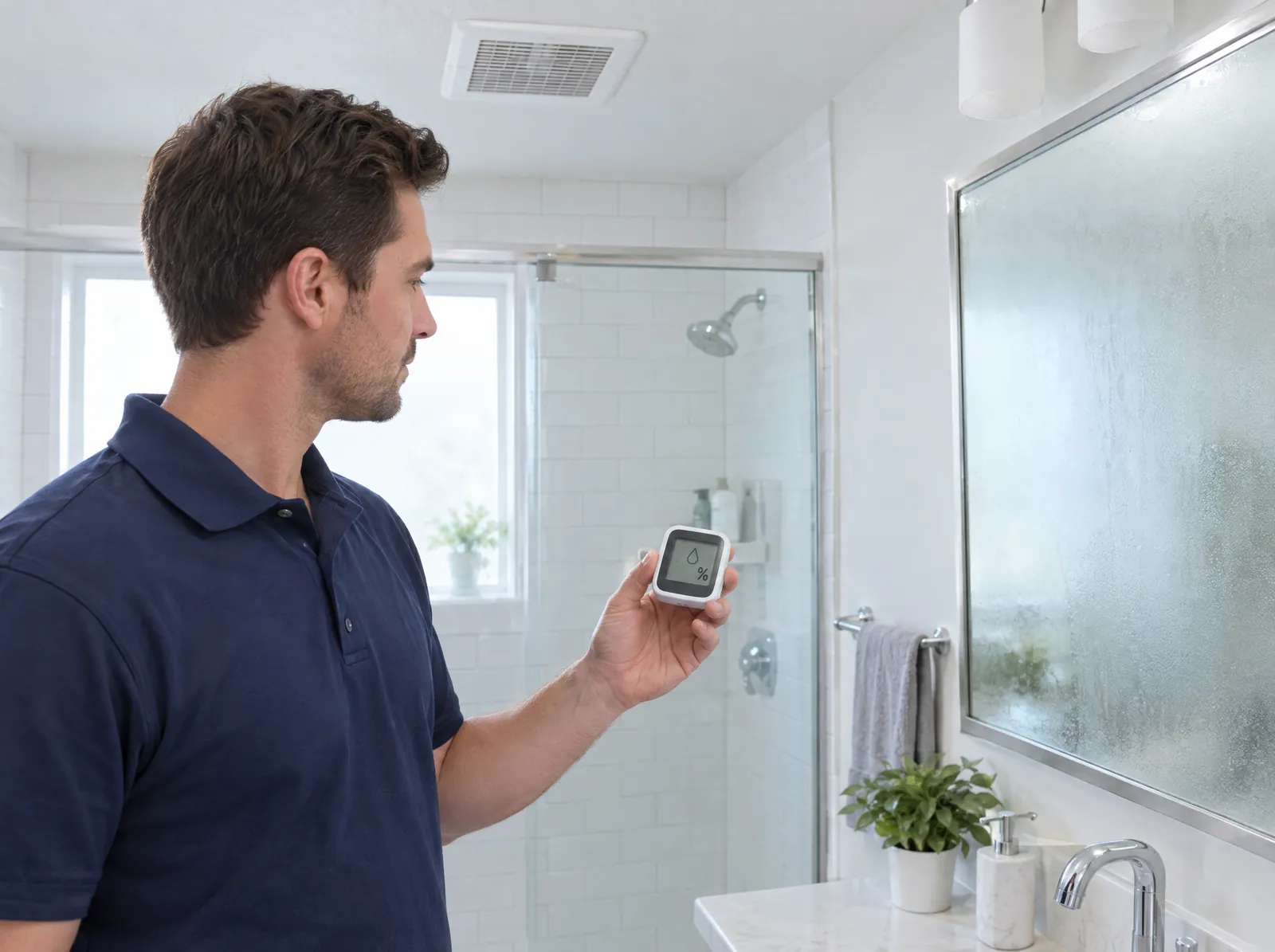
You can’t manage what you’re guessing at. Inexpensive digital hygrometers are accurate enough for this, and a few placed around the house tell you more than a thermostat reading from the hallway. Put one in the basement, one in the crawlspace if you have one, one in the main living area and one in a bedroom. Check them at different times of day for a week or two. A basement that reads in the 60s or 70s through July is common in Indiana, and it’s where most summer mold starts.
Summer: basements, crawlspaces and the air conditioner
- Run a dehumidifier below grade. Size it for the space, set it to the target range, and connect it to a floor drain or pump so it runs without anyone emptying a bucket.
- Keep basement windows and doors closed on humid days. Letting outside air in during a muggy July usually adds moisture instead of removing it.
- Let the air conditioner do its job. An oversized unit that cools the house quickly and shuts off removes less moisture than one that runs longer cycles. If the house feels cool and clammy, have the system checked.
- Watch the equipment itself. Cooling coils and drain pans stay wet all summer. Our page on HVAC mold in Indiana explains what happens when they don’t drain.
A dehumidifier keeps conditions from getting worse. It doesn’t remove mold that’s already growing, or the toxins some molds leave behind, as we cover in do dehumidifiers reduce mycotoxins.
Winter: humidifiers and sweating windows
Furnace heat dries the air, and many Indiana homes add a whole-house or room humidifier to compensate. That’s fine in moderation. When it’s set too high, the moisture condenses on window glass, in the corners of exterior walls, and in the attic, where warm air leaking up from the house meets cold roof sheathing. Heavy condensation on the inside of windows on a cold morning is a sign the air is too humid for the weather, so turn the humidifier down.
Bathroom and kitchen fans matter most in winter. They should vent outdoors, not into the attic, and run long enough to clear the steam. Our attic mold in Indiana page shows what happens when they don’t.
When humidity isn’t the whole story
Good humidity numbers don’t rule out mold. A slow plumbing leak, seepage through a foundation wall or a roof leak wets materials directly, no matter what the air reads. If your readings are in range and you still notice a musty smell, stains or symptoms that seem worse at home, testing is the next step. For how humidity and outdoor spores change through the year, see when mold season is in Indiana.
We're done when the lab says so.
Every remediation ends with clearance testing, and our work is backed by a complete-removal guarantee. We don't close a job on a failed result.
Talk to a specialistHumidity under control but still smell mold?
Then something else is feeding it, and testing will show where. Tell us what you're noticing, and a specialist from our Avon office will call you back.
- (833) 772-6653
- info@americanmoldexperts.com
- Open 7 days, 8am to 8pm