
Cape Coral storm recovery
Hurricane mold remediation in Cape Coral
When the canals come up, we dry the block, remove what's ruined and clean. Independent testing confirms it.
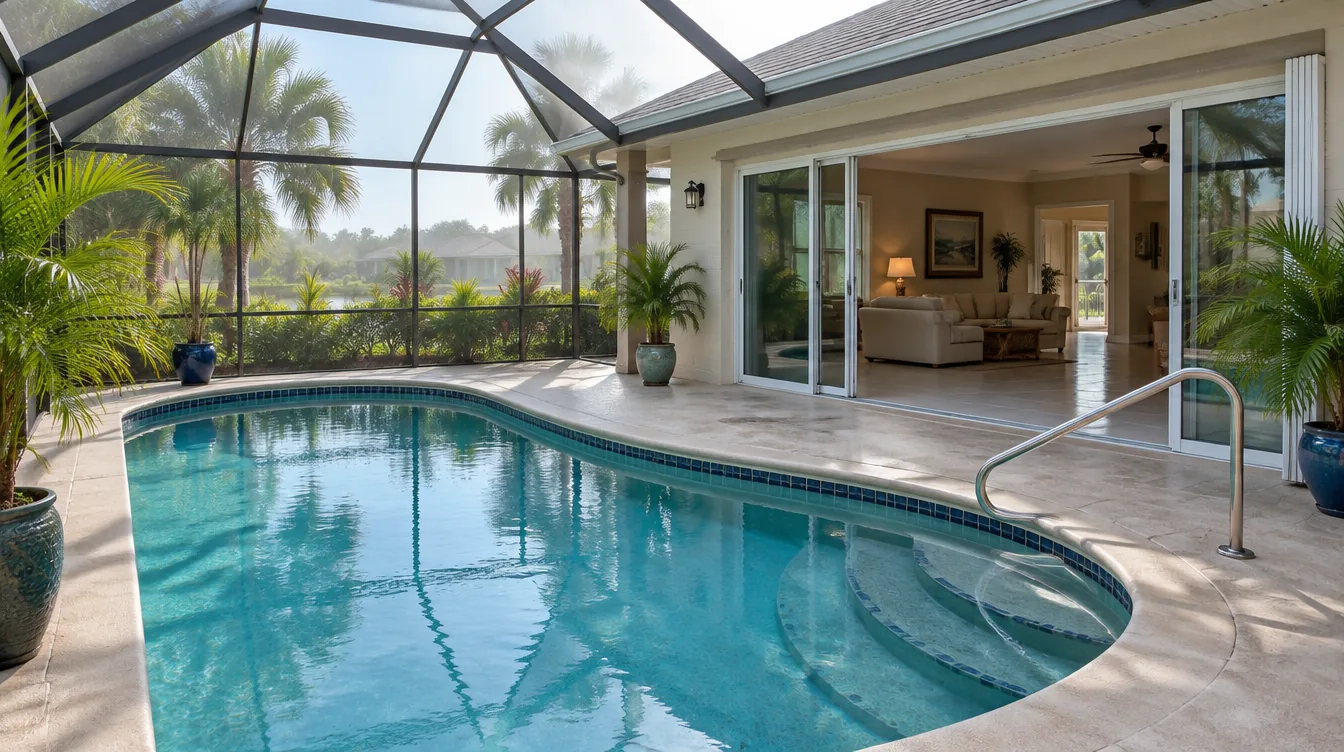
What is hurricane mold remediation in Cape Coral?
Hurricane mold remediation in Cape Coral is drying a flooded or storm-damaged home, removing the drywall, insulation and flooring the water ruined, and cleaning out the mold before it spreads. In Cape Coral, surge usually arrives through the canals, so water reaches the lanai and back of the house first. Clearance testing by an independent licensed assessor confirms the home is ready to rebuild.
Why canal surge is hard on Cape Coral homes
Cape Coral's canals are the reason many people live here, and in a hurricane they're how the Gulf gets in. Surge pushes up the saltwater canals, over seawalls and into back yards, pool cages and lanais before it reaches the house. Many homes here are single-story block on slab, so when water gets inside, it reaches every room at once. Then the power goes out, the AC stops, and the house sits hot and wet.
Sound familiar?
- Salt water came in from the canal side and soaked the whole floor.
- The pool cage and lanai flooded and water got under the sliders.
- The walls were cut and dried, but the house still smells musty.
- Your insurer wants documentation you don't have yet.
We do it differently.
| A quick flood cleanup | AME storm mold remediation in Cape Coral | |
|---|---|---|
| Salt water | Dried like fresh water | Salt-soaked materials removed and surfaces cleaned |
| Block walls | Surface looks dry | Readings in the block until it tests dry |
| Back of the house | Front rooms first | Lanai side, sliders and slab edge checked first |
| Testing | Rarely done | Independent licensed assessor, before and after |
| Records | An invoice | Photos, moisture logs and lab reports |

Why families trust us with their homes
-
Family-owned since 2008
A multigenerational family business. Not a franchise, not a private-equity rollup.
-
Trained and certified
Our team holds IICRC, CMR, CRMI and CCMI credentials in mold remediation and inspection.
-
Called on as experts
Attorneys bring us into legal cases involving mold and mycotoxins.
-
Documentation at every step
Photos, moisture logs and lab reports you can hand to your insurer or FEMA.
- IICRC Certified Firm
- CMR
- CRMI
- CCMI
- BBB A+ Accredited
- NAMRI
- IAQA
- NORMI
- AMMA
- PMII
The AME Clearance Method
Our Cape Coral storm mold process
Seven steps, in order. The first two can't wait, because salt water and Florida heat speed everything up.
Talk to a specialist-
Safety and documentation
Power and structure checked, then every room, the waterline and damaged belongings photographed before anything moves.
-
Water out
Standing water, wet carpet and soaked debris come out. Sliders and the lanai drain path are cleared so water stops coming back in.
-
Dry and measure
Dehumidifiers and air movers run while we log moisture in block, drywall and slab until the numbers show dry.
-
Independent assessment
A licensed mold assessor who is independent of us inspects and samples the home and writes the protocol.
-
Contain and remove
Negative air and barriers protect dry rooms. Drywall, furring strips, insulation, baseboards and cabinet bases the water reached come out.
-
Clean and treat
Block, framing and slab are HEPA-vacuumed and cleaned, then enzyme-treated for mycotoxins. The AC is checked and cleaned before it runs.
-
Independent clearance
The assessor retests before new drywall goes up. You keep the report for your insurer and any future sale.
What a Cape Coral storm mold project includes
- Photo and video documentation from day one
- Moisture logs for block, drywall and slab
- Containment with negative air
- Flood cuts and removal of salt-soaked materials
- HEPA vacuuming and detailed cleaning
- Enzyme treatment for mycotoxins
- AC and duct inspection and cleaning
- Coordination with an independent licensed assessor
- A documentation packet for your insurer or FEMA

Proof you can hold in your hands
When we finish, you don't get a handshake and a promise. You get the paperwork your family, your doctor, your insurer or your buyer can rely on.
Inspection report
What we found, where it is coming from, with color photos.
Written remediation plan
Scope, timeline and what will and won't be removed, before work starts.
Clearance lab report
Air, surface and mycotoxin results after the work is done.
A report for your doctor
With your permission, we share results directly with your care team.
Storm mold in Cape Coral, explained
More than 400 miles of canals, and what they mean in a storm
Cape Coral has more than 400 miles of canals, and they come in two kinds. Saltwater canals connect to the Gulf through the Caloosahatchee River and Matlacha Pass. The freshwater canals are separate from that tidal system and rise mainly with rain and runoff. In a hurricane, surge rides up the saltwater system from the river and the pass, rising behind homes until it tops seawalls and spreads across back yards. In heavy rain, the freshwater side can rise too.
That’s why so many Cape Coral storm jobs start at the back of the house. Water reaches the pool cage and lanai first, gets under sliding glass doors, and spreads across the slab from the rooms that face the canal. By the time it reaches the front door, the back bedrooms have been wet the longest.
What Ian, Helene and Milton did here
The figures below are from the National Hurricane Center’s tropical cyclone reports.
| Storm | When | What the National Hurricane Center reported |
|---|---|---|
| Ian | September 2022 | 6 to 9 feet above ground in Pine Island, Cape Coral and other communities at the mouth of the Caloosahatchee. A water level sensor placed in Cape Coral was lost or destroyed. |
| Helene | September 2024 | 3 to 5 feet above ground from south of Englewood to Bonita Beach, including Charlotte Harbor. |
| Milton | October 2024 | 4 to 6 feet above ground from south of Boca Grande through Bonita Beach, including the Caloosahatchee River. |
Ian was the defining storm. Canal-front neighborhoods took salt water, and in southwest Cape Coral the storm destroyed the city’s Yacht Club, which still hadn’t been rebuilt years later. The National Hurricane Center’s Ian report notes that while high water marks in this area were scattered, its model indicates significant flooding along the immediate coast. In 2024, the Milton report estimated 4 to 6 feet of surge along this stretch, including the Caloosahatchee, less than two weeks after Helene.
Drying a single-story block home
Many Cape Coral homes are one story, block on slab. That makes them fast to walk through and slow to dry. Here’s where we focus:
The block itself
Concrete block soaks up water and releases it slowly. The drywall on the inside of exterior walls usually sits on thin wood furring strips, leaving a gap where moisture and mold hide. We take readings in the block, not just the drywall, and keep drying until the block tests dry.
Slab and tile
Tile can look perfect while the slab under it and the thinset holding it are still wet. Baseboards, door casings and cabinet toe kicks sit right at the waterline and wick water upward. We remove baseboards and check under cabinets as standard practice.
Salt
Salt left in drywall, block and wood draws moisture out of humid air, which can keep surfaces damp even after the flood water is gone. Salt-soaked porous materials come out, and block and slab are cleaned so the salt doesn’t keep pulling in moisture behind the new finishes.
The pool lanai and garage
Pool cages and lanais collect debris and standing water, and they drain toward the house. Garages flood early and often hold the water heater, the washer and dryer, and years of stored boxes. Both need to be dried and cleaned along with the living space, or they feed moisture back into it.
The first 48 hours on a canal lot
What you do in the first two days after the water drops shapes the whole job. If it’s safe to go back in:
- Make sure power is off to wet areas before walking through standing water.
- Photograph and video every room, the waterline, the lanai, the garage and damaged belongings before anything moves.
- Get standing water out and pull wet rugs, cushions and boxes outside.
- Open the house to dry only if the air outside is drier than inside. Run dehumidifiers once there’s power.
- Keep the AC off if the air handler, return or ducts took on water.
- Call your insurer, and if a disaster has been declared, apply at DisasterAssistance.gov.
The EPA advises drying water-damaged areas within 24 to 48 hours to prevent mold growth. After a big storm, when every crew in the city is booked, that is hard to do, which is why getting fans and dehumidifiers running yourself matters.
Before you rebuild
It’s tempting to hang new drywall as soon as the old is gone. Wait until the block and framing test dry and the independent assessor has cleared the space. Once the walls are closed, no one can see whether what’s behind them was clean. If your home is in a special flood hazard area, ask the City of Cape Coral’s building department how the substantial damage rule applies to your repairs before you commit to a scope, since a large enough repair can require the home to meet current flood elevation standards.
Independent testing and clearance
Under Florida Statute 468.8419, a mold assessor may not remediate a structure it assessed within 12 months, and a remediator may not assess or clear one it remediated within 12 months. Certified Division I contractors are the exception. On our Cape Coral storm projects, an independent licensed mold assessor inspects and samples the home, writes the scope, and performs clearance testing. We do the remediation to that protocol. The company testing your home has no reason to find more mold than is there, and the company removing it can’t grade its own work.
Records that protect your claim
- Dated photos and video of every room, the waterline and each stage of the work
- Moisture readings from the first visit until materials test dry
- The independent assessor’s report, protocol and lab results
- An itemized list of materials and belongings removed
- The final clearance report
FEMA’s mold guidance says NFIP flood policies won’t cover damage from mold, and the policy also excludes mold caused by failing to inspect and maintain the property after the water recedes. Ask your adjuster in writing how your claim will be handled. Records still matter for the flood damage itself and for any other coverage you have. FEMA’s Individuals and Households Program may help with disaster-caused mold when it makes a home unlivable. If a family member’s doctor has raised concerns about mold since the storm, our page on mycotoxin remediation in Cape Coral explains the next step. Our Southwest Florida team serves Cape Coral and the rest of Lee County.
Common questions
Have a question that isn't here? Call a specialist
How much water did Ian bring to Cape Coral?
The National Hurricane Center estimated maximum flooding of 6 to 9 feet above ground in Cape Coral, Pine Island and other communities at the mouth of the Caloosahatchee. A water level sensor placed in Cape Coral was lost or destroyed in the storm, so the estimate relies on high water marks and the center's surge model.
Was Cape Coral affected by Helene and Milton?
Both storms raised the water along this stretch of coast. The National Hurricane Center estimated 3 to 5 feet of flooding from south of Englewood to Bonita Beach in Helene, and 4 to 6 feet from south of Boca Grande through Bonita Beach, including the Caloosahatchee River, in Milton.
Is salt water worse than fresh water for mold?
Salt water isn't a better food for mold, but it causes other problems. Salt left in drywall, block and wood draws moisture from humid air, which can keep surfaces damp longer. That's one reason we remove salt-soaked porous materials and clean the block rather than simply drying it.
Do freshwater canals flood too?
Cape Coral has both freshwater and saltwater canals. Surge reaches homes mainly through the saltwater system, which connects to the Gulf, while freshwater canals are more likely to rise with heavy rain. Either kind of flooding can lead to mold if the house isn't dried quickly.
Can the same company test and remove mold in Cape Coral?
Generally not on the same property. Florida Statute 468.8419 bars an assessor from remediating a structure it assessed, and a remediator from assessing one it remediated, within 12 months, except for certified Division I contractors.
Does FEMA help with mold after a hurricane?
It can. FEMA's Individuals and Households Program may provide help with disaster-caused mold when FEMA verifies it makes the home unlivable. Apply through DisasterAssistance.gov and keep photos, receipts and reports.
We're done when the lab says so.
Every remediation ends with clearance testing, and our work is backed by a complete-removal guarantee. We don't close a job on a failed result.
Talk to a specialistFlood damage in Cape Coral? Talk to us
Tell us which side the water came in on, how high it got and when. A Southwest Florida specialist will call you back.
Not sure yet? Try the free AI Mold Risk Check