
Lee County
Mold remediation in Cape Coral, FL
Canal-front or inland, block homes cleaned of mold and mycotoxins, then cleared by an independent licensed assessor.
Mold remediation in Cape Coral, start to finish
Mold remediation in Cape Coral, FL is the contained removal of mold-damaged materials, followed by HEPA cleaning and treatment for the mycotoxins mold leaves in dust and surfaces. American Mold Experts, a family-owned firm since 2008, does the removal. An independent licensed mold assessor inspects and samples the home, writes the scope, and performs the clearance testing that decides when the job is done.
Canals, slab homes and a lot of water close by
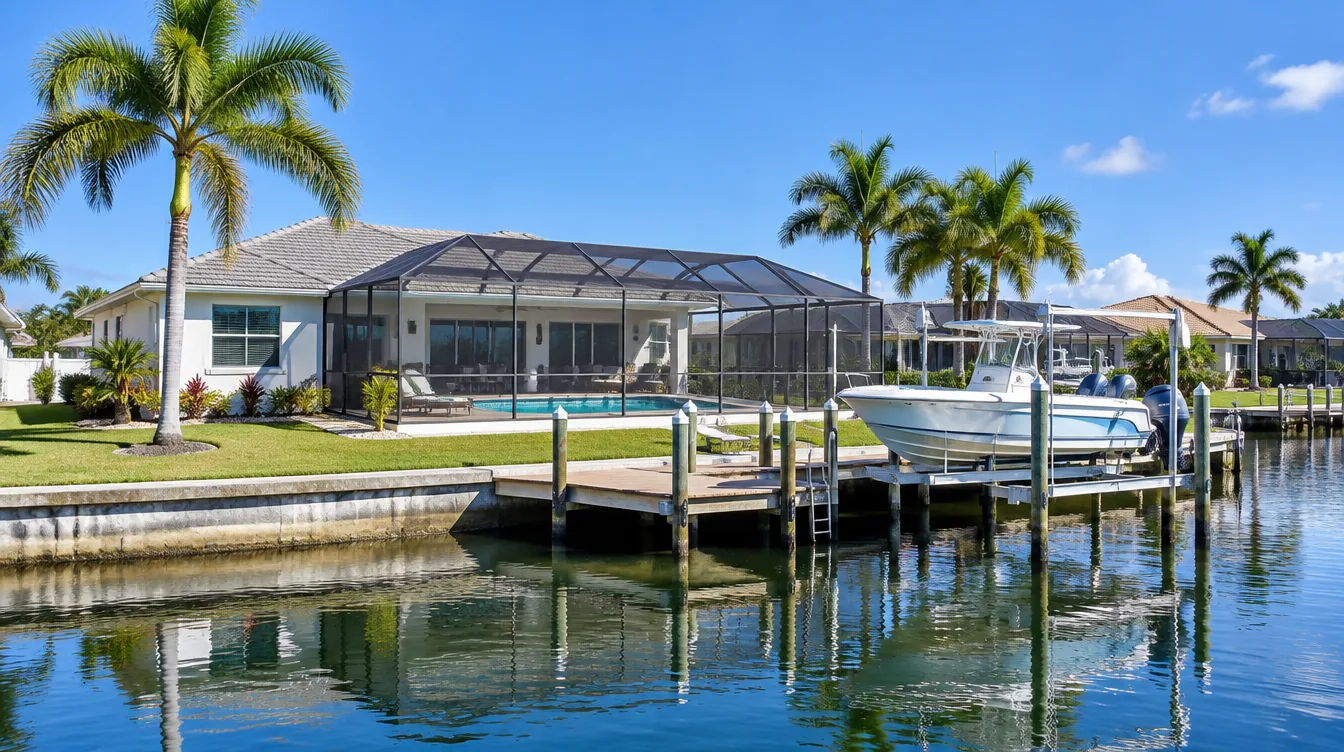
Cape Coral was dredged and platted from the late 1950s onward, and the city says it has more than 400 miles of canals, more than any other city in the world. That means thousands of homes sit a backyard away from salt or fresh water, with the Caloosahatchee River along the south and east edge of the city and Matlacha Pass to the west.
During Hurricane Ian in 2022, surge pushed up the Caloosahatchee and backed through those canals. The National Hurricane Center reported inundation of roughly 6 to 9 feet above ground in the communities near the mouth of the river, Cape Coral among them, and whole sections of canal-front neighborhoods were underwater.
Away from the water, Cape Coral is mostly single-story concrete block homes on slabs, many with a screened pool lanai off the living room. Those homes don't have basements or crawlspaces to worry about. Their weak points are the slab and the bottom of the drywall, the AC closet, and the sliding doors and windows that let wind-driven rain in during a storm.
- County
- Lee County
- Waterways
- 400+ miles of canals, Caloosahatchee River
- Typical housing
- Single-story block homes, many with pool lanais
- Storm history
- Ian surge through the canals, 2022
Mold services in Cape Coral
- Mycotoxin remediation in Cape CoralToxins cleaned from dust and surfaces
- Hurricane and flood mold in Cape CoralCanal and surge flooding
- Mold inspection and testingIndependent assessment explained
- Black mold removalHeavy growth, fully contained
- Seasonal home moldFor owners who leave for summer
- AC, duct and HVAC moldAir handlers and ductwork

Why families trust us with their homes
-
Family-owned since 2008
A multigenerational family business. Not a franchise, not a private-equity rollup.
-
Trained and certified
Our team holds IICRC, CMR, CRMI and CCMI credentials in mold remediation and inspection.
-
Called on as experts
Attorneys bring us into legal cases involving mold and mycotoxins.
-
Documentation at every step
Photos, moisture logs and lab reports you can hand to your insurer or FEMA.
- IICRC Certified Firm
- CMR
- CRMI
- CCMI
- BBB A+ Accredited
- NAMRI
- IAQA
- NORMI
- AMMA
- PMII
Nearby areas we serve
Where mold hides in a Cape Coral block home
The typical Cape Coral house is simple on paper: block walls, stucco outside, drywall and tile inside, a slab underneath, and an air handler in a closet near the middle. Mold finds the same few spots in almost all of them:
- The bottom few inches of drywall and baseboard on exterior walls, especially walls that took storm water
- The AC closet, around the air handler, the condensate pan and the return
- Walls next to sliding glass doors that open onto the lanai, where wind-driven rain gets past worn seals
- Under kitchen and bathroom sinks, where slow drips go unnoticed
- Closets on outside walls, where air barely moves
Our guide to mold in concrete block homes explains why block walls behave the way they do.
Canal-front homes after the surge
Ian put water inside canal-front homes whose owners had never dealt with a flood before. Many owners gutted the lower walls, ran fans, and rebuilt as fast as contractors allowed. Where the rebuild closed in block or slab that was still wet, the mold often shows up later as a smell, stained baseboards or new growth behind furniture. Our Cape Coral hurricane and flood mold page covers that storm work in detail, including the paperwork insurers ask for.
Who tests, and who removes
In Florida, the company that assesses your home and the company that remediates it are generally kept separate by Florida Statute 468.8419. On our Cape Coral projects an independent licensed assessor writes the scope and does the clearance test, and we do the removal, the HEPA cleaning and the enzyme treatment for mycotoxins. We serve Cape Coral and the rest of Lee County through our Southwest Florida team.
We remove mold and mycotoxins from buildings. We don’t diagnose or treat medical conditions.
Cape Coral mold questions
Have a question that isn't here? Call a specialist
Are you the same company as other Cape Coral mold businesses with similar names?
No. We're American Mold Experts, a family-owned company founded in 2008 with a Midwest office and a Southwest Florida team. There are local businesses with similar names, so check the full name when you compare quotes.
Does living on a canal make mold more likely?
Being on the water raises the outdoor humidity your home has to fight, and it raised flood exposure during Ian. But most indoor mold still comes from something specific: a leak, a flood, or an AC system that isn't keeping humidity down. Finding that source matters more than the address.
Can mold grow on concrete block walls?
Block itself isn't food for mold, but it holds water and passes it to the drywall, paint, dust and framing against it. That's why a Cape Coral wall can look dry on the surface while the back of the drywall stays damp.
We're selling a house that had mold. What paperwork helps?
The independent assessor's report, the remediation scope, photos of the work, and the clearance report. Together they show what was found, what was done and how it was verified. For disclosure questions, talk with a Florida real estate attorney.
We're done when the lab says so.
Every remediation ends with clearance testing, and our work is backed by a complete-removal guarantee. We don't close a job on a failed result.
Talk to a specialistTalk to a mold specialist about your Cape Coral home
Tell us what's going on and whether your home is canal-front or inland. A Southwest Florida specialist will call you back.
Not sure yet? Try the free AI Mold Risk Check