
Naples storm recovery
Hurricane mold remediation in Naples, Florida
Surge, rain or a torn roof: we dry, remove and clean, then an independent assessor confirms it's gone.
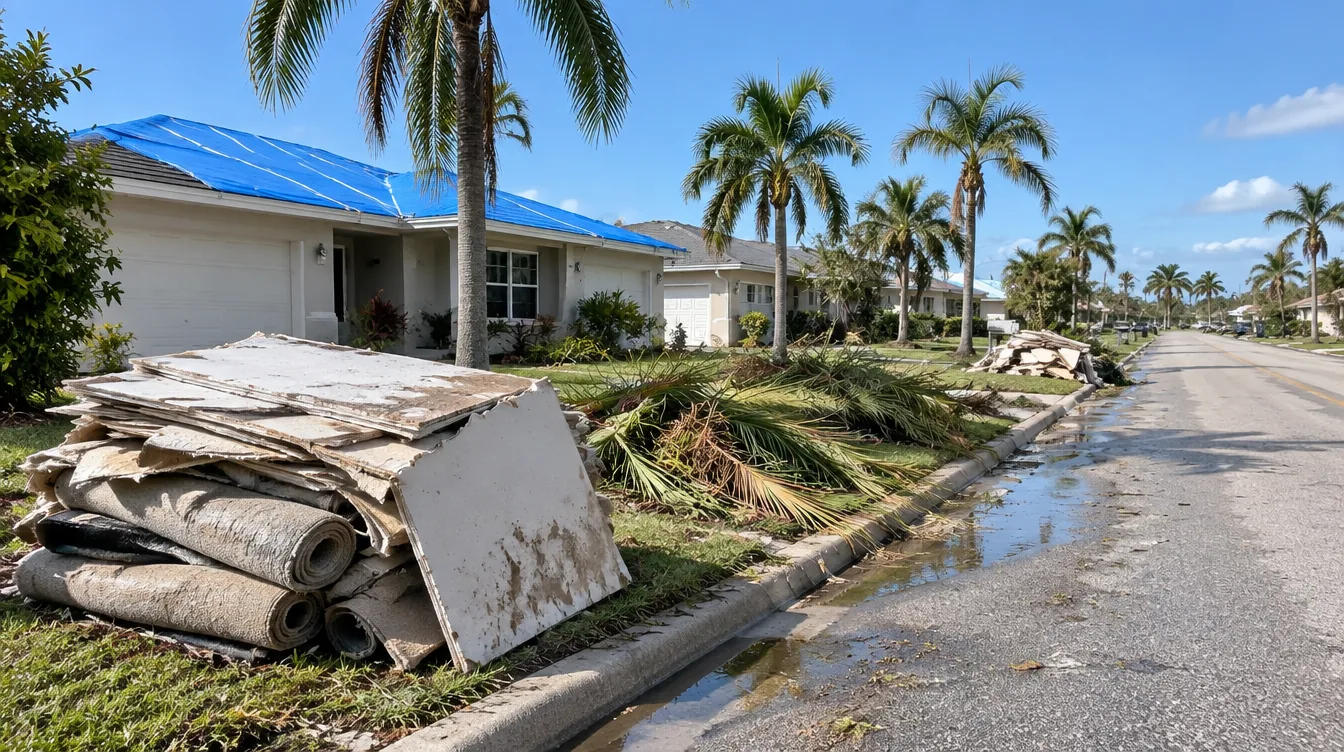
What does hurricane mold remediation in Naples include?
Hurricane mold remediation in Naples means drying a storm-damaged home, removing the materials surge or rain water ruined, and cleaning out the mold that follows before it spreads. Streets near the Gulf, Naples Bay and the Gordon River flood first, and block walls hold water long after a room looks dry. An independent licensed assessor tests before the work and confirms clearance after.
What storm water does to a Naples house
In Hurricane Ian, the National Hurricane Center estimated 6 to 9 feet of water above ground in parts of Naples. Helene and Milton in 2024 brought less here, but both still pushed Gulf water into low streets, garages and ground floors. Inside a flooded Naples home the pattern repeats: wet drywall over block, soaked baseboards and cabinet bases, wet slab under tile, and an AC system that was off for days while the house sat hot and closed.
Sound familiar?
- Water came in under the doors and you can't tell how high it wicked.
- The garage and lanai flooded, and now the house smells musty.
- Your home is in a flood zone and the repair estimate is creeping toward the 50 percent line.
- Your adjuster wants moisture readings and photos you don't have.
We do it differently.
| Quick storm cleanup | AME storm mold remediation in Naples | |
|---|---|---|
| Drying | Fans for a few days | Moisture readings in block, drywall and slab until they test dry |
| Surge water | Wipe, bleach and paint | Porous materials the water touched are removed |
| Hidden areas | Skipped | Cabinet bases, wall cavities and the AC closet opened and checked |
| Testing | Often none | Independent licensed assessor, before and after |
| Records | An invoice | Photos, moisture logs and lab reports for your claim |

Why families trust us with their homes
-
Family-owned since 2008
A multigenerational family business. Not a franchise, not a private-equity rollup.
-
Trained and certified
Our team holds IICRC, CMR, CRMI and CCMI credentials in mold remediation and inspection.
-
Called on as experts
Attorneys bring us into legal cases involving mold and mycotoxins.
-
Documentation at every step
Photos, moisture logs and lab reports you can hand to your insurer or FEMA.
- IICRC Certified Firm
- CMR
- CRMI
- CCMI
- BBB A+ Accredited
- NAMRI
- IAQA
- NORMI
- AMMA
- PMII
The AME Clearance Method
Storm mold work on a Naples home, in order
Speed matters most in the first two steps. After that, doing things in the right order matters more.
Talk to a specialist-
Stabilize and document
We confirm the power and structure are safe, stop any water still getting in, and photograph every room and the waterline before anything moves.
-
Extract and dry
Standing water comes out, then dehumidifiers and air movers go in. We log moisture in block, drywall and slab every visit until the numbers say dry.
-
Independent assessment
A licensed Florida mold assessor, independent of us, inspects and samples the home and writes the remediation protocol we follow.
-
Contain and remove
Sealed barriers and negative air protect clean rooms. Drywall is cut above the wicking line, and wet insulation, carpet and pad are bagged and removed.
-
Clean the structure and the AC
HEPA vacuuming and hand cleaning of block, framing and slab, then enzyme treatment for mycotoxins. The air handler and ducts are cleaned if they took on water.
-
Independent clearance
The assessor retests before walls are closed. You get the report for your records, your adjuster and your contractor.
What a Naples storm mold project includes
- Dated photos and video from the first visit
- Daily moisture readings until materials test dry
- Containment with negative air
- Flood cuts and removal of porous materials the water touched
- HEPA vacuuming and hand cleaning of block, framing and slab
- Enzyme treatment for mycotoxins
- AC air handler and duct cleaning where needed
- Coordination with an independent licensed assessor
- A documentation packet for your insurer or FEMA

Proof you can hold in your hands
When we finish, you don't get a handshake and a promise. You get the paperwork your family, your doctor, your insurer or your buyer can rely on.
Inspection report
What we found, where it is coming from, with color photos.
Written remediation plan
Scope, timeline and what will and won't be removed, before work starts.
Clearance lab report
Air, surface and mycotoxin results after the work is done.
A report for your doctor
With your permission, we share results directly with your care team.
Storm mold in Naples, explained
How Ian, Helene and Milton reached Naples
Naples has now seen three hurricanes in three years push Gulf water into the city. The figures below come from the National Hurricane Center’s tropical cyclone reports, which estimate the peak flooding above ground in each area.
| Storm | When | What the National Hurricane Center reported for Naples |
|---|---|---|
| Ian | September 2022 | 6 to 9 feet above ground in Naples. The Naples Pier tide gauge read 6.18 feet above the normal high-tide line before it was destroyed. |
| Helene | September 2024 | 2 to 4 feet above ground south of Bonita Beach, including Naples. The Naples Bay gauge read 4.02 feet above the normal high-tide line. |
| Milton | October 2024 | 3 to 5 feet above ground from Bonita Beach through Marco Island. The Naples Bay gauge read 5.08 feet above the normal high-tide line. |
Ian was the storm that changed how Naples thinks about flooding. Water pushed up Naples Bay and the Gordon River and spread into the streets around them. Fifth Avenue South and Tin City flooded, and in River Park, where canals off the Gordon River line most of the east side of the neighborhood, residents reported about three feet of water inside some homes. The National Hurricane Center’s Ian report also notes flooding at the Naples airport. Helene and Milton were smaller here, but they came two weeks apart, and a home still drying from the first storm had no time to recover before the second.
If your home took water in any of the three, the questions are the same: how long did the water sit, how high did it wick, and was the house dried and checked before it was closed back up.
Where storm water hides in a Naples home
Most Naples homes, old and new, are concrete block with stucco outside and drywall and tile inside. That construction handles wind well, but it holds on to water in ways that aren’t obvious from the middle of the room.
Block walls and the space behind the drywall
Concrete block soaks up flood water and releases it slowly. In many homes the drywall sits on thin wood strips fastened to the block, which leaves a narrow gap that stays damp. The face of the drywall can dry in a few days while the back stays wet enough to grow mold. That is why we take moisture readings in the block itself, not just on the surface.
Tile floors over slab
Tile looks fine after a flood, but the slab underneath and the baseboards and cabinet toe kicks along it can stay wet for weeks. Cabinet bases made of particleboard swell and hold water against the wall. We pull baseboards and check under cabinets as a matter of routine.
Garages, lanais and ground-floor rooms
Newer and rebuilt homes near the water are often raised, but the garage, storage, entry and elevator areas at ground level still take water. Those spaces tend to get hosed out and forgotten. When the garage shares a wall with the living space, or the air handler sits nearby, mold that starts there can reach the rest of the house.
The AC closet
After a storm the power is often out for days. When it comes back, the first instinct is to turn on the AC. If the air handler, return or ductwork took on water or shows growth, running it can spread spores through the whole house. We check the system before it runs and clean it if it needs it.
Old Naples, the bay side and the condo towers
Where you live in Naples shapes what a storm job looks like. Older homes on low lots near the Gulf and Naples Bay, including parts of Old Naples, take surge directly, and the work is often a full flood cut through the ground floor. Inland neighborhoods are more likely to see rain intrusion, roof damage and water under doors, which calls for a more targeted scope.
Condo buildings along Gulf Shore Boulevard and Park Shore add another layer. Ground-floor units, parking levels, elevator pits and mechanical rooms flood first, and water can travel through shared walls and chases. Under Florida condominium law, associations generally handle common elements and owners generally handle unit interiors, but the declaration controls, so read yours and ask your association manager or an attorney before work starts. We can work with the association, the owner or both.
The 50 percent rule and rebuilding decisions
Many Naples homes sit in special flood hazard areas. Under the National Flood Insurance Program rules that local governments enforce, if the cost to restore a building to its condition before the damage equals or exceeds 50 percent of its market value, the building is considered substantially damaged and has to meet current flood standards. That can mean elevating the home or rebuilding it. Ask the City of Naples or the Collier County building department how your repair costs will be counted, and keep your mold remediation invoice separate and itemized so it can be reviewed on its own.
Testing and clearance, done independently
Under Florida Statute 468.8419, a mold assessor may not remediate a structure it assessed within 12 months, and a remediator may not assess or clear one it remediated within 12 months. Certified Division I contractors are the exception. On our Naples storm projects, an independent licensed mold assessor inspects and samples the home, writes the scope, and performs clearance testing. We do the remediation to that protocol. The company testing your home has no reason to find more mold than is there, and the company removing it can’t grade its own work.
Clearance happens before the walls are closed. Once new drywall is up, nobody can see whether the block and framing behind it were clean. Our page on clearance testing explains what the assessor checks.
Paperwork for your claim
Storm claims in Naples often run for months. On every project we keep:
- Dated photos and video of the damage, the waterline and each stage of the work
- Moisture readings from the first visit until materials test dry
- The independent assessor’s report, protocol and lab results
- An itemized list of materials and belongings removed, with photos
- The final clearance report
FEMA’s mold guidance says NFIP flood policies won’t cover damage from mold, and the policy also excludes mold caused by failing to inspect and maintain the property after the water recedes. Ask your adjuster in writing how your claim will be handled. Records still matter for the flood damage itself and for any other coverage you have. FEMA’s Individuals and Households Program may help with disaster-caused mold when it makes a home unlivable, and our answer on whether FEMA pays for mold remediation goes into more detail. If someone in your household is dealing with mold-related health concerns after a storm, our page on mycotoxin remediation in Naples covers the next step. We serve Naples and the rest of Collier County, along with Lee and Charlotte counties.
Common questions
Have a question that isn't here? Call a specialist
How high did the water get in Naples during Hurricane Ian?
The National Hurricane Center's report estimates maximum flooding of 6 to 9 feet above ground in Naples. The tide gauge on the Naples Pier recorded 6.18 feet above the normal high-tide line before it was destroyed, and there were reports of flooding at the Naples airport.
Helene and Milton didn't flood my house. Should I still check?
If water reached the garage, the lanai or the thresholds, yes. The National Hurricane Center estimated 2 to 4 feet of surge flooding around Naples in Helene and 3 to 5 feet from Bonita Beach through Marco Island in Milton. Water that sat against walls even briefly is worth a moisture check.
What is the 50 percent rule?
In a special flood hazard area, if the cost to restore a damaged building equals or exceeds 50 percent of its market value, the building has to meet current flood standards, which can mean elevating it. Ask the City of Naples or Collier County building department how your repair costs will be counted.
Does FEMA or flood insurance pay for mold after a storm?
Sometimes. FEMA's Individuals and Households Program may help with disaster-caused mold when it makes a home unlivable. FEMA's mold guidance says NFIP flood policies won't cover damage from mold, and the policy also excludes mold caused by failing to inspect and maintain the property after the water recedes. Ask your adjuster in writing how your claim will be handled, and keep records of everything you did.
Can the same company test and remove mold in Naples?
Generally not on the same property. Florida Statute 468.8419 bars an assessor from remediating a structure it assessed, and a remediator from assessing one it remediated, within 12 months, with an exception for certified Division I contractors. An independent licensed assessor handles testing and clearance on our projects.
Our Naples house was empty when the storm hit. What should we do first?
Have a neighbor or home watch service photograph every room and the waterline, shut off power to wet areas, and open the house to dry only if the air outside is drier. Then call your insurer and a remediation company. Every day it stays wet makes the job bigger.
We're done when the lab says so.
Every remediation ends with clearance testing, and our work is backed by a complete-removal guarantee. We don't close a job on a failed result.
Talk to a specialistStorm damage in Naples? Talk to us today
Tell us where the water came in, how high it got and when. A Southwest Florida specialist will call you back.
Not sure yet? Try the free AI Mold Risk Check