
How do I dry out my house after a hurricane?
Short answer
Start within 24 to 48 hours. Once it's safe, get standing water out, remove wet carpet, pad and flood-soaked drywall and insulation, then move air with open doors, windows and fans and pull moisture out with dehumidifiers. Don't run the AC if the system took on water. Keep going until moisture readings, not touch, show the materials are dry.
Safety before drying
Don’t go in until local officials say it’s safe. FEMA advises checking for damaged power lines, gas lines and structural damage before entering. Turn off power to wet areas before you walk through standing water. The EPA says to use portable generators only outside and at least 20 feet from buildings, never in the house, garage or any enclosed space. The CDC recommends goggles, an N95 respirator and gloves once cleanup starts.
Step by step
- Document. Photograph and video every room and the waterline before you move anything.
- Get the water out. Pump or wet-vac standing water, and mop the rest.
- Remove what holds water. Carpet, pad, rugs, mattresses and upholstered furniture that flood water soaked go outside. See what to throw away after a flood.
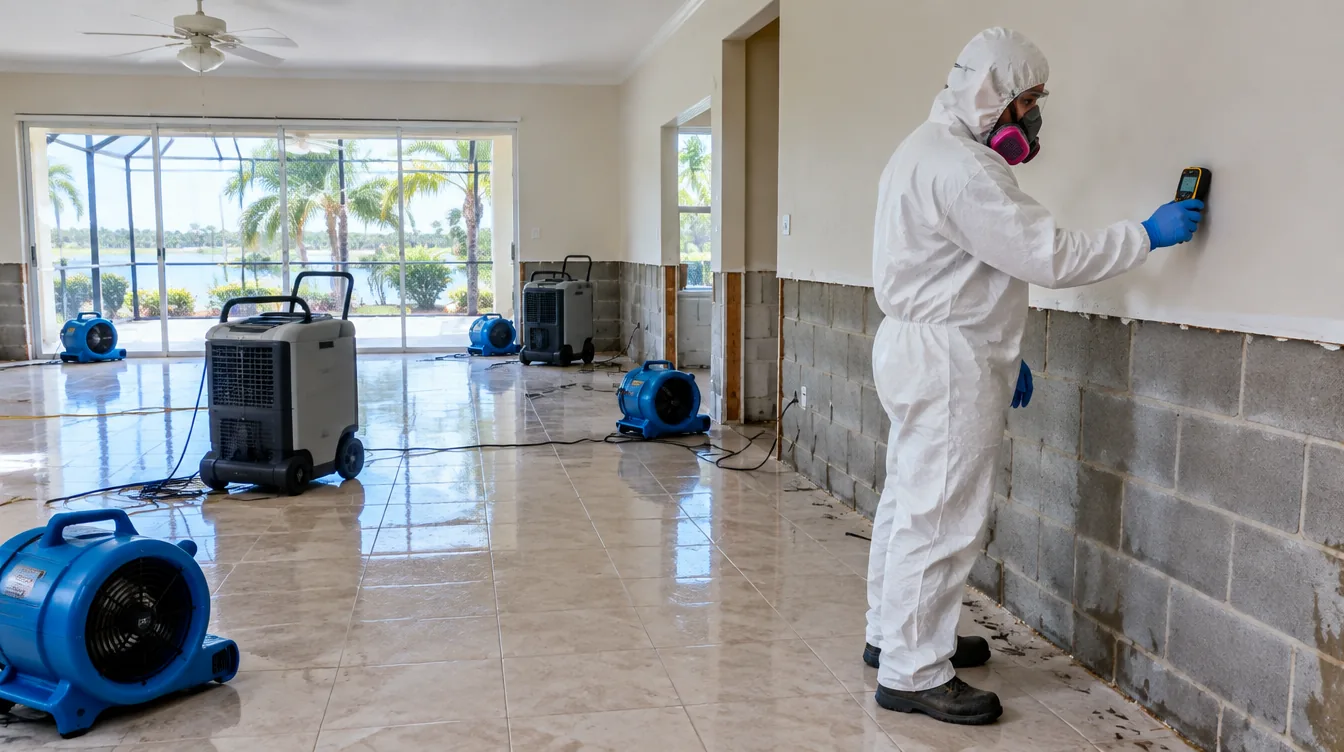
- Open the walls. Drywall and insulation that flood water touched should come out. Professionals usually cut the drywall in a straight line above the highest waterline so the wet section comes out in one piece.
- Pull baseboards and open lower cabinets. Water hides behind them, and they block drying.
- Move air. The EPA says to leave doors and windows open, if it’s safe, and to use fans, dehumidifiers or heaters to speed drying. The CDC suggests pointing fans to blow air out through windows.
- Pull moisture out. Once you have power, run dehumidifiers continuously and empty or drain them.
- Measure. Keep going until moisture readings show walls, block and floors are dry.
The Florida problem: humid air and block walls
Most drying advice is written for places where outside air is drier than inside. In a Southwest Florida September, it often isn’t. Open windows help most right after the storm, when the house is hot, wet and sealed, and when there’s no power. Once power is back, closing up and running dehumidifiers, plus the AC if it’s safe to use, usually dries the house faster than open windows letting humid air back in.
Concrete block and slabs are the other challenge. They absorb water and release it slowly, so the surface can feel dry while the block behind the drywall is still wet. That’s why walls should stay open until readings confirm they’re dry. Our page on mold on concrete block walls explains what happens when they’re closed too early.
When to run the AC and when not to
Air conditioning is one of the best dehumidifiers a Florida house has, but only if the system is clean. The EPA says that if any part of your HVAC system was affected by the flood, don’t use it to help dry the house, because it can spread contamination. Have the air handler, returns and ducts checked and cleaned first. If you’re not sure, our guide on how to tell if there is mold in your AC lists the signs.
How to know it’s actually dry
Touch isn’t reliable. Drying professionals use moisture meters to compare wet materials with the same materials in an unaffected room, and they keep going until the numbers match. Keep indoor humidity below 60 percent, as the EPA recommends. If you’re doing it yourself, an inexpensive moisture meter and a humidity gauge are worth buying. If a musty smell develops, or you see spots at the bottom of walls, drying has fallen behind.
Keep records as you go
An NFIP flood policy excludes mold caused by failing to inspect and maintain the property after flood water recedes. Dated photos of fans and dehumidifiers running, and daily notes or readings, show that you acted quickly. FEMA may also help with disaster-caused mold in some cases; see does FEMA pay for mold remediation.
When to call a professional
If water got into walls throughout the house, sat for more than two days, or came from storm surge, professional drying and remediation is usually faster and better documented. Our hurricane and flood mold remediation team dries to measured readings, removes what can’t be saved and cleans for mold and mycotoxins, with testing and clearance by an independent licensed assessor.
We remove mold and mycotoxins from buildings. We don’t diagnose or treat medical conditions. If anyone in the home has symptoms, please work with a doctor. With your permission, we’re glad to share test results and our plan with them.
We're done when the lab says so.
Every remediation ends with clearance testing, and our work is backed by a complete-removal guarantee. We don't close a job on a failed result.
Talk to a specialistNeed help drying out after the storm?
Tell us what the water touched and when it went down. A Southwest Florida specialist will call you back.
Not sure yet? Try the free AI Mold Risk Check