
How can I tell if there is mold in my AC?
Short answer
The most common sign is a musty smell when the system starts. Others include dark spotting on supply vents or the ceiling around them, standing water or slime in the drain pan, a clogged condensate line, and indoor humidity that stays above 60 percent. Something that looks like mold can only be confirmed by an expert, sometimes with lab analysis, so treat these as reasons to check.
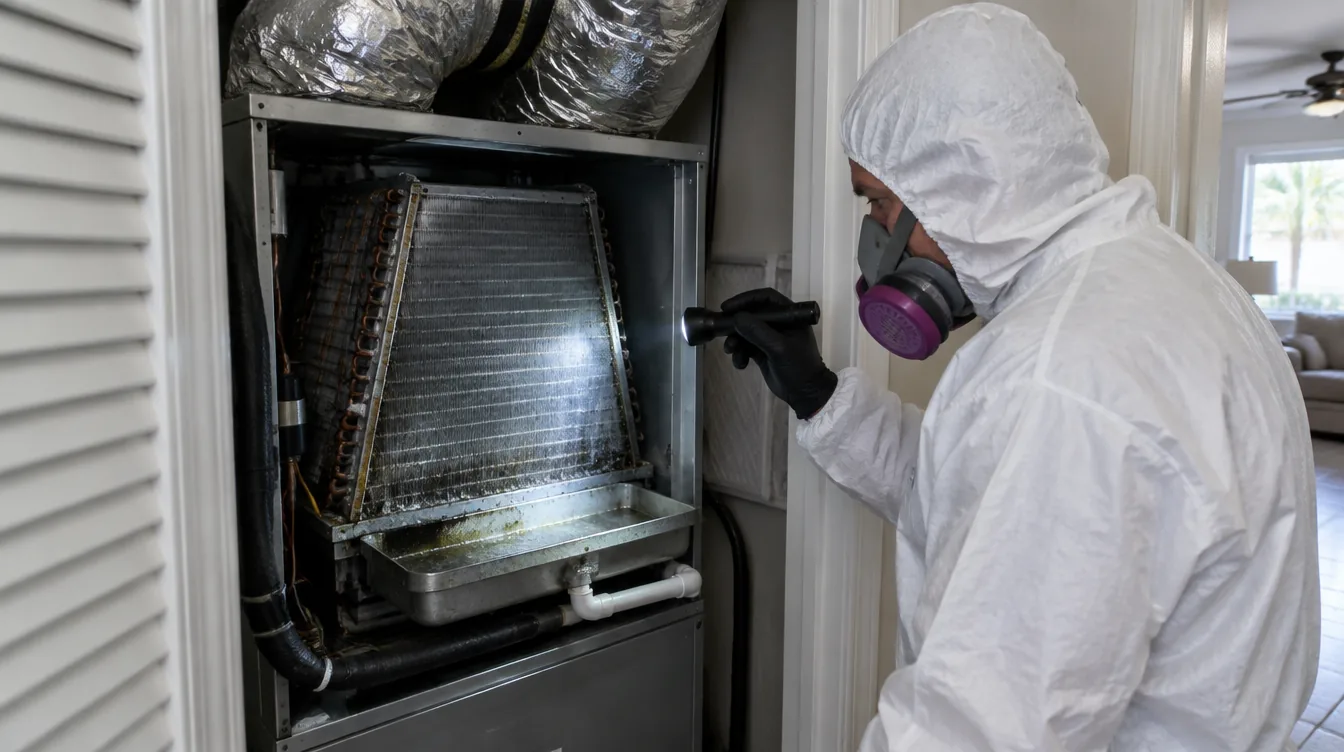
Why Florida AC systems grow mold
A Southwest Florida air conditioner pulls a lot of water out of the air. That water collects on the cold evaporator coil, drips into a drain pan and leaves through a condensate line. The coil, the pan and the insulation lining the air handler stay wet and dark for much of the year, and household dust gives mold something to feed on. The EPA points to cooling coils as a major source of moisture problems in HVAC systems for exactly this reason.
In most homes here, the air handler sits in an interior AC closet or the garage, and the ducts run through a hot attic. When something goes wrong, like a clogged drain line or a system that sat off during a long power outage, the whole setup can go from damp to moldy quickly.
The signs, from most to least obvious
- A musty smell when the system starts. An earthy, damp odor that’s strongest in the first minutes of a cooling cycle usually points to the air handler or ducts rather than a room.
- Spotting on vents. Dark specks on supply registers, or on the ceiling or drywall around them, can be mold feeding on dust where cold air meets humid air.
- Water where it shouldn’t be. Standing water, slime or debris in the drain pan, water on the AC closet floor, or a condensate line that backs up. The EPA says substantial standing water or debris in the pan indicates a problem needing immediate attention.
- Humidity that won’t come down. If the thermostat is satisfied but indoor humidity stays above 60 percent, the system isn’t drying the house, and that’s the condition mold needs.
- Growth you can see inside the air handler. On the coil, the blower housing or the insulation lining the cabinet.
- A house that smells worse after being closed up. Common in seasonal homes when the AC was off or set too high.
What you can safely check yourself
The Florida Department of Health recommends routinely checking the evaporator coil, liner surfaces, drain pan and drain lines for standing water. Without opening sealed panels, you can:
- Look at the supply registers and the ceiling around them with a flashlight
- Look at the floor and walls of the AC closet for water stains
- Check the filter, and note how dirty it gets between changes
- Put a digital hygrometer in two or three rooms for a week
- Notice whether the smell comes and goes with the system
Leave the coil, blower and ducts to professionals. Don’t spray bleach or a fogger into the system. It won’t remove the growth, and it can damage components.
Confirming it
The EPA’s guidance on air duct cleaning makes the point plainly: a substance may look like mold, but only an expert can say whether it is, and that may take laboratory analysis. In Florida, an independent licensed mold assessor inspects and samples the system and the home, writes the scope and performs clearance testing after the work. Sampling can include surface samples from the air handler, air samples compared with outdoor air, and settled dust from the rooms the system serves.
If you’re fairly sure it’s there
The EPA advises not running an HVAC system you know or suspect is contaminated with mold, because it can spread mold through the building. In a Florida summer that’s a hard call, since shutting the AC off lets humidity climb. Get the system looked at quickly, and while it’s off, portable dehumidifiers can help hold indoor humidity down in the short term.
Some parts can’t be cleaned. The EPA says wet or moldy insulation in ducts can’t be effectively cleaned and should be removed and replaced. Mold in the system also spreads the fine dust that mycotoxins travel on, which our page on whether mycotoxins can spread through HVAC explains. Our Southwest Florida AC and HVAC mold service covers how we clean the air handler and ducts to the assessor’s protocol, and our national HVAC mold page covers the process in general.
We remove mold and mycotoxins from buildings. We don’t diagnose or treat medical conditions. If you have symptoms, please work with a doctor. With your permission, we’re glad to share test results and our plan with them.
We're done when the lab says so.
Every remediation ends with clearance testing, and our work is backed by a complete-removal guarantee. We don't close a job on a failed result.
Talk to a specialistSmell it when the AC kicks on?
Tell us what you're noticing and where. A Southwest Florida specialist will call you back and explain what to check next.
Not sure yet? Try the free AI Mold Risk Check