
For Plainfield households
Mycotoxin testing in Plainfield after the water's gone
A dried-out basement can still hold mold toxins in its dust. We test for them and show where they are.
What is mycotoxin testing in Plainfield?
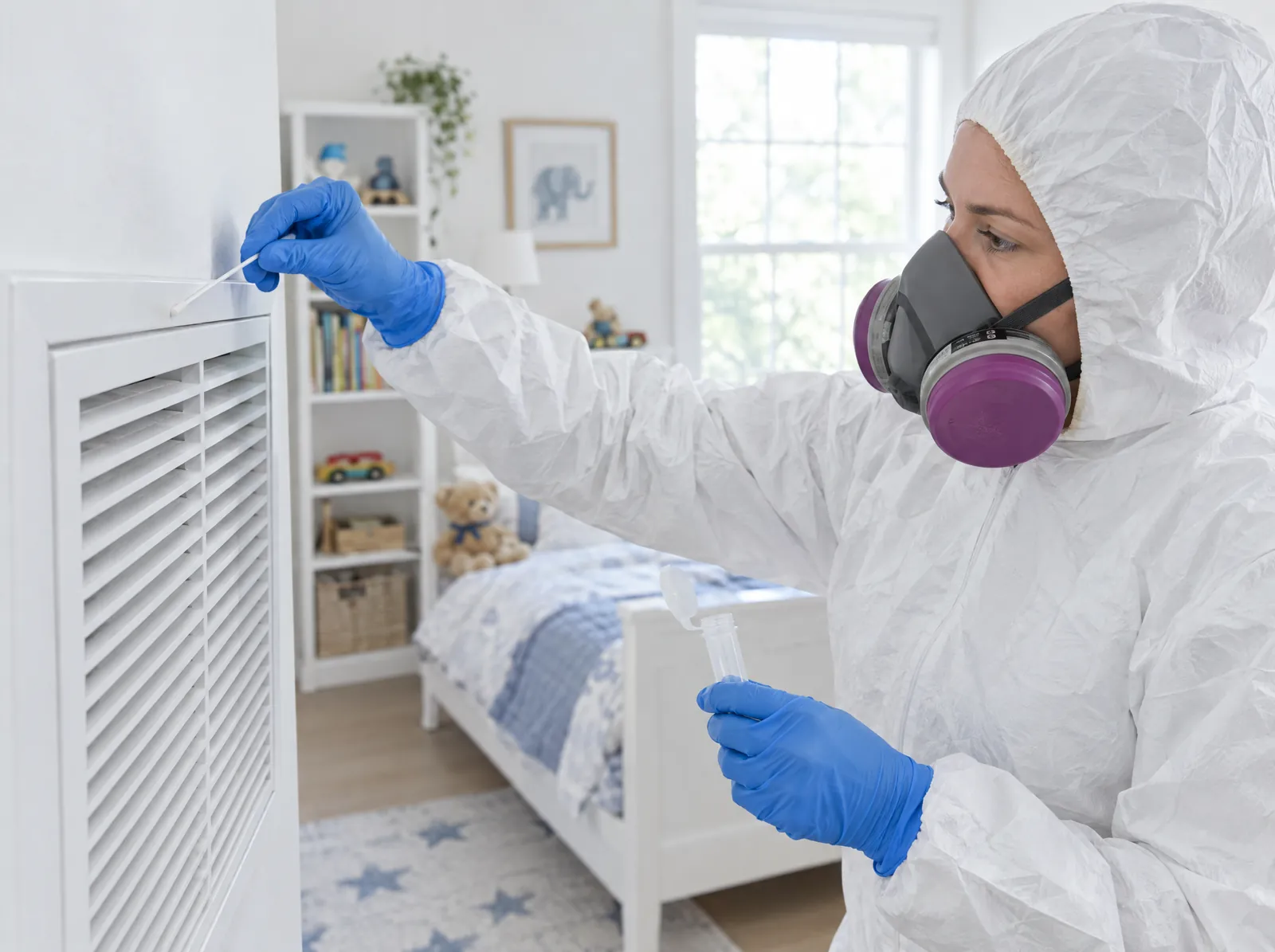
Mycotoxin testing in Plainfield checks settled dust and surfaces for toxins that mold produced while materials were wet. It's most useful when a doctor suspects the home, or after a basement flood or long leak was dried but never tested. We collect dust from the rooms your family uses most, send it for a lab mycotoxin panel, and pair it with mold testing to find the source.
Drying a basement doesn't remove what mold left
After White Lick Creek comes up or a sump pump fails, most Plainfield homeowners do the sensible things: pump the water out, run fans, pull up wet carpet. The house dries and smells better. But mold that grew during those wet days may have produced mycotoxins, and those compounds don't evaporate. They stay in the dust on stored items, in framing and in the lower edge of walls that were dried in place. A basic mold test done afterward measures spores in the air, not the toxins that remain.
Sound familiar?
- Your basement was dried after a flood but never tested.
- Your doctor has asked whether your home could be a factor.
- Stored belongings came through a water event and you don't know what's safe to keep.
- You rent, and you need something in writing to show your landlord.
We do it differently.
| A post-flood air check | AME mycotoxin testing | |
|---|---|---|
| Measures | Spores currently airborne | Mycotoxins in dust and on surfaces |
| After drying | Often looks normal | Shows whether toxins remained |
| Stored items | Not assessed | Sampled when they came through the water |
| Mold source | Guessed | Traced with dust-based mold testing |
| Paper trail | A spore sheet | A lab report for your doctor or landlord |

Why families trust us with their homes
-
Family-owned since 2008
A multigenerational family business. Not a franchise, not a private-equity rollup.
-
Credentialed where it isn't required
Indiana doesn't license mold remediators. We hold IICRC, CMR, CRMI and CCMI credentials anyway.
-
Called on as experts
Attorneys bring us into legal cases involving mold and mycotoxins.
-
Lab results in 24 to 48 hours
Every inspection comes with a written report, color photos and lab results.
- IICRC Certified Firm
- CMR
- CRMI
- CCMI
- BBB A+ Accredited
- NAMRI
- IAQA
- NORMI
- AMMA
- PMII
The AME Clearance Method
How we test a Plainfield home for mycotoxins
Five steps, starting with what happened to the house and ending with a plan.
Talk to a specialist-
Reconstruct the water event
When water came in, how high it reached, what was removed and what was dried in place. That shapes where we sample.
-
Sample where people live
Settled dust from bedrooms and living areas shows what reaches your family, not just what sits near the old water line.
-
Sample near the source
Dust from stored items, the lower level and return air grilles shows how concentrated toxins are close to where the water was.
-
Lab testing
A mycotoxin panel runs together with dust-based mold DNA testing, and the lab typically reports in 24 to 48 hours.
-
Results and recommendations
We compare living-area results with source-area results and explain what the difference means for cleanup and belongings.
What's included for Plainfield homes
- A detailed look at past floods and leaks
- Dust samples from living areas and the lower level
- Surface samples from affected stored items
- A lab mycotoxin panel
- Dust-based mold testing to trace the source
- A moisture check to confirm areas are truly dry
- Recommendations for belongings and materials
- A report you can share with your doctor or landlord

Proof you can hold in your hands
When we finish, you don't get a handshake and a promise. You get the paperwork your family, your doctor, your insurer or your buyer can rely on.
Inspection report
What we found, where it is coming from, with color photos.
Written remediation plan
Scope, timeline and what will and won't be removed, before work starts.
Clearance lab report
Air, surface and mycotoxin results after the work is done.
A report for your doctor
With your permission, we share results directly with your care team.
Mycotoxin testing in Plainfield, explained
Why flood history matters for mycotoxins
Molds tend to produce mycotoxins when they have water and are competing for space, which is exactly the situation in a wet basement. The longer materials stayed damp, the more chance toxins had to build up. That’s why the first thing we ask a Plainfield family isn’t about symptoms but about the house: when water came in, what got wet and what was thrown out. Our page on whether mycotoxins go away on their own explains why time alone doesn’t clear them.
Older homes and what’s stored below grade
In the older houses near US 40, basements are often storage. Boxes of paperwork, holiday decorations, old furniture and clothing sit against block walls that let in a little moisture with every rain. Those items can hold mold and toxin-laden dust for years. We sample them directly when they matter to you, and the results help decide what gets cleaned, what gets replaced and what can come upstairs.
Using results to plan the work
When toxins turn up only near the old water line, remediation can be focused and relatively contained. When living-area dust also tests positive, the plan grows to include HVAC cleaning and more rooms. Either way, the same panel runs again at clearance. Indiana mycotoxin remediation describes that process, and mold testing in Plainfield covers the spore and DNA testing that goes with it.
Your doctor’s role
With your permission, your physician receives the full lab report and our notes on where each sample came from. We stick to what’s in the building.
Our work stops at the building. We don’t diagnose or treat medical conditions, and household dust results aren’t a medical test. Anyone with symptoms should be under a doctor’s care, and we’ll pass our findings along to that doctor if you’d like.
Common questions
Have a question that isn't here? Call a specialist
Our basement flooded two years ago. Is it too late to test?
No. Mycotoxins are stable, which is exactly why testing after the fact is useful. If toxins were left in dust or materials, they are often still detectable.
Can testing tell us which stored belongings to keep?
It helps. Hard items usually clean well. Soft, porous items that sat in floodwater or a damp basement for a long time are harder to save. We'll tell you what the results support and what they don't.
I rent in Plainfield. Can I order this testing?
Yes. Tenants and landlords can both order testing. The report describes the building's condition, and some renters share it with their landlord to start a repair conversation.
Can you test for the specific toxins my doctor named?
Lab panels cover the mycotoxins most often found in water-damaged buildings, such as trichothecenes, ochratoxin A, gliotoxin and aflatoxins. If your doctor names specific ones, we'll confirm the panel includes them.
Will you share the results with my doctor?
Yes, with your permission. We'll explain how and where samples were collected. What they mean for your health is your doctor's call.
We're done when the lab says so.
Every remediation ends with clearance testing, and our work is backed by a complete-removal guarantee. We don't close a job on a failed result.
Talk to a specialistAsk about mycotoxin testing in Plainfield
Tell us about any past water in the house and what your doctor has asked. We'll call back from our Avon office to plan sampling.
- (833) 772-6653
- info@americanmoldexperts.com
- Open 7 days, 8am to 8pm