
Mycotoxin testing
Mycotoxin testing for your home, step by step
What gets sampled, how the lab measures it, and how to make sure the results mean something.
What is mycotoxin testing for a home?
Mycotoxin testing for a home measures the toxic compounds certain molds leave behind in settled dust and on surfaces. Dust is collected from places where it has built up undisturbed, and a lab analyzes it for a panel of specific toxins, such as trichothecenes, ochratoxin A, gliotoxin and aflatoxins. It answers a question a spore count can't, and it works best alongside an inspection and mold DNA testing.
Why a standard mold test can't answer the mycotoxin question
A typical mold test pulls a few minutes of indoor air through a cassette, counts the spores and compares them with outdoor air. That is useful for spotting active growth. It says nothing about toxins. Mycotoxins don't show up on a spore trap, and the dust where they collect never gets sampled. A house can post a normal spore count and still hold toxins from growth that died years ago.
The opposite mistake happens too. A mail-in panel run on one dust sample, with no inspection behind it, leaves you holding numbers with no idea where they came from or what to do next.
Sound familiar?
- Your spore test came back normal, but something still feels wrong at home.
- Your doctor asked whether the house has been tested for mycotoxins, and you don't know where to start.
- You tried a mail-in kit and can't tell what the numbers mean.
- You need results you can compare before and after remediation.
We do it differently.
| A basic mold test | Mycotoxin testing done well | |
|---|---|---|
| What's sampled | A few minutes of indoor and outdoor air | Settled dust and surfaces that reflect months of buildup |
| What the lab reports | Spore types and counts | Specific mycotoxins and their amounts |
| Where samples come from | Wherever the pump is set down | Locations chosen after an inspection and moisture check |
| Context | Read on its own | Paired with mold DNA testing and the building's water history |
| After the job | Rarely repeated the same way | The same panel repeated for clearance |

Why families trust us with their homes
-
Family-owned since 2008
A multigenerational family business. Not a franchise, not a private-equity rollup.
-
Credentialed where it isn't required
Indiana doesn't license mold remediators. We hold IICRC, CMR, CRMI and CCMI credentials anyway.
-
Called on as experts
Attorneys bring us into legal cases involving mold and mycotoxins.
-
Lab results in 24 to 48 hours
Every inspection comes with a written report, color photos and lab results.
- IICRC Certified Firm
- CMR
- CRMI
- CCMI
- BBB A+ Accredited
- NAMRI
- IAQA
- NORMI
- AMMA
- PMII
The AME Clearance Method
How we test a home for mycotoxins
Sampling decisions shape the result more than most people expect. This is the order we follow so the numbers are worth acting on.
Talk to a specialist-
Start with the history
We ask about leaks, flooding, past mold work, which rooms bother people most and what your doctor has asked for. That tells us which questions the test needs to answer.
-
Inspect and measure moisture
Moisture meters and thermal imaging find wet materials and likely hidden growth, so sample locations reflect the house instead of a guess.
-
Pick the right dust
We look for dust that has settled undisturbed for months: tops of door frames, cabinets, ceiling fan blades and return grilles. Freshly cleaned surfaces tell you very little.
-
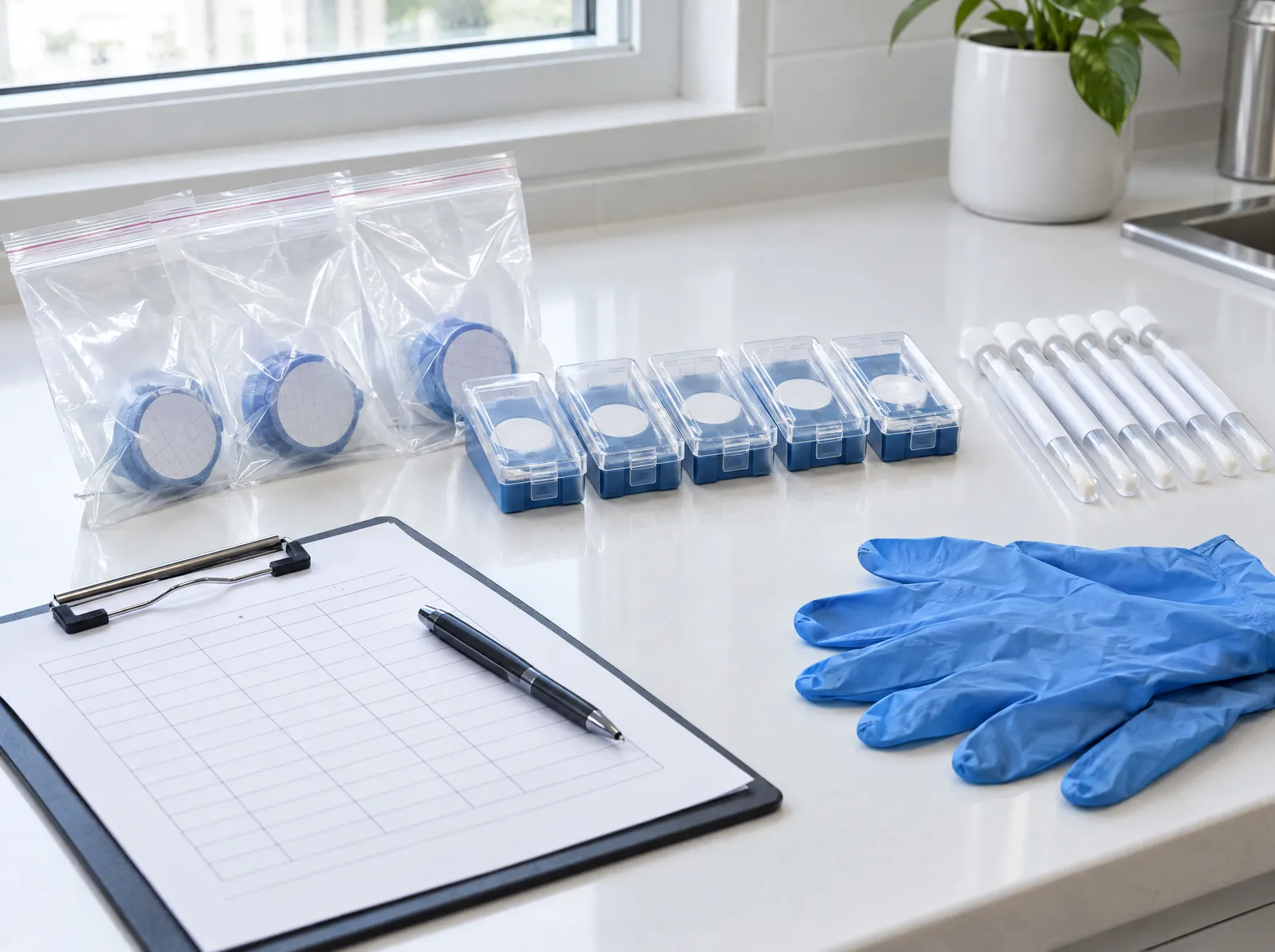
Collect under clean technique
Fresh gloves, sterile collection media and a sealed, labeled container for every sample, with chain-of-custody paperwork so the lab knows exactly what it received.
-
Add mold DNA testing
A dust DNA test such as ERMI or HERTSMI-2 shows which molds have been growing. Matching toxins to the molds that make them helps point to the source.
-
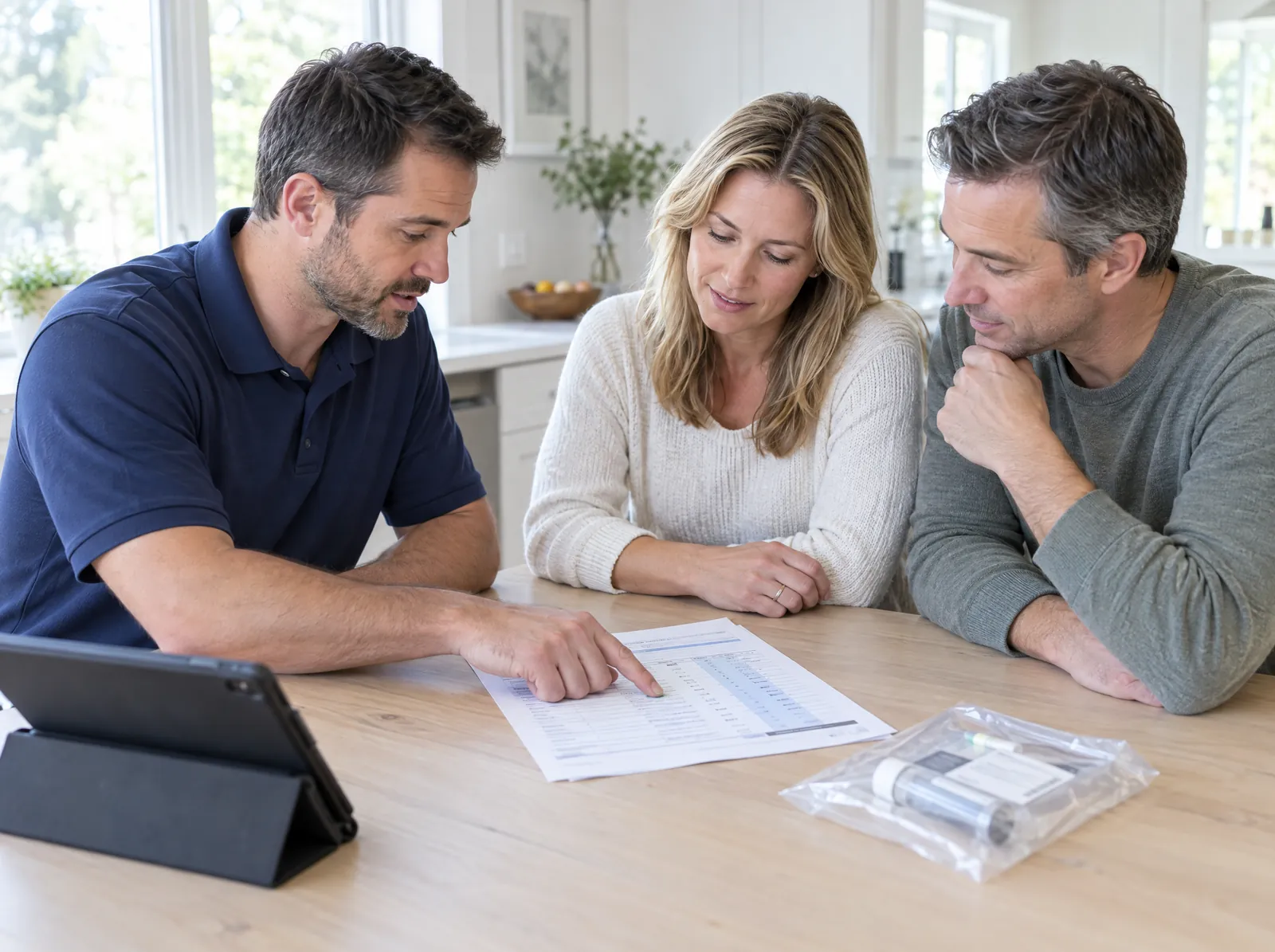
Walk you through the report
Lab results usually come back in 24 to 48 hours. We explain every line, what it supports and what it doesn't, and put our recommendations in writing.
What our mycotoxin testing includes
- A conversation about the home's water history and your concerns
- A visual inspection of living areas, plus the basement, crawlspace or attic as needed
- Moisture mapping with meters and thermal imaging
- Settled dust samples from locations chosen for the question being asked
- A mycotoxin panel run by an environmental laboratory
- Mold DNA dust testing where it adds useful information
- Chain-of-custody records for every sample
- A written summary of results and recommendations
- The full lab report, which you can share with your doctor
- No obligation to hire us for remediation
Proof you can hold in your hands
When we finish, you don't get a handshake and a promise. You get the paperwork your family, your doctor, your insurer or your buyer can rely on.
Inspection report
What we found, where it is coming from, with color photos.
Written remediation plan
Scope, timeline and what will and won't be removed, before work starts.
Clearance lab report
Air, surface and mycotoxin results after the work is done.
A report for your doctor
With your permission, we share results directly with your care team.
Mycotoxin testing, in detail
What a mycotoxin test actually measures
A mycotoxin test isn’t growing anything or counting spores. The lab is looking for specific chemical compounds and reporting how much of each it found, usually as a mass of toxin per mass of dust, such as parts per billion. Each panel checks a set list of toxins. If a toxin isn’t on that list, the report can’t tell you anything about it, so the first question to ask any lab or tester is which compounds the panel covers.
Choosing the sample type
Most home projects rely on settled dust, with other sample types added when one material or item needs a closer look.
| Sample type | How it’s collected | Best for | Limits |
|---|---|---|---|
| Settled dust, vacuum | A filter cassette or collection sock on a vacuum, drawn over a measured area | A picture of a whole room or zone | Needs enough dust. Carpet and hard floors give different results. |
| Settled dust, wipe | A clean cloth drawn across surfaces holding old dust | Door frame tops, cabinet tops, fan blades | Small sample. Technique affects the result. |
| Surface swab | A sterile swab from one spot | Checking a single material or item | Reflects only that spot |
| Bulk material | A small piece of drywall, insulation or carpet | Whether a material itself is contaminated | Destructive, and only one location |
| Air | A pump pulling a large volume of air through a filter | Specialized or research questions | Toxins in air are usually at very low levels, so it’s rarely the first choice |
How labs measure mycotoxins
Environmental labs generally use one of two approaches. Immunoassays, often called ELISA, use antibodies that bind a toxin or a family of closely related toxins. They’re relatively fast and are often used to screen for groups, such as macrocyclic trichothecenes. Because an antibody can react to related compounds, a result may represent a group rather than a single molecule.
Mass spectrometry, usually LC-MS/MS, separates a sample and identifies individual compounds by their mass. It can measure many specific toxins in one run. Neither method is simply better. They answer slightly different questions, and the numbers from one aren’t on the same scale as the other. That’s why before and after samples should go to the same lab using the same method.
Where samples should come from
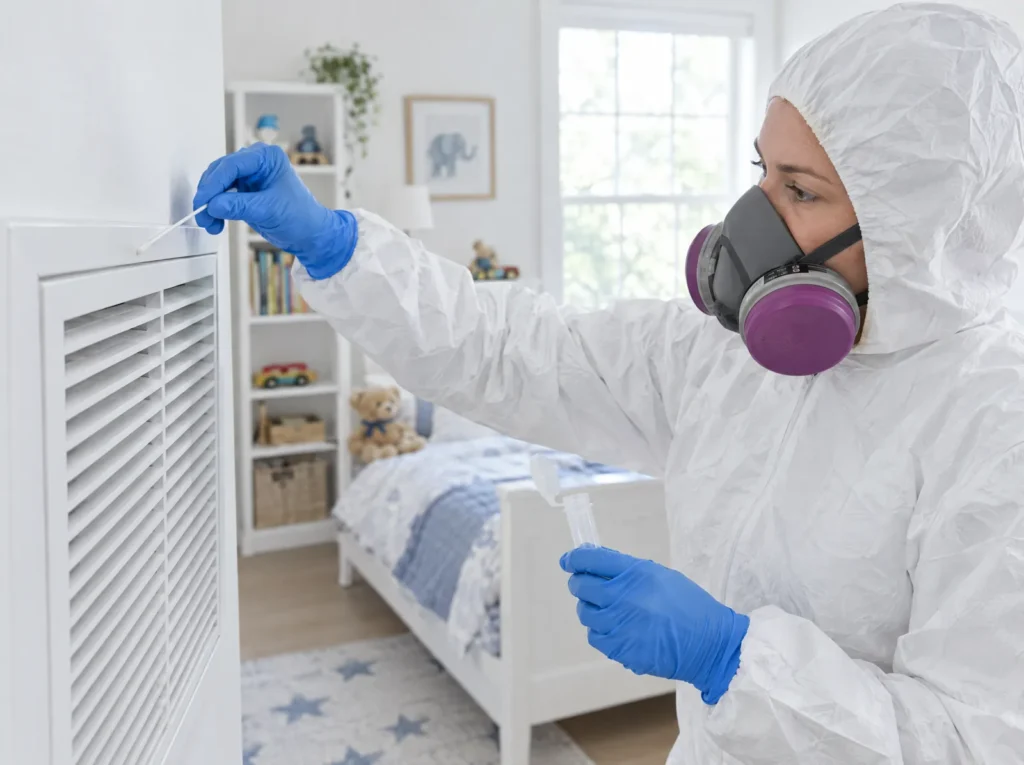
Old dust is a record of what has been floating around the house. We usually sample the rooms where people spend the most time, such as bedrooms and the family room, the area closest to the suspected source, and at least one comparison location. The return side of the HVAC system is often worth sampling too, because it collects dust from the whole area it serves. Our page on mycotoxins in house dust explains where dust tends to pile up and why.
Separate samples usually beat one composite sample. A composite blends several rooms into one number, which can hide a hot spot. Separate samples cost more, but they show whether the problem is concentrated or spread through the house, and that changes the scope of the work.
Testing before and after remediation
A test before remediation sets the scope: which areas need removal, which need cleaning, and whether the HVAC system and belongings are involved. A test after remediation only means something if it can be compared fairly with the first one. That means similar locations, the same sample type, the same lab and the same method. If the first test was a mail-in kit and the second is a professional panel from a different lab, the two sets of numbers can’t be lined up directly. Clearance testing covers how the finish line is set.
Limits worth knowing
- There are no federal standards for mycotoxins in house dust, so no number on a report is an official pass or fail.
- Not detected isn’t zero. It means the amount was below what the method can reliably measure.
- A detection doesn’t locate the source. Dust travels, so inspection and moisture mapping still matter.
- Results depend on sampling. Recently cleaned rooms, very little dust or an unusual location can all shift the numbers.
- A home test is not a medical test. It tells you about the building, not about anyone’s health.
When the report arrives, our guide to reading mycotoxin test results explains units, detection limits and flags. If you’re weighing a kit against professional sampling, can you test your home for mycotoxins yourself? lays out the tradeoffs.
We test buildings for mold and mycotoxins. We don’t diagnose or treat medical conditions, and a home test result is not a medical result. If you or anyone in your home has symptoms, please work with a doctor. With your permission, we’re glad to share results with them.
Common questions
Have a question that isn't here? Call a specialist
Can a house be tested for mycotoxins?
Yes. Environmental labs can measure specific mycotoxins in settled dust, on surfaces and in building materials. Dust is the most common sample because it collects the particles toxins travel on over a long period, while air usually holds them at very low levels at any given moment.
Should I clean before a mycotoxin test?
No. Cleaning removes the dust the test depends on. Live normally, but avoid deep cleaning, dusting or vacuuming the areas being sampled beforehand. If you've recently cleaned, tell the person sampling so they can look for older, undisturbed dust.
Which mycotoxins does a home panel look for?
It depends on the lab. Common panels include macrocyclic trichothecenes, ochratoxin A, aflatoxins, gliotoxin, sterigmatocystin and sometimes citrinin, zearalenone or chaetoglobosins. A panel can only report what it tests for, so check the list before you order.
How long do mycotoxin test results take?
Once samples reach the lab, results usually come back in 24 to 48 hours. We then review them with you and explain what they show.
Will insurance pay for mycotoxin testing?
Sometimes, when testing is part of a covered water-damage claim, but many homeowner policies limit or exclude mold. Coverage varies a lot by policy, so ask your insurer before testing and keep every report.
Can you test just one room?
You can, but a single room gives you one number with nothing to compare it to. Adding a sample from a room far from the suspected problem, or from the main living area, makes the results much easier to interpret.
We're done when the lab says so.
Every remediation ends with clearance testing, and our work is backed by a complete-removal guarantee. We don't close a job on a failed result.
Talk to a specialistPlan a mycotoxin test for your home
Tell us about the house and what your doctor or inspector has said. A specialist will call you back to talk through what to sample and why.
- (833) 772-6653
- info@americanmoldexperts.com
- Open 7 days, 8am to 8pm