
For Indiana families who need answers
Mycotoxin testing for Indiana homes
Dust and surface panels that show which mold toxins are in your house, not just which spores are airborne.
What is mycotoxin testing in Indiana?
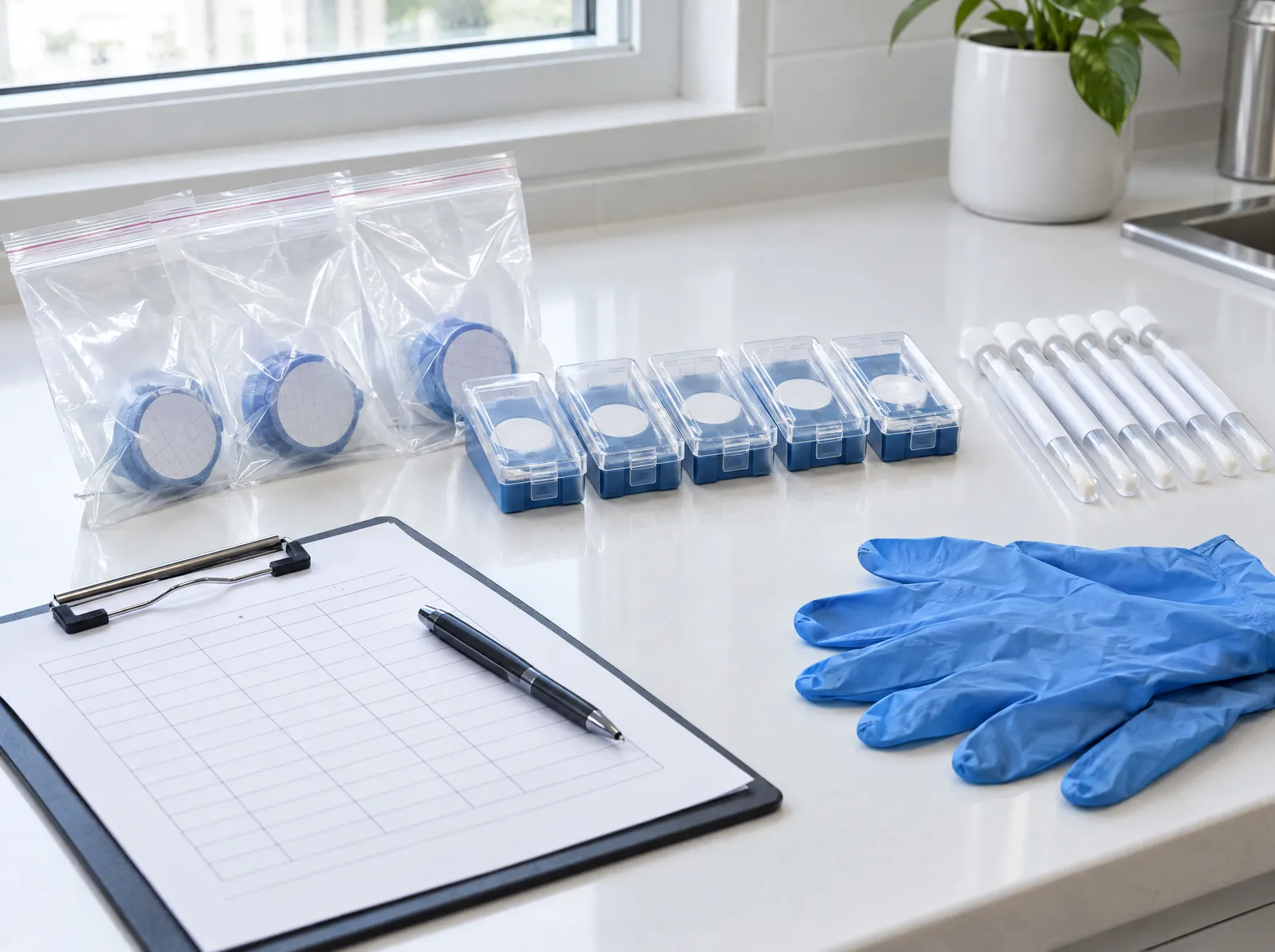
Mycotoxin testing in Indiana checks a home's settled dust and surfaces for the toxic compounds some molds produce, such as trichothecenes, ochratoxin A, gliotoxin and aflatoxins. We collect samples from the places dust has been collecting undisturbed and send them to a lab that runs a mycotoxin panel. Paired with mold testing, it shows what grew in the home and what it left behind.
Why a normal mold test can come back clean
Standard mold tests count spores. Mycotoxins don't show up in a spore count. They travel on dust and on mold fragments far smaller than a spore, and they stay behind after the mold that made them is dead or gone. A house that was cleaned years ago, or where mold is growing out of sight in a crawlspace, can pass a spore test and still carry toxins in the dust that settles in bedrooms and living areas.
Sound familiar?
- Your doctor suspects mold exposure, but your air test looked normal.
- Your home was remediated before, and no one tested for toxins afterward.
- You feel better away from home and worse when you come back.
- You need to decide what to do with furniture, bedding and belongings.
We do it differently.
| Spore-count testing alone | AME mycotoxin testing | |
|---|---|---|
| What's measured | Mold spores in the air | Specific mycotoxins in dust and on surfaces |
| Timeframe | The air at that moment | What has built up in the home over time |
| After old remediation | May look normal | Shows whether toxins were left behind |
| Belongings | No guidance | Results help decide what to clean or replace |
| For your doctor | A spore count | A mycotoxin report you can share |

Why families trust us with their homes
-
Family-owned since 2008
A multigenerational family business. Not a franchise, not a private-equity rollup.
-
Credentialed where it isn't required
Indiana doesn't license mold remediators. We hold IICRC, CMR, CRMI and CCMI credentials anyway.
-
Called on as experts
Attorneys bring us into legal cases involving mold and mycotoxins.
-
Lab results in 24 to 48 hours
Every inspection comes with a written report, color photos and lab results.
- IICRC Certified Firm
- CMR
- CRMI
- CCMI
- BBB A+ Accredited
- NAMRI
- IAQA
- NORMI
- AMMA
- PMII
The AME Clearance Method
How we test an Indiana home for mycotoxins
Where the dust comes from decides what the test can tell you, so sampling is planned before anything is collected.
Talk to a specialist-
Talk it through
We ask about the home's water history, past mold work, which rooms feel worst and whether a doctor has requested specific testing.
-
Choose sample locations
We look for dust that has settled undisturbed: tops of door frames, high shelves, return air grilles, and furniture in the rooms used most.
-
Collect under clean technique
Samples are collected with sealed kits and fresh gloves at each location, so one room's dust doesn't contaminate another's.
-
Pair with mold testing
A mycotoxin panel works best alongside air sampling and dust-based mold DNA testing, so you know which molds were involved as well as which toxins remain.
-
Lab analysis
The lab runs a panel for the mycotoxins most often found in water-damaged buildings. Results typically come back in 24 to 48 hours.
-
Walk through the results
We explain each result, what it suggests about where the source is, and what we'd recommend next. With your permission, we send the report to your doctor.
What's included in mycotoxin testing
- A consultation about your home's history
- A sampling plan built around the rooms you use most
- Settled-dust and surface sample collection
- A lab mycotoxin panel
- Air sampling and dust-based mold testing when recommended
- A moisture check of basement, crawlspace and attic
- A plain-English explanation of the results
- Written recommendations for next steps
- A copy of the report for your doctor, if you'd like

Proof you can hold in your hands
When we finish, you don't get a handshake and a promise. You get the paperwork your family, your doctor, your insurer or your buyer can rely on.
Inspection report
What we found, where it is coming from, with color photos.
Written remediation plan
Scope, timeline and what will and won't be removed, before work starts.
Clearance lab report
Air, surface and mycotoxin results after the work is done.
A report for your doctor
With your permission, we share results directly with your care team.
Mycotoxin testing in Indiana, explained
Who orders mycotoxin testing
Most of the Indiana families who ask for mycotoxin testing have been told by a doctor, often a functional or integrative physician, that their home may be involved in how they feel. Others had mold removed in the past and never felt the house was right afterward. Some are buying a home with a history of water damage and want more than a spore count before they close.
What they share is a question a standard mold test can’t answer: what did the mold leave behind? Our national guide to mycotoxin testing covers the science. This page is about how we do it in Indiana houses.
Where toxins collect in Indiana houses
The layout of a typical Indiana home shapes where mycotoxins end up. Many houses here have a forced-air furnace and ductwork in the basement or crawlspace, which is often the dampest part of the house. The return side of that system pulls air from below grade and spreads fine dust to every room it serves.
Winter adds to it. For months, windows stay shut and the furnace runs, so the same indoor air and dust circulate with little fresh air mixing in. That’s one reason we sample settled dust in the rooms people use most, like bedrooms and family rooms, and not only near the suspected source.
Reading a mycotoxin report
A mycotoxin report lists each toxin the lab checked for and whether it was detected. The results mean the most when read alongside the rest of the picture:
- Which molds were found. If dust testing shows Stachybotrys and the panel shows trichothecenes, the two results support each other and point toward long-term water damage in cellulose materials like drywall paper.
- Where the samples came from. Detections in bedroom dust matter differently than detections near a known leak.
- What has already been done. Toxins found after a past remediation usually mean contaminated dust or materials were left in place.
For more on specific results, see what mycotoxin test results mean.
From results to a plan
Test results decide what happens next. Sometimes they point to one area and a focused cleanup. Sometimes they show toxins spread through the HVAC system and the living space, which calls for a whole-house approach. If remediation is needed, the same panel is repeated afterward as part of clearance testing, so you can compare before and after directly. Our Indiana mycotoxin remediation page explains that work.
We test buildings for mold and mycotoxins. We don’t diagnose or treat medical conditions, and home test results aren’t a medical test. If you have symptoms, please work with a doctor. With your permission, we’re glad to share results with them.
Common questions
Have a question that isn't here? Call a specialist
How much does mycotoxin testing cost?
It depends on how many samples the home needs and whether we pair the panel with air and dust-based mold testing. We'll recommend a sampling plan and give you the cost before we schedule.
Can I test my own home for mycotoxins?
Some kits are sold directly to homeowners. The hard part is knowing where to sample and how to read the results in the context of the house. A result from the wrong room, or dust that was recently cleaned, can point you in the wrong direction.
Is this the same as a urine mycotoxin test?
No. Urine tests are ordered by doctors and measure what's in a person. We test the building. Some families do both, and doctors often find the home results useful alongside their own testing.
Which mycotoxins do you test for?
Panels usually cover the toxins most often linked to indoor mold, including trichothecenes such as satratoxins, ochratoxin A, gliotoxin, aflatoxins and sterigmatocystin. The exact list depends on the lab panel.
Do you have to do the remediation if you do the testing?
No. Testing stands on its own. You get the lab results and our written recommendations with no obligation to hire us for the work.
When should an Indiana family consider mycotoxin testing?
Common reasons include a doctor asking about mold exposure, a history of leaks or basement flooding, a past remediation that was never verified, or feeling better away from home. It's also worth considering before moving a sensitive family member into a house with known water damage.
How long do results take?
Lab results typically come back in 24 to 48 hours after the samples arrive at the lab.
We're done when the lab says so.
Every remediation ends with clearance testing, and our work is backed by a complete-removal guarantee. We don't close a job on a failed result.
Talk to a specialistFind out what's in your home's dust
Tell us what's going on and what your doctor has asked for. A specialist will call you back.
- (833) 772-6653
- info@americanmoldexperts.com
- Open 7 days, 8am to 8pm