
Roof sheathing, rafters and ventilation
Attic mold removal that fixes the airflow too
Attic mold is usually a ventilation problem wearing a mold costume. We remove it and fix why it grew.
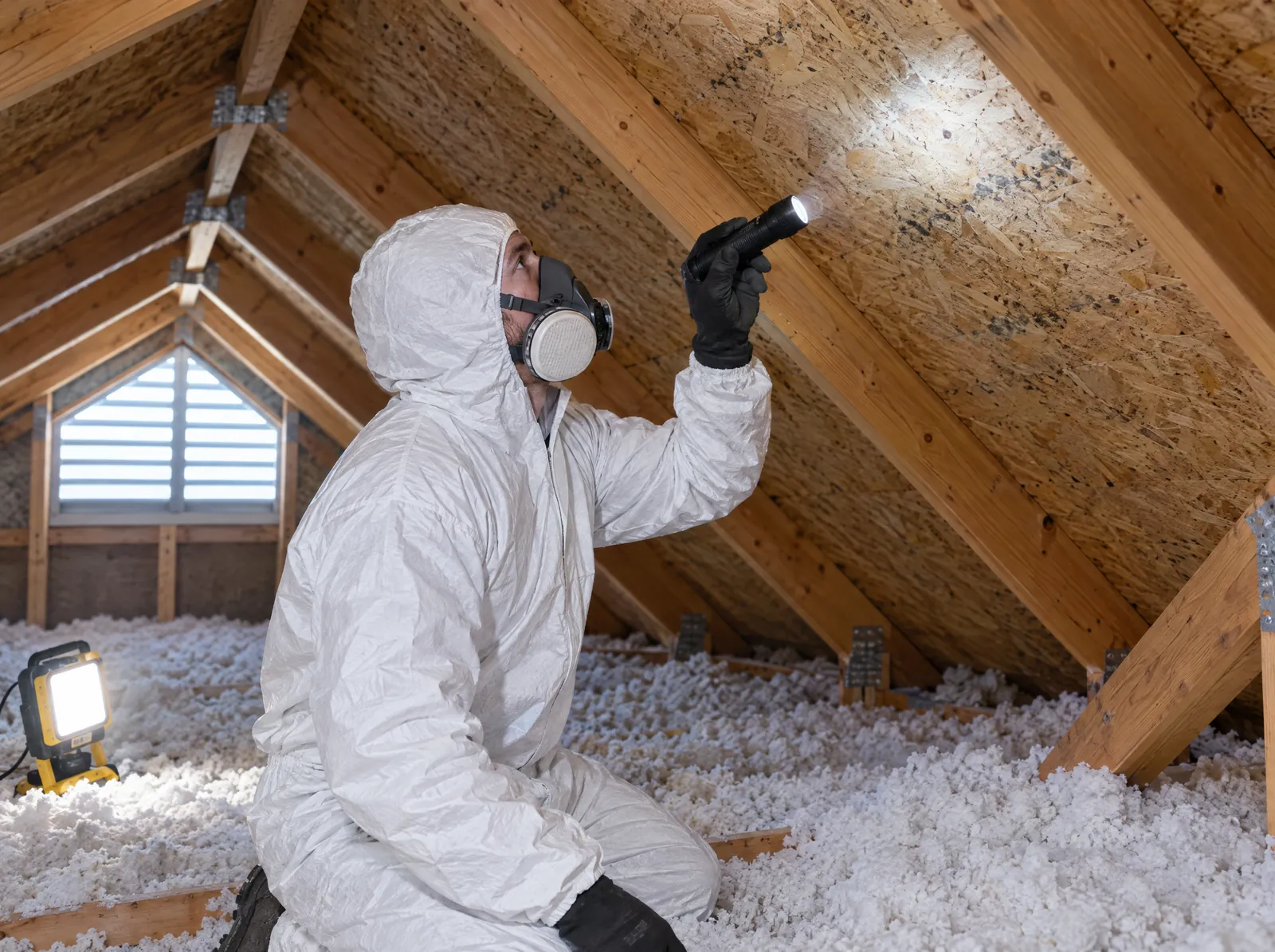
How is attic mold removal done?
Attic mold removal means cleaning mold from the underside of the roof sheathing and the rafters or trusses, removing insulation that is wet or contaminated, and correcting the moisture that caused it. In most attics that moisture is warm, humid air from the house condensing on cold roof decking, not a roof leak. The job isn't finished until ventilation and air leaks are addressed and clearance testing confirms the result.
Why attic mold is rarely a roof problem
Most people who find mold in the attic assume the roof is leaking. Sometimes it is. Far more often the roof is fine and the moisture came from inside the house: a bath fan venting into the insulation, warm air leaking up around light fixtures and the attic hatch, or soffit vents blocked by insulation. That moist air meets the cold underside of the roof in winter, condenses, and feeds mold across the sheathing. Replacing the roof won't fix that. Neither will spraying the wood.
Sound familiar?
- A home inspection flagged dark staining on the roof sheathing.
- You were quoted a new roof for what might be a ventilation issue.
- Frost or water droplets form on the nails and decking in winter.
- A bathroom fan has been blowing into the attic for years.
We do it differently.
| Spray-and-seal attic jobs | AME attic remediation | |
|---|---|---|
| Diagnosis | Blamed on the roof | Traced to leaks, venting or ventilation |
| Sheathing | Sprayed with a colored sealant | HEPA vacuumed, cleaned and treated |
| Insulation | Left in place | Removed where wet or contaminated |
| Exhaust fans | Not checked | Confirmed to vent outdoors |
| Proof | Encapsulant hides the stain | Clearance testing with lab results |

Why families trust us with their homes
-
Family-owned since 2008
A multigenerational family business. Not a franchise, not a private-equity rollup.
-
Credentialed where it isn't required
Indiana doesn't license mold remediators. We hold IICRC, CMR, CRMI and CCMI credentials anyway.
-
Called on as experts
Attorneys bring us into legal cases involving mold and mycotoxins.
-
Lab results in 24 to 48 hours
Every inspection comes with a written report, color photos and lab results.
- IICRC Certified Firm
- CMR
- CRMI
- CCMI
- BBB A+ Accredited
- NAMRI
- IAQA
- NORMI
- AMMA
- PMII
The AME Clearance Method
Attic mold removal, step by step
Six steps. The last one is only meaningful if the second one gets done.
Talk to a specialist-
Read the pattern
We check where the growth is heaviest, take moisture readings on sheathing and framing, and look at vents, fans, penetrations and insulation depth.
-
Find the moisture path
Exhaust fans venting into the attic, air leaks from the living space, blocked soffits, ice dams or a roof leak. We identify which, and what needs to change.
-
Contain the attic
The hatch and ceiling openings are sealed and HEPA air machines keep the attic under negative pressure so dust doesn't fall into the rooms below.
-
Remove contaminated insulation
Insulation that is wet, moldy or heavily soiled is removed with HEPA equipment and bagged.
-
Clean the sheathing and framing
Roof decking, rafters and trusses are HEPA vacuumed, cleaned and treated with plant-based enzyme products.
-
Correct and verify
Once venting and air sealing are fixed, clearance testing confirms the attic is clean before new insulation goes in.
What an attic project includes
- Moisture readings on sheathing, rafters and trusses
- A check of every fan, vent and ceiling penetration
- A written explanation of the moisture source
- Containment of the attic hatch and ceiling openings
- HEPA removal of contaminated insulation
- HEPA vacuuming and cleaning of roof decking and framing
- Enzyme treatment of wood surfaces
- Recommendations for ventilation and air sealing
- Clearance testing before new insulation goes in

Proof you can hold in your hands
When we finish, you don't get a handshake and a promise. You get the paperwork your family, your doctor, your insurer or your buyer can rely on.
Inspection report
What we found, where it is coming from, with color photos.
Written remediation plan
Scope, timeline and what will and won't be removed, before work starts.
Clearance lab report
Air, surface and mycotoxin results after the work is done.
A report for your doctor
With your permission, we share results directly with your care team.
Attic mold, explained
Where attic moisture comes from
An attic is supposed to stay close to outdoor conditions: cold in winter, hot in summer, and dry. Air enters low at the soffits, moves along the underside of the roof and leaves high at ridge or gable vents. Mold grows when that system is interrupted or when the house keeps feeding it moist air. These are the causes we find most:
- Exhaust fans that end in the attic. Bathroom, kitchen and sometimes dryer ducts that were never connected to a roof or wall cap, or that came loose, dump warm, wet air straight onto the insulation and decking.
- Air leaks from the house. Recessed lights, the attic hatch, plumbing vents, wiring holes and the tops of interior walls let conditioned air rise into the attic. In winter that air carries moisture from cooking, showers and breathing.
- Blocked soffit vents. Insulation pushed against the eaves can cut off intake air, so the attic stops flushing moisture out.
- Ice dams and roof leaks. Water getting under shingles or around flashing wets sheathing in one area, usually near a valley, chimney, skylight or the eaves.
What the pattern tells you
Attic mold leaves a signature. Even staining spread across large areas of sheathing, often worst on the side of the roof that gets the least sun, usually points to condensation from inside the house. Growth concentrated around a bath fan or at the end of a loose duct points to exhaust. A dark patch around a chimney, vent stack or valley, with water stains running down the rafters, points to a leak. Rusted nail tips poking through the decking are a sign that frost has been forming and melting on them. Reading the pattern first keeps you from paying for the wrong fix.
How sheathing gets cleaned
There are several ways the industry cleans roof decking. Some companies use soda or dry-ice blasting, which is fast but throws debris and dust across the attic and into the insulation, so it has to be paired with careful containment and cleanup. Others spray a biocide and follow with a colored encapsulant, which changes how the wood looks without removing anything. Our approach is slower and quieter: HEPA vacuuming to lift loose growth and dust, detailed cleaning of the sheathing and framing, and a plant-based enzyme treatment designed to break down mold and mycotoxins left in the wood grain. We use products from US Enzyme for that step, and testing afterward is what tells you whether the method worked.
Fixing the attic so it stays clean
Remediation removes the growth. These fixes, usually done by a roofer, insulation contractor or HVAC technician, stop it from returning:
- Extend every exhaust duct to a dedicated exterior termination, with insulated duct runs so they don’t drip condensation.
- Air seal the attic floor: around fixtures, pipes, wiring, chimneys and the hatch.
- Install baffles at the eaves so insulation doesn’t block soffit intake.
- Make sure intake and exhaust vents are balanced for the roof.
- Repair flashing and address the heat loss that leads to ice dams.
Bathroom fans are behind so many attic problems that our page on bathroom mold remediation covers venting in detail. If you’ve been told to paint the sheathing and move on, read why painting over mold rarely holds up. And if you’d like to know what’s in the air below before deciding, start with mold testing. In Indiana? See attic mold removal in Indiana.
We remove mold and mycotoxins from buildings. We don’t diagnose or treat medical conditions. If anyone in your home has symptoms, please work with a doctor. With your permission, we’re glad to share test results and our plan with them.
Common questions
Have a question that isn't here? Call a specialist
What causes mold in an attic?
Usually moisture from inside the house. Warm, humid air leaks into the attic through ceiling gaps and fixtures, or is blown there by bathroom, kitchen or dryer vents that don't reach the outdoors. It condenses on the cold roof sheathing. Roof leaks and ice dams cause it too, but less often than most people expect.
Is attic mold dangerous if I never go up there?
It's less directly connected to your living space than a basement or crawl space, because air generally flows up and out through the attic. But ceiling gaps, return ducts in the attic and the attic hatch can all move air and dust back into the house. It also signals a moisture problem that can damage the roof deck over time.
Does attic mold removal mean replacing the roof?
Rarely. Mold on roof sheathing is almost always surface growth that can be cleaned. Sheathing is replaced only if it's delaminating, soft or rotted, which usually comes from long-term leaks rather than condensation.
Should the attic insulation be replaced?
Only where it's wet, moldy or heavily contaminated with debris. Insulation that has stayed dry can often stay. When some has to come out, it's usually a good time to air seal the ceiling below before new insulation goes in.
Do mold sealants or encapsulants work in attics?
Colored encapsulants are sometimes sprayed over attic mold to make it look finished. They can have a place after cleaning, but applied over growth they only cover it, and they make it harder to judge the wood later. We clean first and let testing decide.
Can ice dams cause attic mold?
Yes. Ice dams form when heat escaping into the attic melts snow that refreezes at the eaves. Water can then back up under shingles and wet the sheathing. The heat loss that causes ice dams also usually means warm, moist air is reaching the attic.
We're done when the lab says so.
Every remediation ends with clearance testing, and our work is backed by a complete-removal guarantee. We don't close a job on a failed result.
Talk to a specialistHave your attic checked before you re-roof
Send us the inspection note or tell us what you saw. A specialist will call you back.
- (833) 772-6653
- info@americanmoldexperts.com
- Open 7 days, 8am to 8pm