
Does sump pump failure cause mold?
Short answer
Yes, it can. When a sump pump fails, groundwater fills the pit and spreads across the basement floor, and mold can start growing on wet drywall, carpet, wood and cardboard within 24 to 48 hours. Even a shallow overflow wicks up inside finished walls. Drying fast, removing soaked porous materials and checking the places you can't see keep a pump failure from turning into a mold problem.
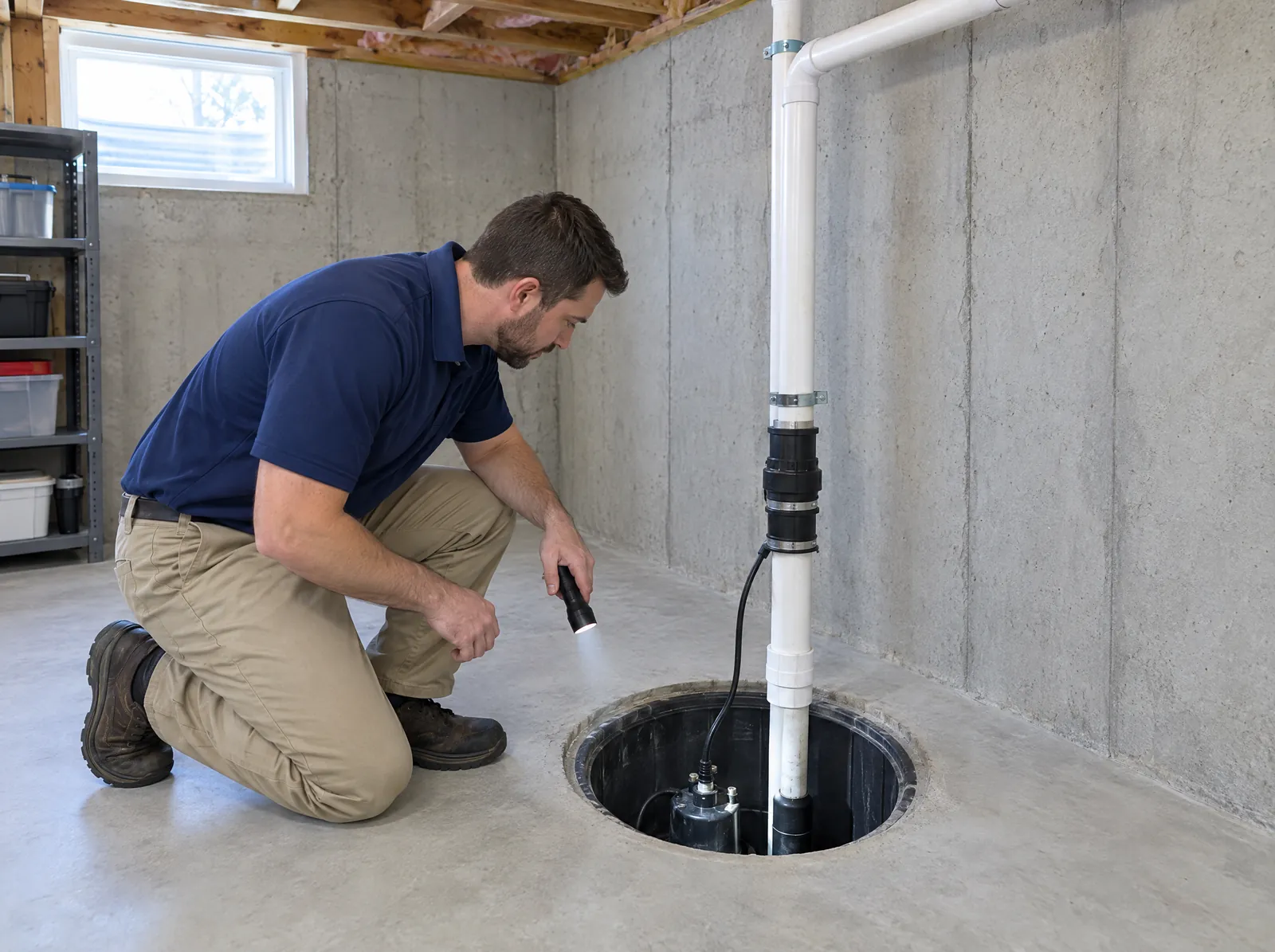
Why sump pumps fail when you need them most
In Indiana, sump pumps work hardest in spring, when rain lands on thawing, saturated clay soil and the water table rises. That’s also when they’re most likely to quit. The common causes:
- Power outages during the same thunderstorms that send water to the pit.
- A stuck float switch, often jammed against the side of the pit or by debris.
- An undersized or worn-out pump that can’t keep up with a heavy storm.
- A blocked or frozen discharge line, especially after a cold snap, so water has nowhere to go.
- A discharge that empties next to the house, sending the same water back to the foundation.
The first 48 hours
Mold needs moisture and time. Take away the time and most of the risk goes with it.
- Stay safe. If water is near outlets, cords or the furnace, don’t step in it until the power to that area is off.
- Get the pump running or replaced, then remove standing water with a wet vacuum or pump.
- Move boxes, rugs and furniture out of the wet area. Cardboard and paper wick water fast and are easy food for mold.
- Pull up soaked carpet and pad. Pad rarely dries well enough to keep.
- Run fans and a dehumidifier, and keep the basement closed to humid outdoor air.
- Take photos and call your insurer before throwing out anything major. Whether a claim is covered often depends on an optional water backup endorsement, as our page on homeowners insurance and mold in Indiana explains.
What you can’t see from the floor
The visible waterline is rarely the end of it. Drywall wicks water upward, often several inches above where it stood. Insulation behind it stays wet long after the surface feels dry. Bottom plates, the wood framing that sits on the slab, can hold moisture for weeks. In many Indiana homes the furnace and return ducts sit in the basement too, so a damp basement can send humid, spore-laden air through the rest of the house.
A moisture meter or thermal camera shows which walls are still wet. Wet drywall that hasn’t dried within a couple of days is often cheaper to cut out low than to wait on. See whether you have to remove drywall with mold for how that decision gets made.
If mold has already started
Sometimes a failure isn’t discovered for days, for example when the family was away or the basement is rarely used. If you smell mustiness or see spotting, stop running fans that blow across moldy surfaces, since they spread spores. Keep the dehumidifier on and have the space tested. Our step-by-step guide on what to do after a basement flood in Indiana covers the cleanup order in more depth.
Carpet, drywall and boxes that sat wet for several days usually need to come out under containment rather than be scrubbed in place, because tearing them out in the open sends spores and dust up the stairs. Framing and concrete can almost always be cleaned and kept once they’re dry. Testing afterward confirms the basement is back to normal before you refinish it.
Preventing the next one
- Add a battery backup pump, or a second pump, if your basement is finished or the pump runs often.
- Install a high-water alarm that alerts your phone, not just a buzzer nobody hears.
- Test the pump each spring by pouring a bucket of water into the pit and watching it cycle.
- Route the discharge well away from the foundation, and keep the outdoor end clear of ice and debris.
- Replace an aging pump before it fails, not after.
We're done when the lab says so.
Every remediation ends with clearance testing, and our work is backed by a complete-removal guarantee. We don't close a job on a failed result.
Talk to a specialistBasement took on water?
Moisture mapping shows what's still wet inside the walls. Tell us what happened, and a specialist from our Avon office will call you back.
- (833) 772-6653
- info@americanmoldexperts.com
- Open 7 days, 8am to 8pm