
Can a house full of mold be saved?
Short answer
Usually, yes. Even a house full of mold can often be saved, because the parts that matter most, such as framing, concrete, masonry and roof sheathing, can usually be cleaned or treated. Drywall, insulation, carpet and other porous finishes with growth are removed and replaced. A house may not be worth saving when framing has rotted, sewage soaked through it, or the cost approaches the home's value.
Why most moldy houses can be saved
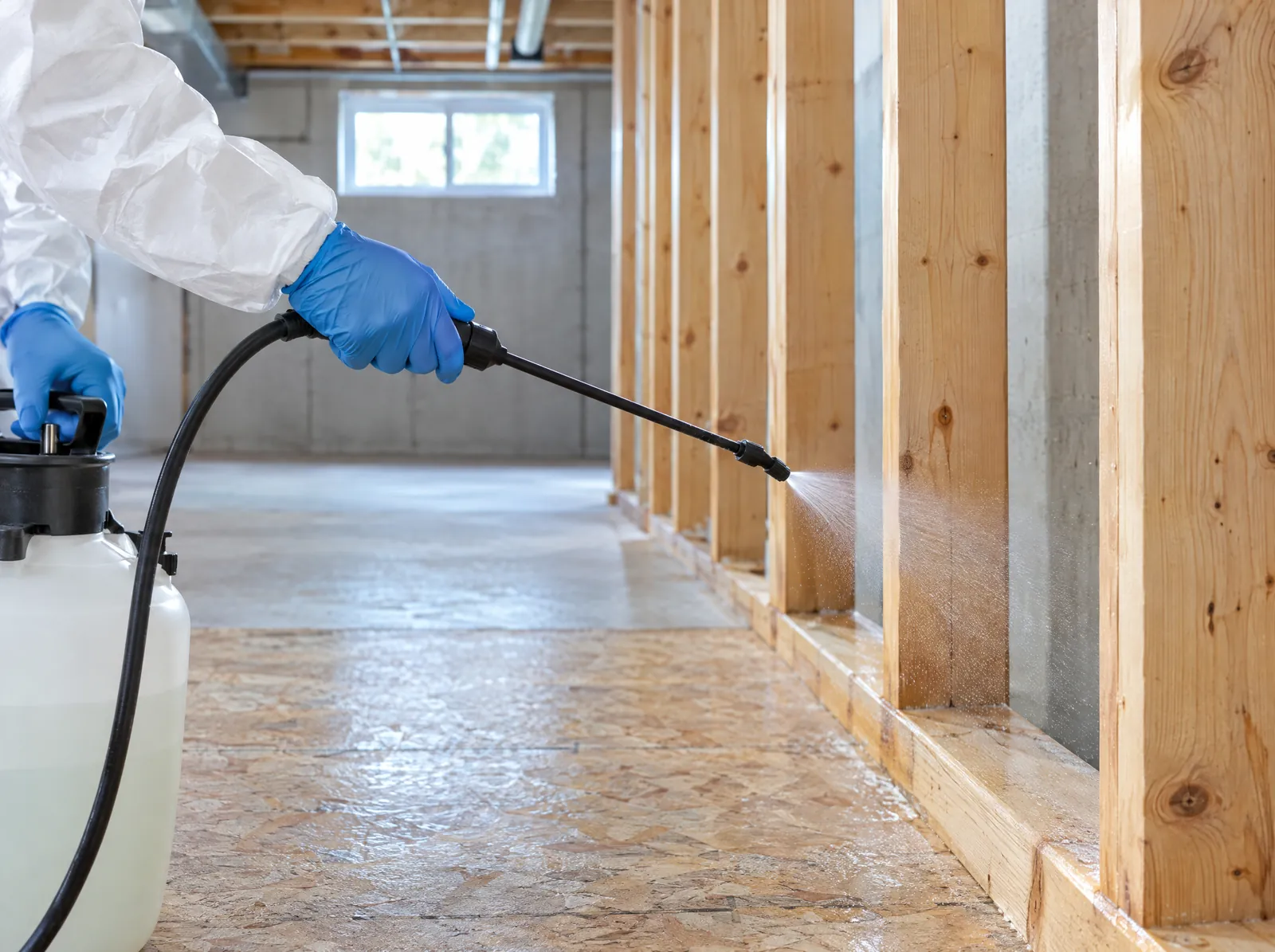
When mold seems to be everywhere, it feels like the whole building is ruined. In practice, mold grows on the surface layers of a house first: drywall paper, insulation, carpet, cardboard and dust. The structural skeleton underneath is far more forgiving. Solid wood framing with surface growth can be HEPA vacuumed, cleaned and treated. Concrete and block can be cleaned. Roof sheathing in an attic can usually be cleaned in place unless it has delaminated or rotted.
So the real job in a heavily affected house is often large but straightforward: take out the porous finishes, clean the structure, clean the dust from everything that stays, and fix the water that caused it.
What usually stays and what usually goes
| Material | Usual outcome in a heavily affected home |
|---|---|
| Wood framing, joists and rafters | Cleaned and treated, unless soft or rotted |
| Concrete, block and brick | Cleaned |
| Roof and wall sheathing | Often cleaned; replaced if delaminated or decayed |
| Drywall and plaster with growth | Removed and replaced |
| Insulation that is wet or contaminated | Removed |
| Carpet and pad | Usually removed |
| Hard furniture, glass, metal | Usually cleanable |
| Upholstery, mattresses, paper goods | Case by case; often discarded when heavily affected |
Our answer on whether you have to remove drywall with mold explains how that call is made wall by wall.
When saving the house may not make sense
There are real cases where rebuilding or walking away is the better choice. They are less common than people fear, but worth naming:
- Widespread structural decay. Long-term leaks can rot sills, joists and subfloors to the point that repair becomes reconstruction.
- Sewage or floodwater through the whole house. Contaminated water changes what can be kept.
- Cost near or above the home’s value, once remediation, repairs and rebuilding are added together.
- A moisture problem that can’t be fixed economically, such as a site that floods repeatedly.
- A household member who is very sensitive to mold, for whom the bar for “clean” is especially high.
How to decide
Start with an assessment before anyone tears anything out. Moisture mapping and testing show how far growth actually reaches, which is often less than it looks, and sometimes more. A written scope then turns “everything is moldy” into a list of rooms and materials you can put costs against. Our answer on whether mold remediation is worth it walks through weighing that cost.
For families dealing with mold-related illness, the question is often less about the structure and more about whether the home can be made clean enough for the person who is sick. That usually means looking at the fine dust as well as visible growth, because dead mold and its fragments can still carry mycotoxins. Our guide on whether to remediate or move is written for that decision.
What a full-house job involves
Large projects are usually worked in zones, with containment moving through the house and HEPA air filtration running throughout. The moisture source is corrected first. Porous materials come out, structure is cleaned, and every surface that stays, including ductwork, is cleaned of settled dust. We use plant-based enzyme treatments from US Enzyme on what remains, and we test before containment comes down. A house isn’t finished until the lab results say so.
We remove mold and mycotoxins from buildings. We don’t diagnose or treat medical conditions. If you or anyone in your home has symptoms, please talk with a doctor. With your permission, we’re glad to share test results with them.
We're done when the lab says so.
Every remediation ends with clearance testing, and our work is backed by a complete-removal guarantee. We don't close a job on a failed result.
Talk to a specialistWondering if your house can be saved?
Tell us what you're seeing, how long it's been going on and who lives in the home. We'll talk through what an assessment would look at and what a realistic plan could involve.
- (833) 772-6653
- info@americanmoldexperts.com
- Open 7 days, 8am to 8pm