
Air handlers, coils and ductwork
Mold in air ducts and HVAC systems
Your HVAC system reaches every room. When mold gets into it, the fix has to reach every room too.
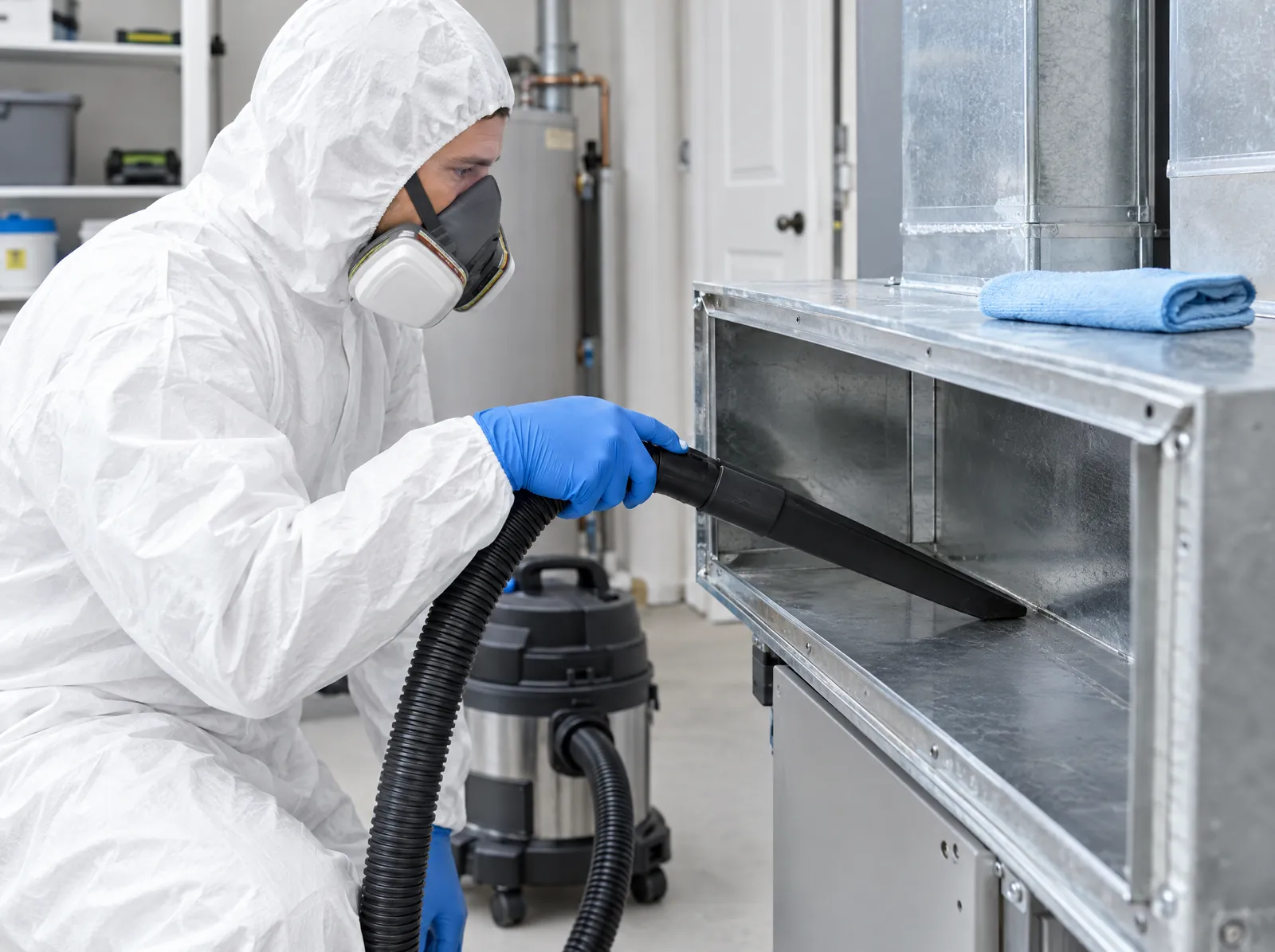
How do you get rid of mold in air ducts?
Mold in air ducts is removed by cleaning the whole HVAC system, not just the ducts: the air handler cabinet, evaporator coil, drain pan and blower, where growth usually starts, then the supply and return ducts under negative pressure with HEPA-filtered equipment. Duct board and lined ducts with growth generally have to be replaced. The humidity or drainage problem that fed the mold gets corrected, and air testing afterward confirms the system is clean.
The ducts are rarely where it starts
When people suspect mold in air ducts, they usually call a duct cleaner. But the ductwork is often downstream of the real problem. Growth typically begins where the system is wettest: on the cold evaporator coil, in a drain pan that doesn't empty, on the blower wheel, or in the insulation lining the air handler. Clean the ducts without cleaning those parts and the system reseeds itself the next time the air conditioning runs.
Sound familiar?
- The house smells musty for a minute every time the system kicks on.
- You see dark spots on supply registers or the ceiling around them.
- You paid for duct cleaning and the smell came back.
- Mold was remediated in one room, but you're worried the system spread it.
We do it differently.
| Typical duct cleaning | AME HVAC mold remediation | |
|---|---|---|
| Scope | Supply and return ducts | Air handler, coil, drain pan, blower and ducts |
| Duct board and lined duct | Brushed and fogged | Replaced where growth is present |
| Method | Spray or fog a biocide | HEPA source removal under negative pressure |
| Cause | Not investigated | Drainage, humidity and air leaks checked |
| Proof | Before and after photos | Air testing after the work |

Why families trust us with their homes
-
Family-owned since 2008
A multigenerational family business. Not a franchise, not a private-equity rollup.
-
Credentialed where it isn't required
Indiana doesn't license mold remediators. We hold IICRC, CMR, CRMI and CCMI credentials anyway.
-
Called on as experts
Attorneys bring us into legal cases involving mold and mycotoxins.
-
Lab results in 24 to 48 hours
Every inspection comes with a written report, color photos and lab results.
- IICRC Certified Firm
- CMR
- CRMI
- CCMI
- BBB A+ Accredited
- NAMRI
- IAQA
- NORMI
- AMMA
- PMII
The AME Clearance Method
How we remediate mold in an HVAC system
Seven steps, starting at the air handler and working outward through the ducts.
Talk to a specialist-
Inspect the system
We open the air handler, look at the coil, drain pan, blower and internal insulation, and inspect ducts with a camera where they're accessible.
-
Test the air
Air samples from supply registers and rooms, compared with outdoors, show whether the system is distributing spores through the house.
-
Find the moisture
Clogged condensate lines, a rusted or sloped drain pan, leaky return ducts in a humid space or an oversized system that short-cycles.
-
Seal and isolate
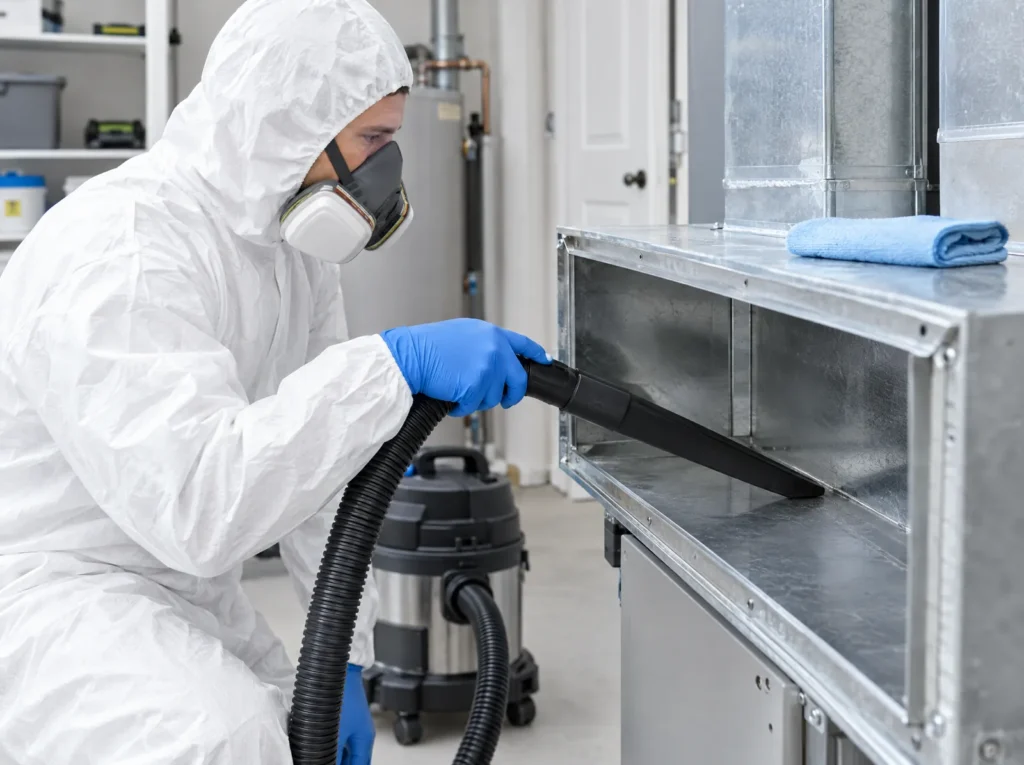
Registers are covered and the system is put under negative pressure with HEPA-filtered equipment so debris goes into the collector, not the rooms.
-
Clean at the source
Coil, drain pan, blower and cabinet are cleaned, and contaminated internal insulation or duct board is removed and replaced.
-
Clean the ductwork
Metal supply and return ducts are cleaned with agitation tools and HEPA vacuum collection, then treated with products appropriate for HVAC use.
-
Retest
With the system running normally, air testing confirms it has stopped circulating mold through the house.
What an HVAC mold project includes
- Air handler, coil, drain pan and blower inspection
- Camera inspection of accessible ductwork
- Air sampling at registers and in living spaces
- Identification of the moisture source
- Negative pressure and HEPA collection during cleaning
- Source cleaning of coil, pan, blower and cabinet
- Replacement of contaminated duct board or lining
- HEPA cleaning of metal supply and return ducts
- Filter and humidity recommendations
- Post-cleaning air testing and a lab report

Proof you can hold in your hands
When we finish, you don't get a handshake and a promise. You get the paperwork your family, your doctor, your insurer or your buyer can rely on.
Inspection report
What we found, where it is coming from, with color photos.
Written remediation plan
Scope, timeline and what will and won't be removed, before work starts.
Clearance lab report
Air, surface and mycotoxin results after the work is done.
A report for your doctor
With your permission, we share results directly with your care team.
HVAC mold, explained
The parts of the system where mold grows
An air conditioner is, among other things, a dehumidifier. As warm air passes over the cold evaporator coil, water condenses out of it, drips into a pan and drains away. That’s normal, and it’s also why the area around the coil is the wettest place in most houses during the cooling season. Mold in air ducts usually starts in one of these spots:
| Component | Why it grows mold | Usual fix |
|---|---|---|
| Evaporator coil | Wet for hours at a time, and it catches dust that feeds growth | Coil cleaning |
| Drain pan and condensate line | Standing water when the pan is rusted, sloped wrong or the line clogs | Clean, repair or replace; clear the line |
| Blower wheel and housing | Collects damp dust just downstream of the coil | Remove and clean |
| Internal cabinet insulation | Porous and often damp near the coil | Replace where contaminated |
| Duct board and lined ducts | Porous surfaces that hold dust and moisture | Replace sections with growth |
| Metal ducts | Condensation where ducts pass through hot, humid attics or crawl spaces | Clean; insulate and seal the ducts |
Signs, and what they don’t mean
A musty or dirty-sock smell for the first few minutes after the system turns on is the most common sign we hear about. It usually means growth on the coil or in the pan. Dark spotting on the ceiling around supply registers is common too, but it isn’t always mold. Cold supply air can cause condensation on the register and ceiling in humid weather, and dust sticks to the damp surface. It may be mold, dust or both, and a surface sample settles it. A spotless register doesn’t rule out a problem either: a dirty coil can be hidden behind a closed cabinet door.
Duct cleaning is not the same as duct mold remediation
Routine duct cleaning removes dust and debris. It’s useful, and the National Air Duct Cleaners Association publishes standards for doing it properly. Mold remediation in an HVAC system has a different goal: remove active growth and contaminated material, keep what’s disturbed from spreading, correct the moisture and prove the result. That means the air handler is cleaned along with the ducts, porous components with growth are replaced rather than brushed, and air testing is done afterward.
Be cautious with offers to fog or spray the ducts as the main treatment. The EPA’s guidance for homeowners notes that biocides and sealants in ductwork should only be considered after the system has been properly cleaned, and only with products registered for that use. Our treatment step uses plant-based enzyme products from US Enzyme, applied after cleaning.
Humidity is usually the root cause
A system that’s the wrong size for the house can make the problem worse. An oversized air conditioner cools the air quickly and shuts off before it has run long enough to pull much moisture out, a pattern called short-cycling. The house feels cool but clammy, and the coil stays damp. Leaky return ducts in a crawl space or attic can also pull in humid, dusty air. After cleaning, we’ll tell you what we saw and recommend that an HVAC contractor check sizing, drainage and duct sealing where it’s warranted. Keeping indoor humidity in the range the EPA recommends, below 60 percent and ideally 30 to 50 percent, is the best protection for the system and the house.
Mycotoxins and the air handler
If testing has found mycotoxins in a home, the HVAC system is one of the first places we look, because it collects and redistributes the fine dust toxins travel on. Read more about mycotoxins in HVAC systems and whether mycotoxins spread through HVAC. If the ductwork runs through the crawl space, crawl space mold remediation is often part of the same fix. In Indiana? See HVAC and duct mold remediation in Indiana.
We remove mold and mycotoxins from buildings and building systems. We don’t diagnose or treat medical conditions. If anyone in your home has symptoms, please work with a doctor. With your permission, we’re glad to share test results and our plan with them.
Common questions
Have a question that isn't here? Call a specialist
How do I know if there is mold in my air ducts?
A musty smell when the system starts, visible growth inside the air handler or on the coil, and mold returning around supply registers are the usual signs. Dark dust on a register isn't proof by itself, since it's often just dust. Air sampling at the registers compared with outdoors is the clearest way to know.
Can I clean mold out of my ducts myself?
Wiping a register cover is fine. Cleaning inside ducts or the air handler without negative pressure and HEPA collection tends to knock loose debris into the airstream and spread it through the house. The coil and blower also need care to avoid damage.
Does fogging the ducts get rid of mold?
Fogging can kill some surface mold, but it doesn't remove it, and the dead growth and dust stay in the system. The EPA advises that biocides only be used in ducts after cleaning, and only products registered for that use, applied according to the label.
Do moldy ducts have to be replaced?
Bare sheet-metal ducts can usually be cleaned. Fiberglass duct board, internally lined ducts and flexible ducts with growth in the insulation or liner generally can't be cleaned reliably and are replaced.
Should the HVAC be cleaned before or after mold remediation in the house?
After, or at least sealed off during. If the house is remediated while the system keeps running, it can pull fresh contamination into clean ducts. We seal registers during the work and clean the system once the source areas are done.
Will a UV light prevent mold in my HVAC system?
UV lamps aimed at the coil can reduce growth on the surfaces they reach. They don't clean existing contamination, can't reach inside ductwork, and won't make up for a clogged drain line or high humidity.
Can mycotoxins spread through the HVAC system?
Yes. Mycotoxins travel on dust and mold fragments, and the HVAC system moves both. That's why we clean the system after remediation and, when a project calls for it, test settled dust in rooms the system serves.
We're done when the lab says so.
Every remediation ends with clearance testing, and our work is backed by a complete-removal guarantee. We don't close a job on a failed result.
Talk to a specialistWorried your HVAC is spreading mold?
Tell us what you smell and when. A specialist will call you back and explain how we'd test the system.
- (833) 772-6653
- info@americanmoldexperts.com
- Open 7 days, 8am to 8pm