
Where mycotoxins hide
Mycotoxins in HVAC ducts and air systems
How a forced-air system collects and spreads mycotoxins, and what it takes to get them out.
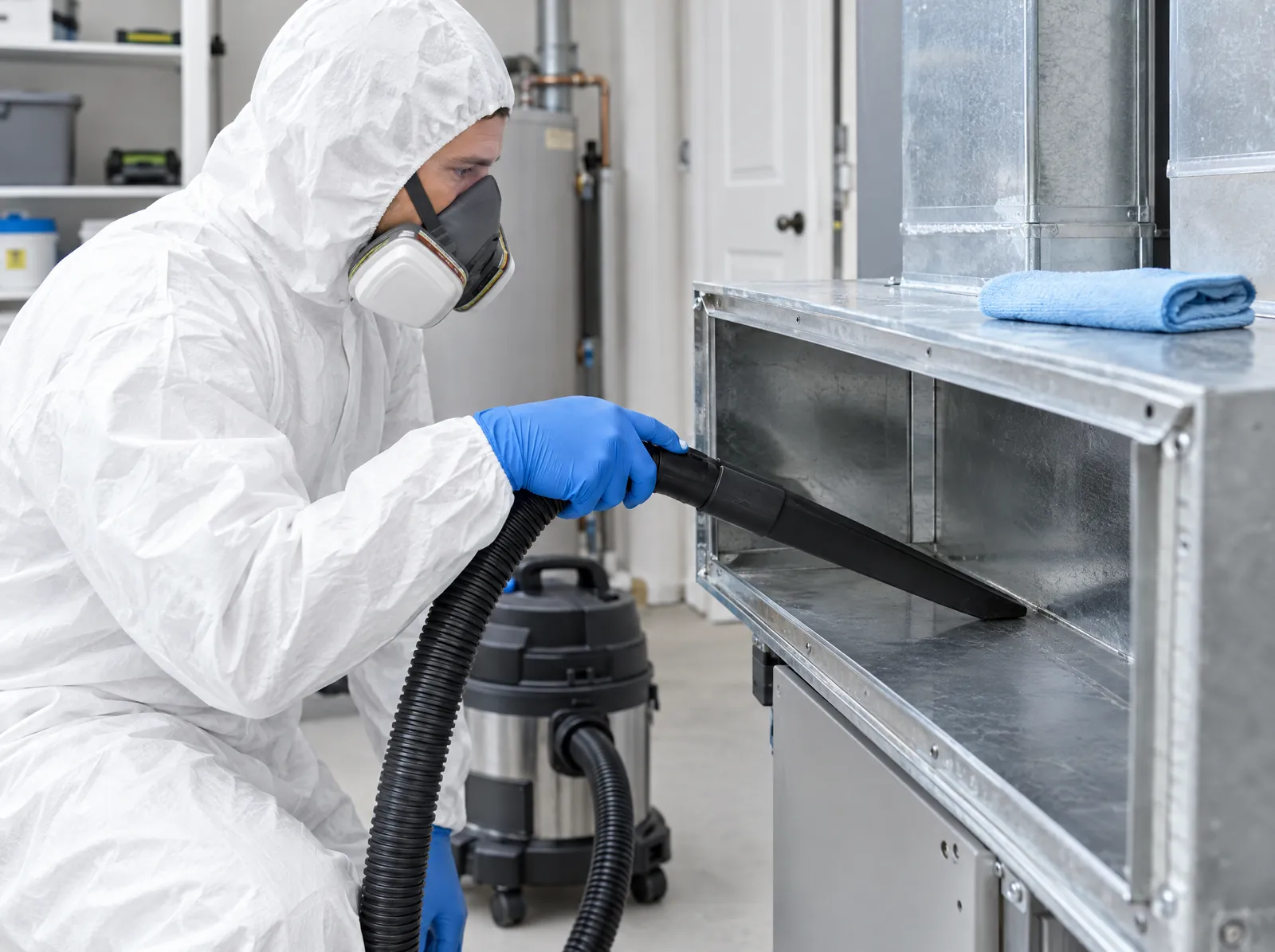
Can mycotoxins get into HVAC ducts?
Yes. Mycotoxins in HVAC ducts come from two places: mold growing inside the system, usually on a wet cooling coil, drain pan or duct liner, and contaminated dust the system pulls in from moldy areas of the house. A forced-air system moves the home's air through the ducts over and over, so it can spread toxin-carrying particles to every room it serves. Cleaning it takes source removal, HEPA duct cleaning under negative pressure, and testing to confirm.
Why clean rooms don't stay clean when the ducts are dirty
Picture a house that has just been cleaned top to bottom. The furnace fan kicks on and pushes air through ducts holding years of dust from a moldy crawlspace. Within days, fine particles are settling on the same surfaces that were just wiped. Leave the HVAC system out of a mycotoxin project and it can undo much of the work.
The system can also be the source. An air conditioner pulls water out of the air at the coil, and a coil, drain pan or insulated liner that stays damp is a good place for mold to grow.
Sound familiar?
- Musty smells get stronger when the heat or air conditioning runs.
- Dust builds up quickly around supply registers.
- Your ducts run through a damp crawlspace, basement or attic.
- A previous mold job cleaned the rooms but never touched the system.
We do it differently.
| Basic duct cleaning | Mycotoxin-focused HVAC cleaning | |
|---|---|---|
| Goal | Remove visible dust | Remove contaminated dust and the growth that produced it |
| Protection | Varies | HEPA-filtered negative air on the system during cleaning |
| Scope | Ducts only | Air handler, coil, drain pan, blower, ducts and registers |
| Lined ducts | Sprayed or coated | Liner that can't be cleaned is replaced |
| Proof | Before and after photos | Dust testing before and after |

Why families trust us with their homes
-
Family-owned since 2008
A multigenerational family business. Not a franchise, not a private-equity rollup.
-
Credentialed where it isn't required
Indiana doesn't license mold remediators. We hold IICRC, CMR, CRMI and CCMI credentials anyway.
-
Called on as experts
Attorneys bring us into legal cases involving mold and mycotoxins.
-
Lab results in 24 to 48 hours
Every inspection comes with a written report, color photos and lab results.
- IICRC Certified Firm
- CMR
- CRMI
- CCMI
- BBB A+ Accredited
- NAMRI
- IAQA
- NORMI
- AMMA
- PMII
The AME Clearance Method
How we clean mycotoxins out of an HVAC system
The system gets its own plan inside the larger project, because it touches every room.
Talk to a specialist-
Test the system's dust
Dust from the return plenum, supply trunks and registers is sampled and compared with the rooms, to see whether the system is a source, a carrier or both.
-
Find the moisture
We check the coil, drain pan, condensate line and any ducts that sweat or run through damp spaces. Growth inside a system almost always has a water source.
-
Put the system under negative air
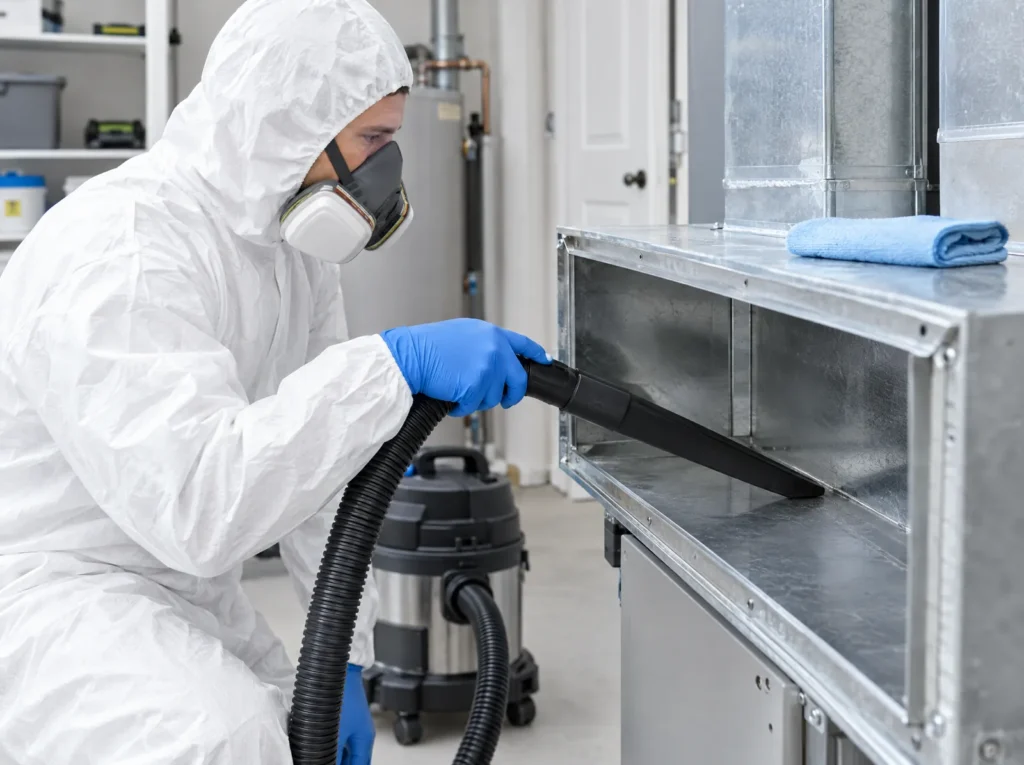
A HEPA-filtered negative air machine is connected to the ductwork and registers are sealed, so loosened dust is pulled into the filter instead of into the house.
-
Clean the equipment
The air handler cabinet, blower, coil and drain pan are cleaned and HEPA vacuumed. These are where growth usually starts.
-
Clean or replace ductwork
Sheet metal ducts are mechanically agitated and HEPA vacuumed. Fiberglass liner, duct board or flex duct with growth is replaced, not coated.
-
Close the gaps
We note return leaks in crawlspaces and attics, drainage problems and filter fit, and recommend fixes so the system stops pulling in contaminated air.
-
Verify
Follow-up dust samples from the system and the rooms are compared with the starting numbers.
What HVAC mycotoxin cleaning includes
- Dust sampling from the return, supplies and living areas
- Inspection of the coil, drain pan, blower and condensate line
- A check of humidity and moisture around the system
- HEPA negative air on the system during cleaning
- Cleaning of the air handler, coil, pan and blower
- Mechanical cleaning of sheet metal ducts, registers and grilles
- Replacement of contaminated liner, duct board or flex duct
- Recommendations for sealing return leaks in damp spaces
- Filter guidance suited to your equipment
- Follow-up dust testing

Proof you can hold in your hands
When we finish, you don't get a handshake and a promise. You get the paperwork your family, your doctor, your insurer or your buyer can rely on.
Inspection report
What we found, where it is coming from, with color photos.
Written remediation plan
Scope, timeline and what will and won't be removed, before work starts.
Clearance lab report
Air, surface and mycotoxin results after the work is done.
A report for your doctor
With your permission, we share results directly with your care team.
Mycotoxins in HVAC systems, explained
How mycotoxins get into the system
There are two basic routes, and many houses have both.
- Growth inside the equipment. In cooling season, the evaporator coil pulls moisture out of the air and it drips into a drain pan. A pan that doesn’t drain, a clogged condensate line or a dirty coil stays wet for long stretches. Dust on those surfaces gives mold something to eat.
- Growth on duct liner. Some ducts and air handlers are lined with fiberglass insulation. Its rough, porous surface traps dust and holds moisture if condensation forms.
- Leaky returns in damp spaces. Return ducts running through a crawlspace, basement or attic can pull air from those spaces through gaps and joints. If there’s mold there, its particles get drawn into the system.
- Dust from the living space. Every return grille pulls in room dust. If rooms are contaminated, so is the air the system is moving.
Once contaminated particles are in the air stream, the system distributes them. Some pass through the filter, some settle inside the ducts, and some blow out of the supplies into every room. That’s the mechanism behind the related question, can mycotoxins spread through HVAC?
Where contamination collects
| Component | Why it matters | Usual approach |
|---|---|---|
| Evaporator coil and drain pan | Wet during cooling season. The most common place for growth inside a system. | Clean, confirm the pan drains, clear the condensate line |
| Blower and cabinet | Collects dust and can hold moisture | HEPA vacuum and clean |
| Return plenum and ducts | Pulls in dust from the house and from any leaky spaces | Mechanical cleaning under negative air. Seal leaks. |
| Supply ducts | Carry fine particles to every room | Mechanical cleaning under negative air |
| Fiberglass liner, duct board, flex duct | Porous, hard to clean once contaminated | Replace where contaminated |
| Registers and grilles | Collect visible dust at the room end | Remove, clean and reinstall |
What public guidance says
EPA’s consumer guidance on duct cleaning says routine cleaning isn’t needed for every home, but it recommends considering it when there’s substantial visible mold growth inside hard-surface ducts or on other components of the system. The same guidance says insulated ducts that get wet or moldy can’t be effectively cleaned and should be removed and replaced, and it urges caution with chemical biocides and sealants. The duct cleaning industry’s trade group, NADCA, publishes a cleaning standard that calls for the system to be kept under negative pressure while it’s cleaned. Our process follows the same logic.
Testing the system
Visual inspection shows dirty coils and dusty ducts, but it can’t tell you whether the dust carries mycotoxins. Dust samples from the return plenum and a main supply trunk, compared with samples from the rooms, show whether the system holds more or less than the living space. A system that’s much higher than the rooms is likely a source or a reservoir. A system that matches the rooms is probably carrying dust from elsewhere, and the source search moves on. Mycotoxins in house dust explains how those samples are collected.
Keeping the system clean afterward
- Keep indoor humidity in a normal range, especially in summer.
- Have the coil, drain pan and condensate line checked during routine service.
- Change filters on schedule, and make sure they fit without gaps.
- Seal return leaks in crawlspaces and attics.
- Correct moisture in any space ductwork runs through.
For the full HVAC project, from coil to register, see HVAC mold remediation. If you’re weighing a filter upgrade or a portable unit, do HEPA filters capture mycotoxins? covers what filtration can realistically do.
We clean mold and mycotoxins out of buildings and their mechanical systems. We don’t diagnose or treat medical conditions. If you notice symptoms that seem tied to your heating or cooling system, please talk with a doctor. With your permission, we’ll share test results with them.
Common questions
Have a question that isn't here? Call a specialist
Does regular duct cleaning remove mycotoxins?
It can remove some contaminated dust, but it usually doesn't address growth on the coil, pan or liner, and it may not use HEPA negative air to keep loosened dust out of the house. For mycotoxins, the equipment, the ducts and the moisture source all need attention, followed by testing.
Can moldy fiberglass duct liner be cleaned?
Generally not well. EPA guidance on duct cleaning says insulation inside ducts that gets wet or moldy can't be effectively cleaned and should be removed and replaced.
Should ducts be fogged or sprayed with a sealant?
We don't rely on it. EPA advises caution with biocides and sealants in ducts and says they should only be considered after the system has been properly cleaned. A coating over contaminated dust or liner can hold the problem in place instead of removing it.
Will a better furnace filter help?
A higher-efficiency filter can capture more fine particles as air passes through, which reduces recirculation. It doesn't remove dust already in the ducts or stop growth on the coil. Ask an HVAC technician which rating your system can handle without restricting airflow.
Do UV lights remove mycotoxins?
UV lamps aimed at a cooling coil can help limit growth on that surface. They don't reach dust inside the ducts and aren't a way to remove or break down mycotoxins already in the system.
Should the system run during remediation?
Usually not in the normal way. During work, the system is typically shut down or isolated and sealed so it doesn't spread disturbed dust. We plan heating and cooling around the project with you.
We're done when the lab says so.
Every remediation ends with clearance testing, and our work is backed by a complete-removal guarantee. We don't close a job on a failed result.
Talk to a specialistFind out whether your HVAC system is involved
Tell us about your system, where the ducts run and what you've noticed. A specialist will call you back to talk through testing.
- (833) 772-6653
- info@americanmoldexperts.com
- Open 7 days, 8am to 8pm