
Do HEPA filters capture mycotoxins?
Short answer
Yes, indirectly. HEPA filters capture the particles that carry mycotoxins, which is how most toxins move through the air. A true HEPA filter traps at least 99.97% of particles 0.3 microns in size, including spores, mold fragments and fine dust. It isn't designed to catch free toxin molecules on their own, and it only works on air that passes through it.
What “HEPA” actually means
HEPA stands for high-efficiency particulate air. In the United States, a true HEPA filter is built to capture at least 99.97% of particles 0.3 microns in diameter. That size is the hardest for a fiber filter to catch. Larger particles are stopped more easily, and very small ones tend to bump into fibers as they zigzag through, so both are captured at even higher rates. The rating describes the filter, tested on its own. How well a whole machine performs depends on airflow, fit and how the filter is sealed into its housing, which we come back to below.
Labels such as “HEPA-type” or “HEPA-style” don’t promise that standard. If filtration matters to you, look for a true HEPA rating, and for a machine built so air can’t slip around the filter.
Particles versus molecules
A single mycotoxin molecule is far smaller than anything a HEPA filter is rated for. So why do HEPA filters matter so much in mold work? Because mycotoxins aren’t volatile. They don’t evaporate into the air the way odor compounds do. In a home they travel attached to spores, to hyphal fragments and to house dust, and those carriers fall within the range HEPA filters capture well.
Two limits follow from that. A HEPA filter isn’t a chemical treatment, so trapped toxins stay on the filter rather than being destroyed. And a filter can’t touch toxins that are already settled in dust, fabric or building materials.
Where HEPA filtration shows up in mold work
| Equipment | What it’s for |
|---|---|
| Sealed HEPA vacuum | Pulling settled dust off surfaces, furniture and carpet without blowing fine particles back out |
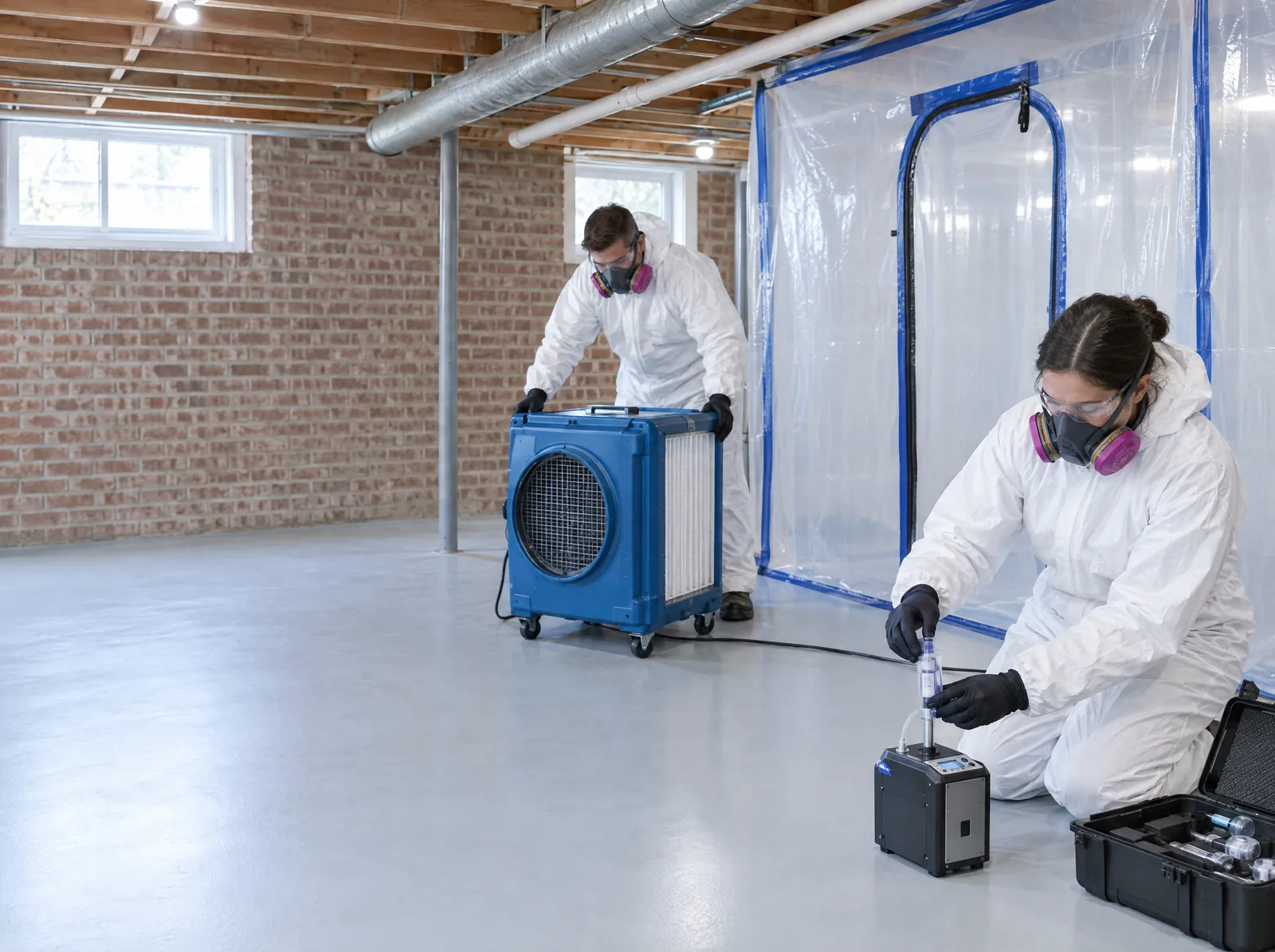
| Air scrubber | Cleaning the air inside a work area while materials are removed |
| Negative air machine | Exhausting filtered air so the work area stays at lower pressure than the rest of the house |
| Portable purifier | Lowering airborne particles in a room people are using |
| HVAC filter | Catching particles in circulating air. Most home systems can’t take a true HEPA filter, so a high-MERV filter the system is rated for is the usual choice. |
The containment side of this is explained on our mold containment page. For forced-air systems, see whether mycotoxins can spread through HVAC.
Why the seal matters as much as the filter
A HEPA filter in a loose housing is a HEPA filter with a gap around it. Air takes the easiest path, and fine particles go with it. That’s why remediation crews use vacuums and scrubbers built as sealed systems, and why we check gaskets and housings on equipment. Handling matters too. A used filter is a concentrated sample of whatever it caught, so change it in the work area or outdoors, bag it, and wear a well-fitted respirator while you do.
When filtration isn’t the answer
HEPA filters reduce what’s floating in the air, and they’re essential during cleanup. They can’t fix a moisture problem or pull toxins out of drywall and carpet. If you’ve added purifiers and the problem persists, the source and the settled dust still need attention. Our page on whether air purifiers remove mycotoxins covers what to expect from a home unit, and mycotoxin remediation explains the full process.
We remove mold and mycotoxins from buildings. We don’t diagnose or treat medical conditions. If you have symptoms, please work with a doctor, and with your permission we’ll share our findings and test results with them.
We're done when the lab says so.
Every remediation ends with clearance testing, and our work is backed by a complete-removal guarantee. We don't close a job on a failed result.
Talk to a specialistWant HEPA work done right?
Ask us how we set up containment, air scrubbing and HEPA cleaning for a mycotoxin project, and how we test the result.
- (833) 772-6653
- info@americanmoldexperts.com
- Open 7 days, 8am to 8pm