
Mycotoxin profiles
Gliotoxin mold: Aspergillus fumigatus indoors
Where the mold that makes gliotoxin grows indoors, how it's tested, and what removal involves.
What is gliotoxin?
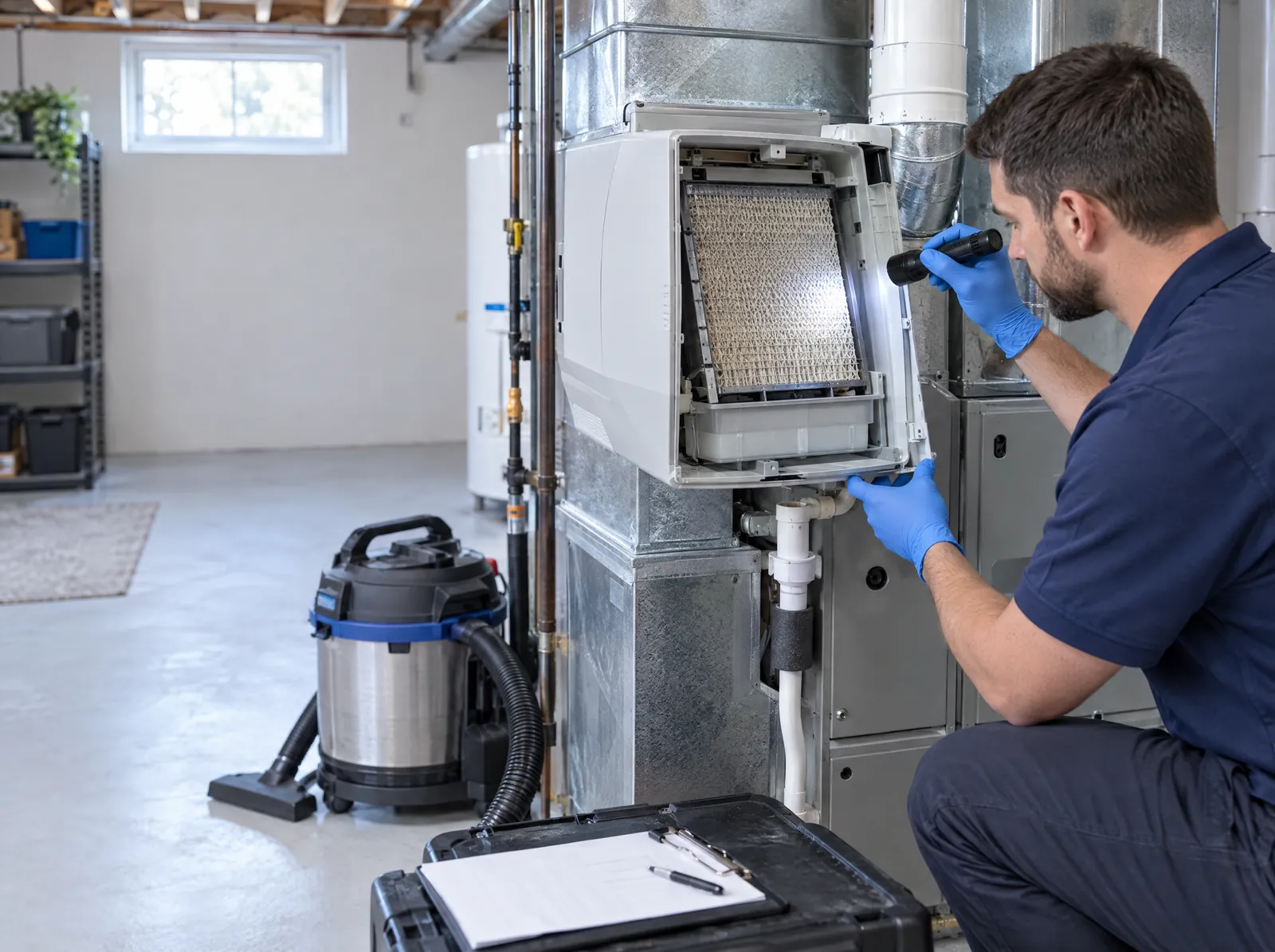
Gliotoxin is a mycotoxin made mainly by Aspergillus fumigatus, the gliotoxin mold most often found in homes. It thrives in warm, damp organic material and is common outdoors in compost and decaying plants. Indoors it can grow on damp HVAC parts, humidifiers, organic debris and water-damaged materials. Most gliotoxin research is medical, so less is known about household levels. A mycotoxin panel on settled dust is how it's found in a home.
Why gliotoxin needs a different kind of search
Aspergillus fumigatus doesn't need soaked drywall. It tolerates heat much better than most household molds and grows on decaying organic matter, so it can show up in places that don't look like a classic mold problem: a damp air handler, a furnace humidifier, a crawlspace with organic debris, a compost pail by the back door. Its spores are small and stay airborne easily.
Gliotoxin is also one of the less studied toxins in indoor environments. Most of what's known comes from clinical and laboratory research, which makes careful sampling and honest interpretation more important.
Sound familiar?
- Your dust panel detected gliotoxin and there's no obvious water damage.
- Dust DNA testing shows Aspergillus fumigatus.
- You run a humidifier or keep compost indoors and wonder whether it matters.
- You want a plan based on what the tests show, not a guess.
We do it differently.
| A wall-by-wall search | A search built for Aspergillus fumigatus | |
|---|---|---|
| Where it looks | Stained walls and ceilings | HVAC parts, humidifiers, crawlspaces, organic debris and damp materials |
| Molds considered | Whatever is visible | Aspergillus fumigatus and other possible producers |
| Warm spots | Not considered | Air handlers, appliance areas and other warm, damp places |
| Sampling | One spot | Living areas plus dust near suspected sources |
| Verification | Visual | A repeat panel and dust DNA comparison |

Why families trust us with their homes
-
Family-owned since 2008
A multigenerational family business. Not a franchise, not a private-equity rollup.
-
Credentialed where it isn't required
Indiana doesn't license mold remediators. We hold IICRC, CMR, CRMI and CCMI credentials anyway.
-
Called on as experts
Attorneys bring us into legal cases involving mold and mycotoxins.
-
Lab results in 24 to 48 hours
Every inspection comes with a written report, color photos and lab results.
- IICRC Certified Firm
- CMR
- CRMI
- CCMI
- BBB A+ Accredited
- NAMRI
- IAQA
- NORMI
- AMMA
- PMII
The AME Clearance Method
How we track down gliotoxin sources
The search starts with the places this particular mold likes, which aren't always where people look first.
Talk to a specialist-
Match the toxin to the mold
Dust DNA testing can identify Aspergillus fumigatus. When it lines up with a gliotoxin detection, the search can focus on the conditions that mold prefers.
-
Inspect the HVAC system and humidifiers
We look at the coil, drain pan, humidifier pad and water panel, and any lined ductwork. Warm, damp and dusty is the pattern to find.
-
Check organic sources
Crawlspace debris, damp stored firewood, compost containers, wet cardboard and overwatered plant soil are all checked.
-
Map moisture in the building
Walls, floors, basements and attics are checked for damp materials that could support growth.
-
Remove and clean under containment
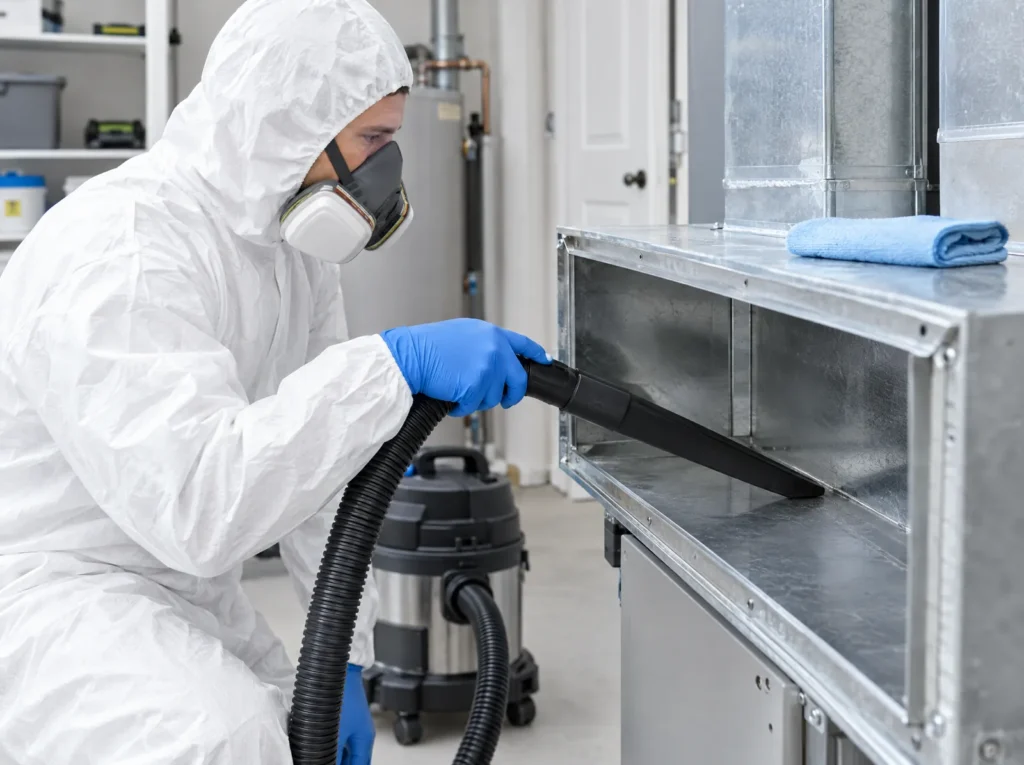
Contaminated materials and debris come out, equipment is cleaned, and dust is captured with HEPA vacuuming and damp wiping.
-
Retest
A repeat panel and, where useful, repeat dust DNA testing from matching locations confirm the result.
What a gliotoxin investigation includes
- Dust DNA testing for Aspergillus fumigatus and related molds
- A mycotoxin panel that includes gliotoxin
- Inspection of the air handler, coil, drain pan and humidifier
- A check of crawlspaces and attics for organic debris and moisture
- Review of indoor sources such as compost, firewood and plant soil
- Containment and removal of contaminated materials
- HVAC cleaning where testing points to it
- HEPA vacuuming and damp wiping
- Clearance testing from matching locations

Proof you can hold in your hands
When we finish, you don't get a handshake and a promise. You get the paperwork your family, your doctor, your insurer or your buyer can rely on.
Inspection report
What we found, where it is coming from, with color photos.
Written remediation plan
Scope, timeline and what will and won't be removed, before work starts.
Clearance lab report
Air, surface and mycotoxin results after the work is done.
A report for your doctor
With your permission, we share results directly with your care team.
Gliotoxin, explained
What gliotoxin is
Gliotoxin belongs to a small chemical class of fungal compounds built around a sulfur bridge, which is central to how it behaves in laboratory studies. It takes its name from Gliocladium, an older name for a group of fungi now classified as Trichoderma, where it was first described. Today it’s most associated with Aspergillus fumigatus.
Much of what’s published about gliotoxin comes from medical research on Aspergillus infections, not from studies of homes. Some commercial environmental labs include it on dust panels, but there’s much less published data on normal household levels than there is for toxins like ochratoxin A. That’s a good reason to read any result with care and compare it within the house.
Aspergillus fumigatus: a heat-tolerant mold
Most household molds prefer ordinary room temperatures. Aspergillus fumigatus is unusual: it’s known to grow at temperatures that stop many other molds, up to around 50 degrees Celsius (about 122 degrees Fahrenheit). In nature, it’s one of the molds that help break down compost and decaying plants, and it’s common in soil and outdoor air.
Indoors, that heat tolerance means it can take hold in warm, damp spots other molds might skip. Its spores are small, only a few microns across, which lets them stay in the air longer than the spores of heavier molds like Stachybotrys.
Where it grows indoors
- HVAC components. Wet coils, drain pans and lined ducts, especially where dust has built up. See mycotoxins in HVAC systems.
- Furnace humidifiers. Water panels and pads that stay wet and collect dust.
- Crawlspaces and attics. Organic debris, damp wood and old insulation.
- Organic material brought indoors. Compost containers, stored firewood, bags of mulch or potting soil.
- Water-damaged building materials. Like most molds, it can grow on damp drywall, wood and carpet.
Furnace humidifiers deserve a special mention because they combine the three things this mold likes: warmth from the furnace, constant moisture and a steady supply of dust from the return air. A water panel that hasn’t been changed in a few seasons, or a drain line that doesn’t clear, can stay damp and dusty all winter. It’s a simple thing to check, and it’s often overlooked.
Reading a gliotoxin result
A gliotoxin detection is most useful when it’s read alongside dust DNA results. If Aspergillus fumigatus is present too, the two support each other and the search can focus on warm, damp, organic sources. If gliotoxin appears without much Aspergillus fumigatus, it may reflect older growth, a less common producer, or dust carried in from elsewhere. Comparing rooms helps show whether it’s concentrated near the HVAC system or spread evenly. Our guide to reading mycotoxin test results covers detection limits and flags.
Removing the sources
Removal follows the same principles as any mycotoxin project: fix the moisture, remove what can’t be cleaned, capture the dust and treat what’s left. For gliotoxin, the HVAC system and any humidifier usually get extra attention, and organic debris is cleared from crawlspaces and attics. Remaining surfaces are treated with plant-based enzyme products from US Enzyme, and we confirm the result with testing. The full project is described on our mycotoxin remediation page.
We remove mold and mycotoxins from buildings. We don’t diagnose or treat medical conditions, including Aspergillus-related illness. If you have symptoms or a medical history that makes mold a concern, please work with your doctor. With your permission, we’re glad to share results with them.
Common questions
Have a question that isn't here? Call a specialist
What mold produces gliotoxin?
Mainly Aspergillus fumigatus. It has also been reported from some Trichoderma species (the toxin is named after Gliocladium, an older name for one of them) and from certain other fungi. Aspergillus fumigatus is the one that matters most in homes.
Where does Aspergillus fumigatus grow indoors?
In warm, damp places with organic material: HVAC components, furnace humidifiers, crawlspace debris, compost containers, damp firewood and potting soil, as well as water-damaged building materials.
Does every Aspergillus fumigatus strain make gliotoxin?
Research shows production varies widely between strains and depends on growing conditions. Finding the mold is a reason to test for the toxin, not proof that it's present.
Can houseplants cause gliotoxin?
Potting soil can harbor Aspergillus fumigatus, especially when it stays wet. Plants usually aren't the main source in a mold-affected home, but in a home with many plants and a gliotoxin result, they're worth including in the review.
Is gliotoxin airborne?
The toxin itself doesn't evaporate. It travels on spores, fragments and dust. Aspergillus fumigatus spores are small and light, so they become airborne easily when disturbed.
Should I stop using my furnace humidifier?
Not necessarily. Keep the water panel or pad clean and replaced on schedule, check that it drains, and avoid setting humidity higher than you need. If testing points to the humidifier, it may need a thorough cleaning or replacement.
How is gliotoxin removed?
By removing the growth and the dust. That means fixing moisture, cleaning or replacing contaminated HVAC parts, removing organic debris and damp materials, HEPA cleaning, treating remaining surfaces and retesting.
We're done when the lab says so.
Every remediation ends with clearance testing, and our work is backed by a complete-removal guarantee. We don't close a job on a failed result.
Talk to a specialistFound gliotoxin on a dust panel?
Tell us about the house, the HVAC system and what testing has shown. A specialist will call you back to talk it through.
- (833) 772-6653
- info@americanmoldexperts.com
- Open 7 days, 8am to 8pm