
What humidity should I keep my Florida home at?
Short answer
Keep your Florida home below 60 percent relative humidity all year, and aim for about 50 percent when you can. The Florida Department of Health says below 60 percent helps prevent mold and below 50 is best. In Southwest Florida's summer, a working, correctly set air conditioner does most of that job. If it can't keep you under 60, have the system checked.
The number, and where it comes from
Every public health source lands in the same range, with slightly different wording:
| Source | Indoor humidity guidance |
|---|---|
| Florida Department of Health | Below 60 percent to prevent mold; below 50 percent is best |
| CDC | As low as you can, no higher than 50 percent |
| EPA | Below 60 percent, ideally 30 to 50 percent |
| Florida Solar Energy Center | Not above 55 percent during the day on a regular basis in summer with the AC running |
For a Southwest Florida home, a practical target is 45 to 55 percent in summer, and never sitting above 60 for days at a time. The general science behind these numbers is on our national page, what humidity level prevents mold. This page is about hitting the number in Florida, where the outdoor air works against you for months.
Why it’s harder here
From mid-May to mid-October, Southwest Florida’s outdoor dew points regularly sit above 70°F. Every time a door opens, a bathroom fan pulls air, or air leaks in around a window, that moisture comes inside. Opening the windows to “air the house out,” which works well in a dry climate, usually makes a Florida home more humid in summer, not less.
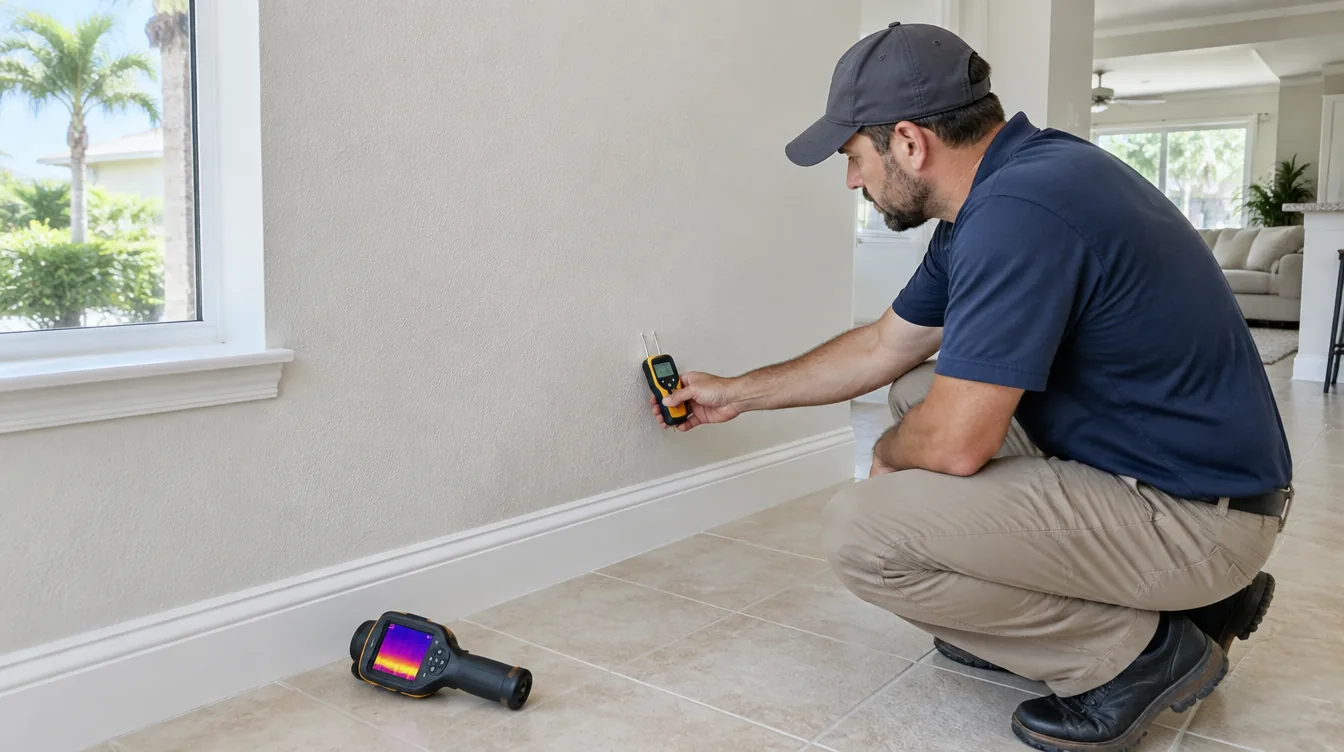
Concrete block walls add to it. Block soaks up wind-driven rain and gives it back slowly, so the drywall and closets along exterior walls can run damper than the room reading suggests. One hygrometer in the hallway won’t tell you what’s happening in the back of a walk-in closet.
How to keep a Florida home in range
- Let the AC do the drying. Your air conditioner removes water as it cools. Keep it serviced, and keep the condensate line clear.
- Leave the fan on AUTO. The Florida Solar Energy Center advises never leaving the thermostat fan in the ON position, because a fan that keeps running after cooling stops blows moisture from the wet coil back into the house.
- Don’t set the temperature too high or too low. UF/IFAS Extension suggests no lower than 78°F in summer. Our page on what temperature to set your AC to prevent mold explains the balance.
- Vent moisture at the source. Run bathroom and kitchen exhaust fans that vent outside, and make sure the dryer vents outdoors.
- Open up closets. Leaving closet doors open lets conditioned air reach them.
- Measure more than one room. Inexpensive digital hygrometers let you compare the living room with closets and bedrooms on exterior walls.
When the humidity won’t come down
The Florida Department of Health makes a useful point: if you have central air and still need a dehumidifier to get below 60 percent, the air conditioning system should be examined for problems. Common causes include:
- An oversized system that cools the house quickly and shuts off before it removes much moisture
- A dirty coil, a clogged condensate line or a drain pan holding water
- Leaky return ducts pulling humid air from the attic or garage
- A hidden water source, such as a slow plumbing leak or a roof or window leak into a wall
A dehumidifier can help while you sort out the cause, and our page on whether a dehumidifier helps with mold in Florida covers when it’s worth it. But if readings stay high and the house smells musty, there may already be growth in the AC or inside a wall.
Condos and seasonal homes
The same target applies when nobody is living in the house, and that’s when it’s most often missed. A condo or seasonal home closed up for the summer with the AC off, or set very high, can sit well above 60 percent for months. Leave the system running with the fan on AUTO and check readings remotely if you can. Our page on whether to leave the AC on when you leave has the settings.
Can a Florida home be too dry?
It’s rare in summer. In a dry winter week, readings can dip into the 30s, which isn’t a mold concern. FPL notes that very low humidity can dry out wood floors and furniture, so there’s no benefit to pushing far below the recommended range.
If humidity has been high for a while and you’re seeing spots or smelling mustiness, our AC and HVAC mold service is the place to start. In Florida, an independent licensed mold assessor inspects and samples the home, writes the scope and performs clearance testing. We do the remediation to that protocol.
We're done when the lab says so.
Every remediation ends with clearance testing, and our work is backed by a complete-removal guarantee. We don't close a job on a failed result.
Talk to a specialistHumidity stuck above 60?
High readings that won't come down often mean moisture you can't see. Tell us what your meter says and a specialist will call you back.
Not sure yet? Try the free AI Mold Risk Check