
Southwest Florida guide
Florida homeowners insurance and mold coverage
Whether mold is covered depends on your policy and where the water came from. Here's how to find out.
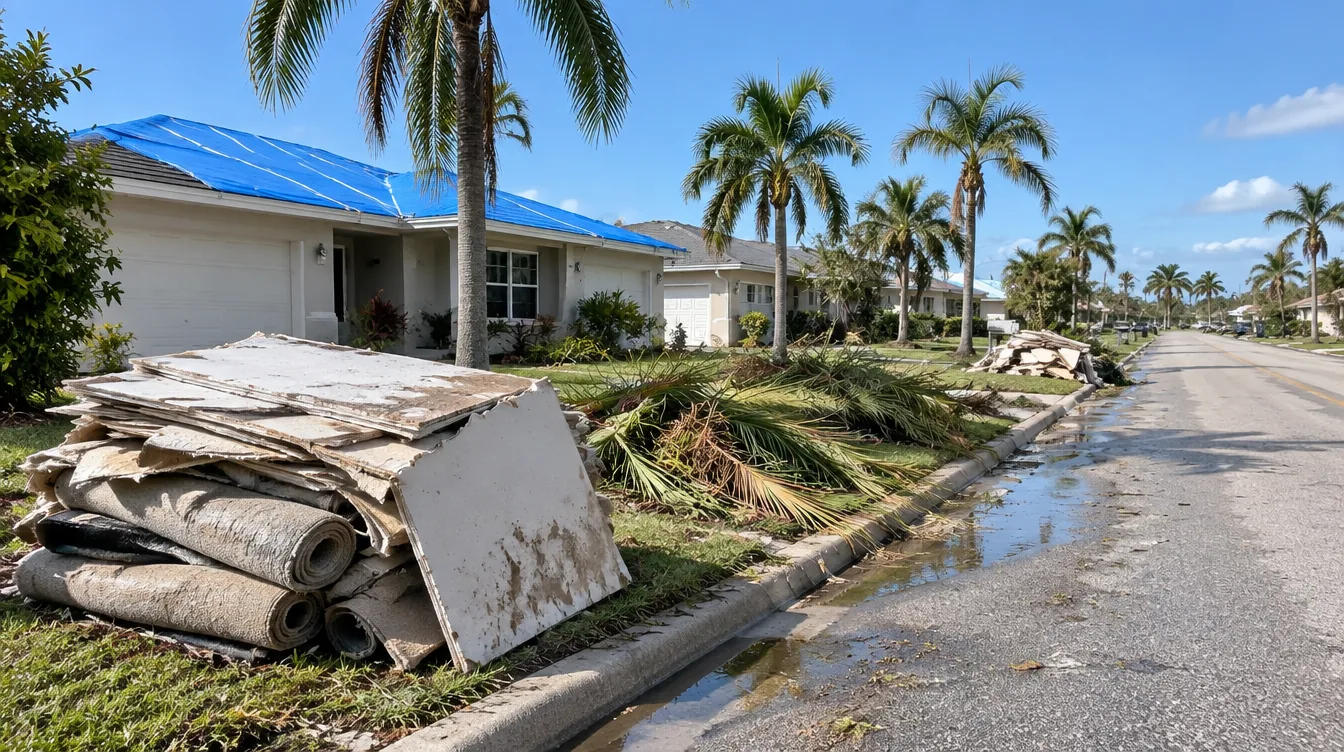
Does Florida homeowners insurance cover mold?
Florida homeowners insurance mold coverage depends on your policy wording and on what caused the water. Many policies limit or exclude mold, and cover it only when it results from a covered event such as a sudden pipe burst or storm damage to the roof. Coverage for mold remediation often has its own lower limit. Florida's Department of Financial Services notes that endorsements can raise that limit. Read the mold or fungi section of your policy and ask your agent.
Why mold claims in Florida get complicated
After a hurricane, one house can have water from three sources: wind-driven rain through a damaged roof, storm surge or rising water, and humidity while the power was out. A homeowners policy, a flood policy and FEMA assistance each treat those differently, and mold is often limited or excluded on top of that. The paperwork you keep in the first days matters as much as the damage itself.
Sound familiar?
- You don't know whether your policy covers mold at all.
- The adjuster says the mold came from long-term humidity, not the storm.
- Your home had both wind damage and flood water.
- A contractor asked you to sign over your insurance benefits.
We do it differently.
| Weak claim | Well-documented claim | |
|---|---|---|
| Timing | Reported weeks later | Reported promptly, with dates |
| Photos | A few after cleanup | Every room, the waterline and damage before anything moves |
| Drying | No records | Daily moisture readings until materials test dry |
| Cause | Unclear | Water source identified and documented |
| Mold evidence | Visual only | Independent assessment report and lab results |

Why families trust us with their homes
-
Family-owned since 2008
A multigenerational family business. Not a franchise, not a private-equity rollup.
-
Trained and certified
Our team holds IICRC, CMR, CRMI and CCMI credentials in mold remediation and inspection.
-
Called on as experts
Attorneys bring us into legal cases involving mold and mycotoxins.
-
Documentation at every step
Photos, moisture logs and lab reports you can hand to your insurer or FEMA.
- IICRC Certified Firm
- CMR
- CRMI
- CCMI
- BBB A+ Accredited
- NAMRI
- IAQA
- NORMI
- AMMA
- PMII
The AME Clearance Method
Handling a mold-related insurance claim in Florida
General steps that help most claims. Your policy and your insurer's instructions come first.
Talk to a specialist-
Read the policy before you call
Find the mold or fungi section, any separate mold limit, the water damage exclusions and whether you carry flood insurance. Note your deductibles, including any hurricane deductible.
-
Document everything first
Date-stamped photos and video of every affected room, the waterline and damaged belongings, before anything is removed.
-
Stop the damage
Policies generally expect you to take reasonable steps to prevent further damage. Get water out, dry the house and keep receipts for everything.
-
Report the claim promptly
Call your insurer, and your flood insurer if you have one. If a disaster has been declared, apply for FEMA assistance too.
-
Get an independent assessment
A licensed Florida mold assessor's report and lab results show what's there and where. Adjusters give independent documentation more weight.
-
Keep records through clearance
Moisture logs, the remediation scope, invoices and the final clearance report complete the file.
What to keep for a mold claim
- Your full policy, including endorsements
- Date-stamped photos and video before cleanup
- A written timeline of the water event
- Moisture readings from day one
- Receipts for fans, dehumidifiers and emergency repairs
- The independent assessor's report and lab results
- The remediation scope and invoice
- A list of discarded belongings, with photos
- All letters and emails with your adjuster
- The final clearance report

Proof you can hold in your hands
When we finish, you don't get a handshake and a promise. You get the paperwork your family, your doctor, your insurer or your buyer can rely on.
Inspection report
What we found, where it is coming from, with color photos.
Written remediation plan
Scope, timeline and what will and won't be removed, before work starts.
Clearance lab report
Air, surface and mycotoxin results after the work is done.
A report for your doctor
With your permission, we share results directly with your care team.
Florida insurance and mold, explained
We’re a mold remediation company, not an insurance agency or a law firm. This guide explains how mold usually fits into Florida insurance and where to find answers. For what your own policy covers, your policy, your agent and your insurer are the authorities. For a disputed claim, talk to an attorney.
Start with the mold section of your policy
Most homeowners policies say something specific about mold, often under a heading like “fungi, wet or dry rot, or bacteria.” Look for three things:
- Whether mold is excluded entirely, or covered only when it results from a covered cause of loss.
- A separate mold limit, which can be much lower than your dwelling coverage and may include testing and removal costs.
- Endorsements you’ve added. Florida’s Department of Financial Services explains that mold testing, removal and cleaning costs can exceed a policy’s limit, and that a mold endorsement can raise the mold damage limit to $25,000 or $50,000.
Our national answer on whether homeowners insurance covers mold remediation covers the general principles. The Florida difference is how often storms put several kinds of water into the same house.
Wind, flood and humidity are treated differently
After a hurricane, the cause of the water often decides the claim. Rain entering through a roof or window the storm damaged is typically handled under the homeowners policy. Rising water and storm surge are flood, which standard homeowners policies generally don’t cover and which needs a separate flood policy. Mold that grows from long-term humidity, a slow leak or lack of maintenance is often excluded.
That’s why documenting the source matters. Moisture maps, photos of the roof or window damage and a timeline of when water appeared help an adjuster tie mold to a specific event. An independent assessor’s report, with lab results, shows what was found and where.
Flood insurance and FEMA
Don’t assume a flood policy will pay for mold. FEMA states that National Flood Insurance Program policies will not cover damage from mold, and NFIP appeal decisions on FloodSmart.gov apply the policy’s exclusion for mold within the policyholder’s control, including failing to inspect and maintain the property after the flood recedes. Acting fast and keeping records protects you either way.
FEMA’s Individuals and Households Program is separate from insurance. After a declared disaster, it may provide Home Repair funds for cleaning up or remediating disaster-caused mold when FEMA verifies the home is unlivable because of it. Our answer on whether FEMA pays for mold remediation walks through it.
Assignment of benefits after 2023
Florida changed the rules on assignment of benefits. Under s. 627.7152(13), with limited exceptions, a policyholder may not assign post-loss benefits under a residential or commercial property policy issued on or after January 1, 2023, and an attempt to do so is void. If anyone asks you to sign over your benefits for mold work, pause and ask your insurer or an attorney.
How testing fits into a Florida claim
Under Florida Statute 468.8419, the company that assesses mold generally can’t remediate the same home within 12 months, and the reverse. On our Southwest Florida projects, an independent licensed mold assessor inspects and samples the home, writes the scope, and performs clearance testing. We do the remediation to that protocol and keep the photos, moisture logs and records your adjuster is likely to ask for. For help with a stalled claim, Florida’s Department of Financial Services runs an insurance consumer helpline.
This guide is general information, not insurance or legal advice. Coverage depends on your policy and your insurer. For advice on a specific claim, speak with your agent, your insurer or a Florida attorney.
Common questions
Have a question that isn't here? Call a specialist
Is mold covered after a hurricane in Florida?
It depends on the cause of the water and your policy. Wind-driven rain through storm damage may be treated differently from flood water, which standard homeowners policies generally don't cover. Mold may then be subject to a separate limit or exclusion. Your policy wording decides.
Can I increase my mold coverage?
Florida's Department of Financial Services describes endorsements that can raise the mold damage limit on a homeowners policy to $25,000 or $50,000, and a separate endorsement for mold liability. Ask your agent what your insurer offers.
Does flood insurance cover mold?
Don't count on it. FEMA states that National Flood Insurance Program policies will not cover damage from mold, and the NFIP policy excludes mold within the policyholder's control, including failing to inspect and maintain the property after the flood recedes.
Does FEMA pay for mold remediation?
It can. FEMA's Individuals and Households Program may provide Home Repair funds for cleaning up or remediating disaster-caused mold when FEMA verifies you can't live in the home because of it. Apply through DisasterAssistance.gov.
Should I sign an assignment of benefits for mold work?
For most Florida residential policies issued on or after January 1, 2023, state law says post-loss benefits generally can't be assigned, and an attempted assignment is void. If a contractor asks you to sign one, talk to your insurer or an attorney first.
What if my mold claim is denied?
Ask for the denial in writing with the policy language it relies on. Florida's Department of Financial Services runs a consumer helpline that can contact your insurer. For a large or disputed claim, consider talking to an attorney.
We're done when the lab says so.
Every remediation ends with clearance testing, and our work is backed by a complete-removal guarantee. We don't close a job on a failed result.
Talk to a specialistNeed documentation for a mold claim?
Tell us what happened and what your adjuster has asked for. A Southwest Florida specialist will call you back.
Not sure yet? Try the free AI Mold Risk Check