
Southwest Florida guide
How to choose a mold remediation company in Florida
After a storm, everyone is suddenly a mold expert. Here's how to tell who actually is.
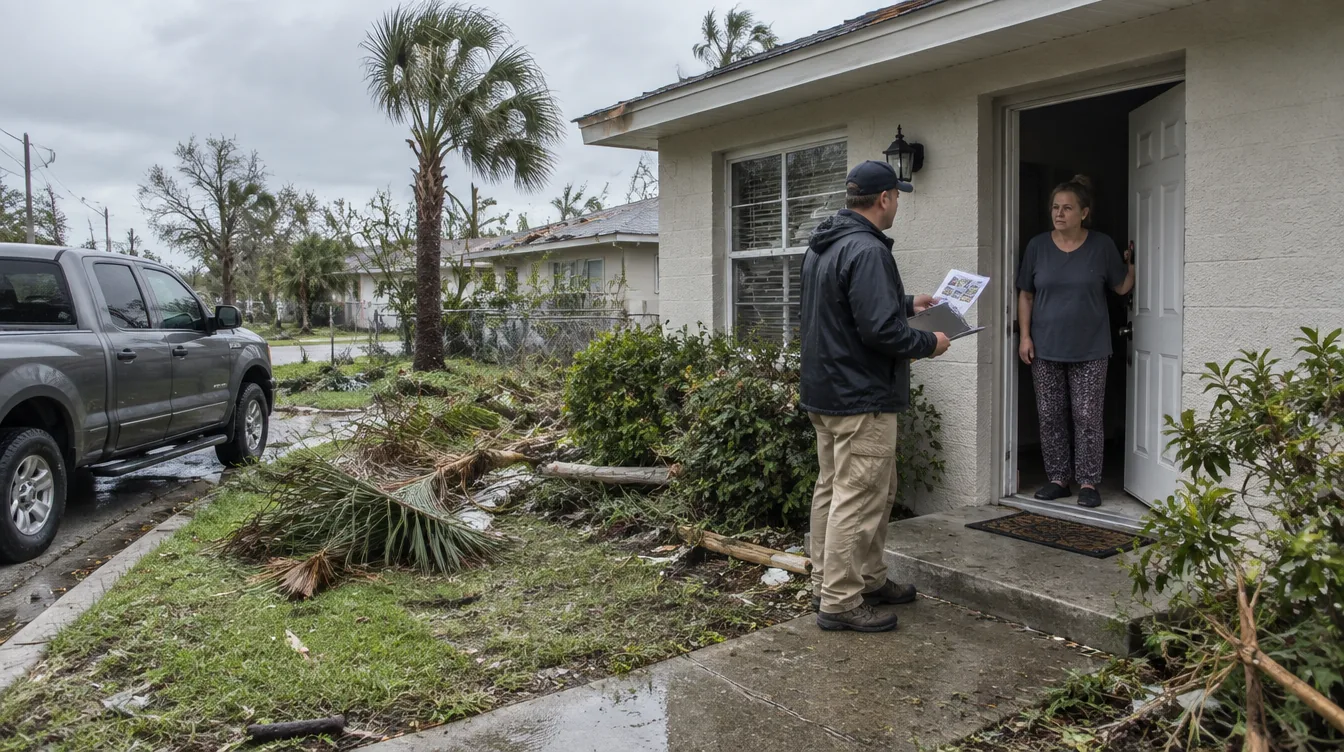
How do you choose a mold remediation company in Florida?
To choose a mold remediation company in Florida, start by confirming the remediator holds a current Florida mold remediator license through the DBPR, then check insurance, credentials and references. Make sure testing and clearance come from an independent licensed mold assessor, as Florida Statute 468.8419 generally requires. Get a written contract based on the assessor's scope, and be cautious of anyone who pressures you, asks you to sign over insurance benefits, or offers to test and fix it all themselves.
Why hiring is harder after a Florida storm
When a hurricane hits Southwest Florida, thousands of homes need help at once. Local crews are booked for weeks, and out-of-area operators arrive to fill the gap. Some are skilled professionals. Others knock on doors, ask for large deposits and move on. Mold work is especially easy to oversell, because most homeowners can't see inside their walls or read a lab report on their own.
Sound familiar?
- Someone knocked on your door offering a mold inspection and removal.
- The quote came with pressure to sign today.
- You can't tell whether a company is licensed in Florida.
- Two quotes for the same house are wildly different.
We do it differently.
| Red flags | Green flags | |
|---|---|---|
| License | Vague or out of state | Named Florida licensee you can look up |
| Testing | Tests, removes and clears their own work | Independent licensed assessor tests and clears |
| Contract | Verbal or one-line estimate | Written contract tied to the assessor's scope |
| Insurance benefits | Asks you to sign them over | Works with you and your insurer, with documentation |
| Method | Fogging, bleach and paint | Source repair, containment, removal, HEPA cleaning |

Why families trust us with their homes
-
Family-owned since 2008
A multigenerational family business. Not a franchise, not a private-equity rollup.
-
Trained and certified
Our team holds IICRC, CMR, CRMI and CCMI credentials in mold remediation and inspection.
-
Called on as experts
Attorneys bring us into legal cases involving mold and mycotoxins.
-
Documentation at every step
Photos, moisture logs and lab reports you can hand to your insurer or FEMA.
- IICRC Certified Firm
- CMR
- CRMI
- CCMI
- BBB A+ Accredited
- NAMRI
- IAQA
- NORMI
- AMMA
- PMII
The AME Clearance Method
Vetting a mold company in Florida
Six checks, in the order that saves you the most time.
Talk to a specialist-
Confirm the Florida license
Ask for the name and license number of the licensed mold remediator on your job and look it up on MyFloridaLicense.com.
-
Ask how testing is handled
Who assesses and who clears? Under s. 468.8419, it generally shouldn't be the company doing the removal, unless it's a certified Division I contractor.
-
Check insurance and credentials
Request a certificate of insurance and ask about industry training, such as IICRC certification.
-
Read the scope and contract
The remediation contract should follow the assessor's scope, describe containment and removal, and be in writing, as Florida law requires.
-
Ask about method
How will they fix the moisture source, contain the work, clean surfaces and handle the AC? Vague answers are a warning sign.
-
Check references
The EPA recommends hiring contractors experienced with mold and checking references. Ask for recent Florida jobs similar to yours.
Questions to ask before you hire
- Who is the licensed mold remediator on my job?
- Who will do the assessment and clearance testing?
- Is that assessor independent of your company?
- What caused the mold, and how will it be fixed?
- How will you contain the work area?
- What will be removed, and what will be cleaned?
- Will you clean or inspect the AC system?
- Do you address mycotoxins, not just visible mold?
- What happens if clearance fails?
- Can I see a sample report and contract?

Proof you can hold in your hands
When we finish, you don't get a handshake and a promise. You get the paperwork your family, your doctor, your insurer or your buyer can rely on.
Inspection report
What we found, where it is coming from, with color photos.
Written remediation plan
Scope, timeline and what will and won't be removed, before work starts.
Clearance lab report
Air, surface and mycotoxin results after the work is done.
A report for your doctor
With your permission, we share results directly with your care team.
Choosing a Florida mold company, explained
Florida gives you something to check
Not every state licenses mold work. Florida does. Chapter 468, Part XVI of the Florida Statutes licenses mold assessors and mold remediators separately through the Department of Business and Professional Regulation. Licensees must pass an exam, show education or field experience, complete training in water, mold and respiratory protection, carry insurance and keep up continuing education. Our guide to Florida mold licensing covers the details.
That gives you something concrete to check. Ask for the name and license number of the licensed remediator responsible for your job, then look it up on the DBPR licensee search. Confirm it’s current and that it’s a mold remediator license, not something else.
The independent-assessor rule works in your favor
Under Florida Statute 468.8419, a mold assessor may not remediate a structure it assessed within the last 12 months, and a remediator may not assess a structure it remediated within the last 12 months. Certified Division I contractors are the exception. The same section bars referral payments between assessors and remediators, and bars assessments whose findings or fee depend on the result.
Put simply, the company testing your home has no reason to find more mold than is there, and the company removing it can’t grade its own work. If someone offers to test, remove and clear the same house, ask how that complies with the statute. On our Southwest Florida projects, an independent licensed mold assessor inspects and samples the home, writes the scope, and performs clearance testing. We do the remediation to that protocol.
Storm-chaser warning signs
- Door-to-door offers right after a storm, especially with a “today only” price.
- Requests to sign over insurance benefits. For most residential policies issued on or after January 1, 2023, Florida law under s. 627.7152(13) says post-loss benefits generally can’t be assigned, and an attempted assignment is void.
- No written contract. Florida requires mold assessment and remediation contracts to be in a signed document or electronic record.
- Fog-and-go plans. Fogging, bleach and paint without finding the water source or removing damaged materials.
- No clear answer on clearance, or a plan to clear their own work.
- Large deposits before any work, from a company you can’t verify.
If you suspect unlicensed activity, the DBPR’s Mold-Related Services FAQs explain how to file a complaint. If you’ve already signed or paid and something feels wrong, talk to a Florida attorney.
Comparing quotes fairly
Quotes only compare when they’re built on the same scope. That’s another advantage of the Florida model: the independent assessor’s written scope describes what has to be removed and cleaned, so every remediation company is pricing the same job. Look at what each quote includes for containment, removal, HEPA cleaning, AC work, contents and the moisture fix. A much lower price often means something was left out. Our national list of questions to ask a mold remediation company helps with the follow-up conversation.
Where we fit
American Mold Experts has been family-owned since 2008. We’re an IICRC Certified Firm, our team holds CMR, CRMI and CCMI credentials, and we’re members of NAMRI, IAQA, NORMI, AMMA and PMII, with a BBB A+ rating. We focus on removing mold and the mycotoxins it leaves behind, and our work is backed by a complete-removal guarantee. We don’t close a job on a failed result. Whoever you hire, use the checks above.
This guide is general information, not legal advice. For questions about a contract, an insurance assignment or a dispute with a contractor, speak with a Florida attorney.
Common questions
Have a question that isn't here? Call a specialist
Should the same company test and remove mold in Florida?
Generally no. Florida Statute 468.8419 bars an assessor from remediating a structure it assessed within 12 months, and a remediator from assessing one it remediated, with an exception for certified Division I contractors. Independent testing protects you.
How do I check a mold license in Florida?
Search the licensee's name or license number on MyFloridaLicense.com, the Department of Business and Professional Regulation's site. Florida licenses individuals, so ask which licensed person is responsible for your job.
How do I avoid mold remediation scams after a hurricane?
Don't sign on the doorstep, don't sign over insurance benefits, verify the license, insist on independent testing and a written contract, and be wary of large upfront deposits or quotes that rely on fogging or painting over mold.
Can a mold assessor recommend a remediation company?
They can share names, but Florida law bars assessors from accepting payment or rewards from remediators for referrals, and bars remediators from offering them. Ask any assessor whether they have any business connection to the company they suggest.
Why are mold remediation quotes so different?
Usually because the scopes are different. One company may plan to remove less, skip containment or leave out AC cleaning. Getting quotes based on the same independent assessor's scope makes them comparable.
What credentials should a Florida mold company have?
A Florida mold remediator license is the baseline. Industry certification, such as from the IICRC, and membership in professional associations show additional training. Insurance and a clear written process matter as much as any certificate.
We're done when the lab says so.
Every remediation ends with clearance testing, and our work is backed by a complete-removal guarantee. We don't close a job on a failed result.
Talk to a specialistComparing mold companies?
Tell us what you've been quoted and what's been found. A Southwest Florida specialist will call you back and walk through it.
Not sure yet? Try the free AI Mold Risk Check