
What is Chaetomium mold?
Short answer
Chaetomium is a genus of mold that grows on cellulose-rich materials after long or repeated water damage, including drywall paper, wood, wallpaper and cardboard. It often starts white or gray and darkens to olive or black with age. Some species, especially Chaetomium globosum, produce mycotoxins called chaetoglobosins. Like Stachybotrys, finding it usually means materials have been wet for a while.
A cellulose specialist
Chaetomium is a large group of molds found worldwide in soil, on straw and dung, and on rotting plant material. What makes it matter indoors is its ability to break down cellulose, the main component of paper and wood. It has long been studied for the damage it does to paper, fabric and other plant-based materials. In buildings, the species most often reported is Chaetomium globosum.
Like Stachybotrys, Chaetomium usually needs materials to stay wet for an extended time before it becomes established. The two are often reported together in the same water-damaged wall, which is one reason inspectors pay attention when either turns up.
How to recognize it
Young growth is often white, gray or cottony. As it matures, it can darken to olive, brown or black. Under magnification you may see tiny round fruiting bodies covered in fine hairs, which give some colonies a fuzzy, textured look. It can produce a strong musty smell. None of that is diagnostic from across the room, and a lab confirms it from a tape lift, a bulk sample or a dust DNA test.
| Chaetomium | Stachybotrys | |
|---|---|---|
| Typical color | White or gray at first, darkening to olive or black | Dark green to black |
| Texture | Cottony to fuzzy | Slimy when wet, sooty when dry |
| Favored materials | Drywall paper, wood, wallpaper, cardboard | Drywall paper, ceiling tile, cardboard |
| Moisture needs | Long or repeated wetting | Long or repeated wetting |
| Mycotoxins associated | Chaetoglobosins and others | Macrocyclic trichothecenes in some strains |
Where it shows up
- Drywall and framing behind slow plumbing leaks
- Subfloors and baseboards after flooding that wasn’t fully dried
- Window framing and wall cavities with repeated condensation or rain intrusion
- Wallpaper backing and paper-faced insulation
- Stored cardboard and wood in damp basements and crawlspaces
Because it grows inside assemblies, it often isn’t visible until walls are opened. Our page on mold in walls covers how hidden growth is found and removed.
Chaetoglobosins and testing
Chaetomium globosum can produce chaetoglobosins, a group of mycotoxins that researchers have detected in water-damaged building materials. Chaetoglobosin A is the one most often measured, and some commercial mycotoxin panels include it, though not all do. If Chaetomium is suspected, check which compounds a lab’s panel covers before you order it. Reading mycotoxin test results explains how to interpret the line items.
On the mold side, both ERMI and HERTSMI-2 dust DNA tests include Chaetomium globosum, so it often first appears on a report as a number in a dust test. ERMI testing explains where it sits in that scoring.
What finding it means
The practical meaning is similar to finding Stachybotrys: something has been wet for a long time. The priorities are to locate the moisture source, remove affected porous materials under containment, clean the settled dust that carries fragments through the house, and test afterward. The mold being light-colored early on doesn’t make it a smaller concern than a black one.
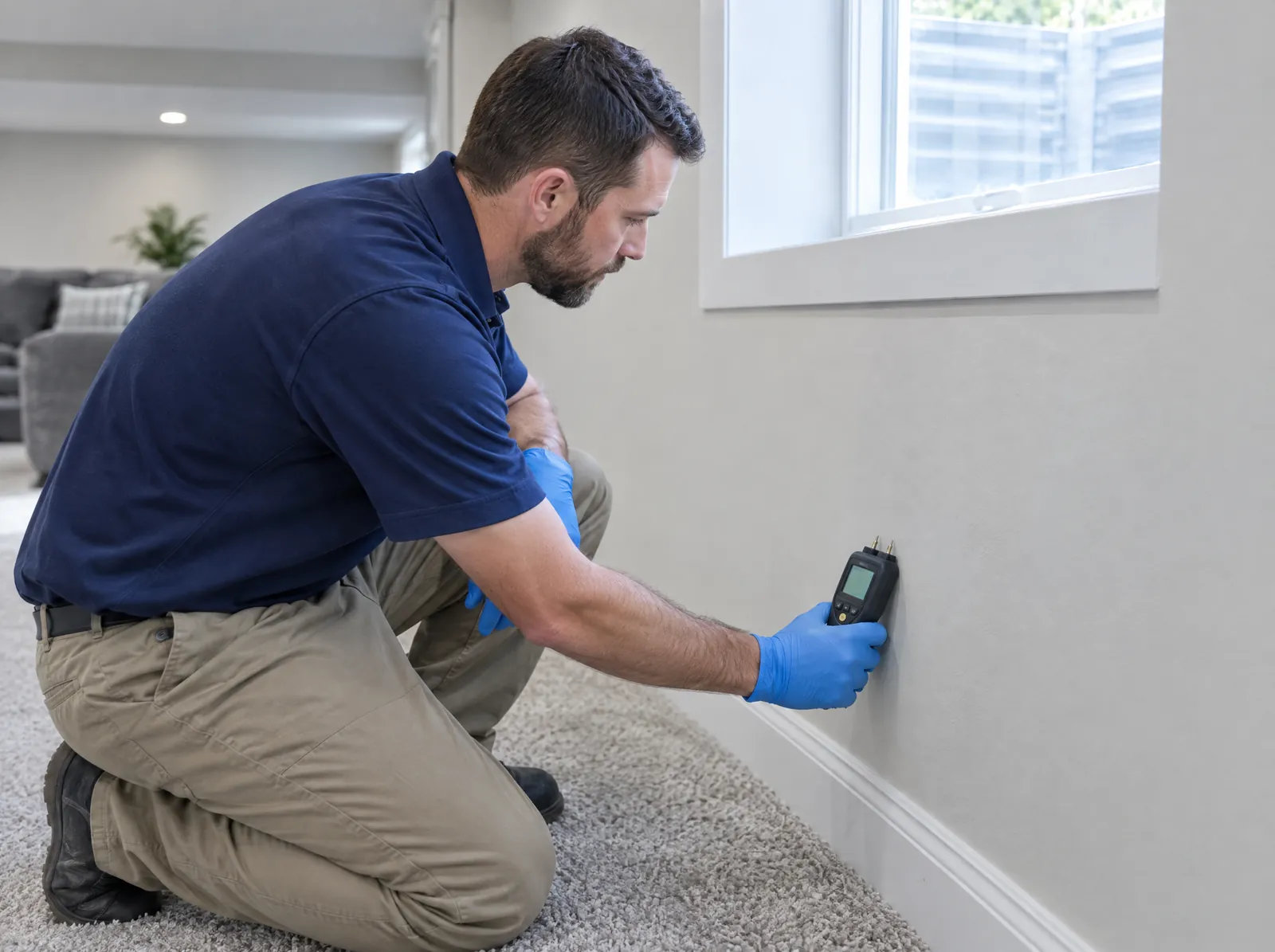
If Chaetomium shows up only as a number in a dust DNA result, with no visible growth, the next step is usually a moisture investigation with meters and thermal imaging to find where it has been growing. Opening walls comes after the source is located, not before.
We identify and remove mold and mycotoxins in buildings. We don’t diagnose or treat medical conditions, and nothing on this page is medical advice. If you’re concerned about exposure, please talk with a doctor. With your permission, we’ll share our findings with them.
We're done when the lab says so.
Every remediation ends with clearance testing, and our work is backed by a complete-removal guarantee. We don't close a job on a failed result.
Talk to a specialistChaetomium on your lab report?
Send us what you have. A specialist will walk you through what the result suggests about the moisture history and what testing or cleanup comes next.
- (833) 772-6653
- info@americanmoldexperts.com
- Open 7 days, 8am to 8pm