
What is the difference between mold removal and mold remediation?
Short answer
Mold removal usually means getting rid of the mold you can see, by scrubbing, spraying or cutting out a stained section. Mold remediation is the full process: finding and fixing the moisture, containing the work area, removing growth wherever it actually is, cleaning up the fine dust it released, and testing afterward to confirm the space is back to normal.
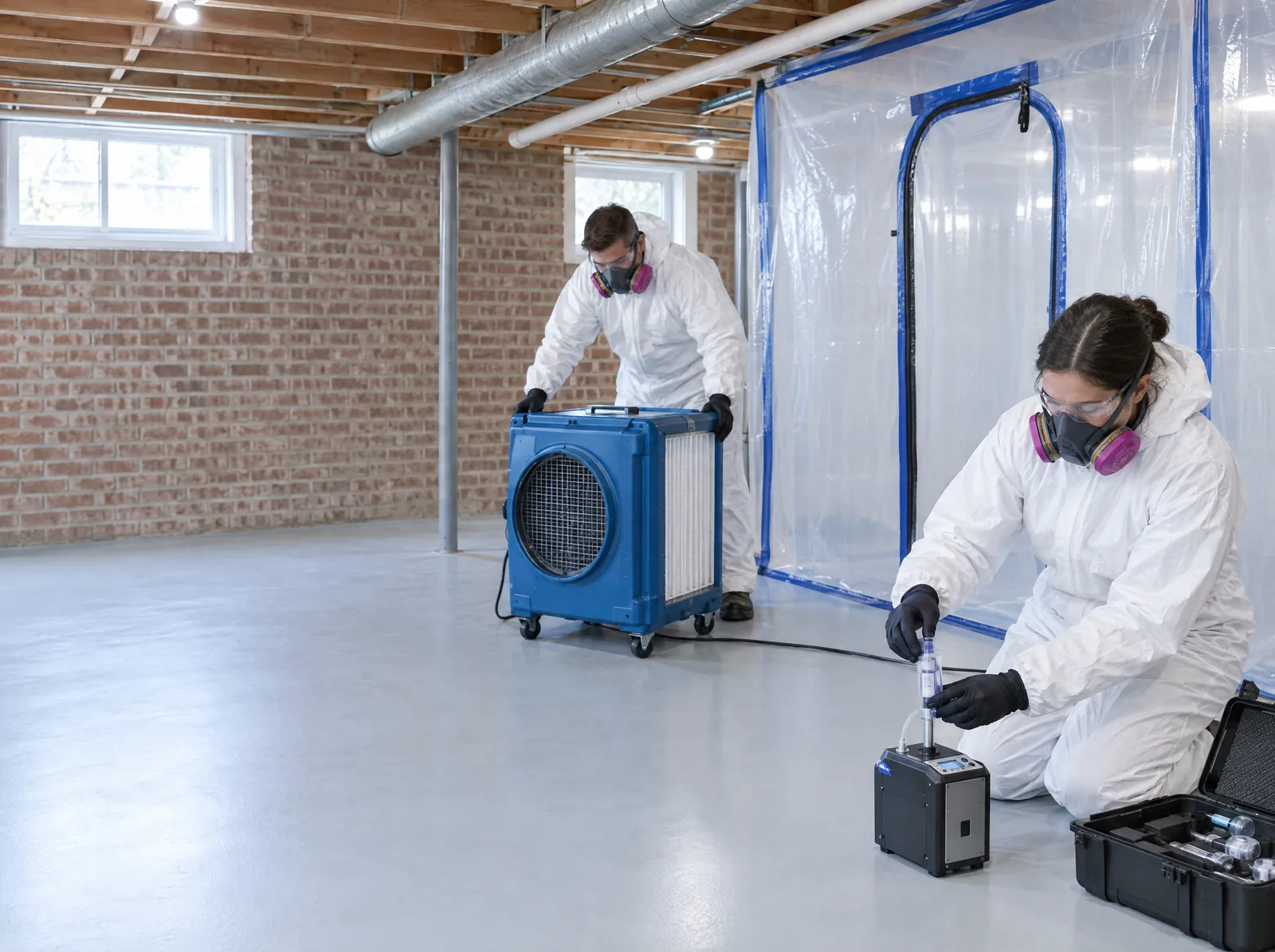
The two terms, side by side
Companies use both words, often for the same service, so the label on a quote doesn’t tell you much. What’s included does. This is how the two approaches usually differ in practice:
| Mold removal (as usually sold) | Mold remediation | |
|---|---|---|
| Goal | Make the visible mold go away | Return the affected area to normal conditions for that home |
| Moisture | Often not addressed | Source found and corrected first |
| Where it looks | The stain you can see | Wall cavities, subfloors, insulation and HVAC as needed |
| Work area | Open to the rest of the house | Sealed behind containment with negative air |
| Method | Spray, scrub, cut out the visible piece | Remove unsalvageable materials, HEPA clean and treat the rest |
| Dust and fragments | Left behind | HEPA vacuumed, wiped and air-scrubbed |
| How you know it worked | It looks clean | Moisture readings and clearance testing |
Why “removal” can’t mean zero mold
Mold spores are part of ordinary outdoor air and drift into every home. So a promise to remove all the mold from a house isn’t something anyone can keep, and it’s a reason to be skeptical of the company making it. Remediation sets a target that can be measured instead. The ANSI/IICRC S520 standard, which covers professional mold remediation, describes that target as returning the space to its normal fungal ecology: the kinds and levels of mold you’d expect in a similar building without a water problem.
That’s why remediation ends with testing. A clean-looking wall is a visual result. Post-remediation verification compares the work area with outdoor air and unaffected rooms, so the finish line is a number rather than an opinion.
Which one does your situation need?
Removal isn’t always the wrong answer. Plenty of mold problems are small enough that cleaning them is the whole job.
- Removal, or a simple cleanup, is often enough for a small patch of surface mold on tile, glass or a window frame, where you know why it grew and can fix that.
- Remediation is the better fit when the area is larger than about 10 square feet, when the mold is in drywall, insulation or carpet, when it followed a leak or flood, when it keeps coming back, or when someone in the home is sensitive to mold.
The dividing line is less about the size of the stain and more about whether you know where the moisture is and how far the growth goes. If you don’t know those two things, removal is guesswork. Testing first answers both, and it often shows that a job is smaller, or larger, than it looked from the doorway.
Questions that show what you’re actually buying
Whatever a company calls its service, these questions tell you which one it is:
- What caused the mold, and who is fixing that?
- How will you keep dust out of the rest of the house during the work?
- What are you removing, what are you cleaning, and why?
- How do you clean up the fine dust afterward, not only the visible growth?
- Do you test before and after, and will I get the lab reports?
A remediation company should answer every one of them in writing before work starts. If the answers are “we’ll spray it” and “you’ll be able to see it’s gone,” you’re being offered removal. For a fuller list, see the questions to ask a mold remediation company, and for the setup that keeps a job from spreading, read about mold containment.
We're done when the lab says so.
Every remediation ends with clearance testing, and our work is backed by a complete-removal guarantee. We don't close a job on a failed result.
Talk to a specialistFind out which one your home needs
Tell us where the mold is and what caused it, if you know. A specialist will explain whether it's a cleanup or a remediation project, and why.
- (833) 772-6653
- info@americanmoldexperts.com
- Open 7 days, 8am to 8pm