
Fort Myers storm recovery
Hurricane mold remediation in Fort Myers
When the river or the rain gets in, we dry, remove and clean. An independent assessor confirms it's gone.
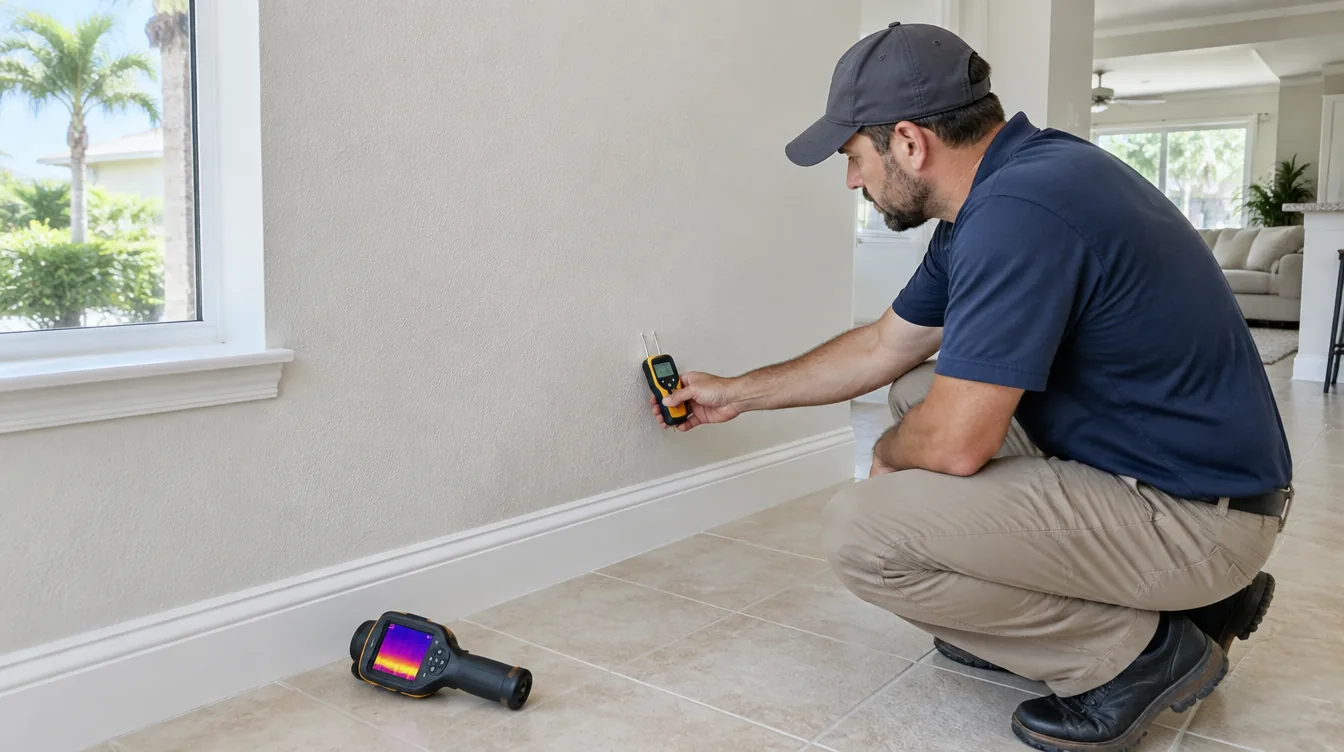
How does hurricane mold remediation work in Fort Myers?
Hurricane mold remediation in Fort Myers starts with drying the house, then removes the materials river or rain water ruined and cleans out the mold that follows. In Fort Myers, the Caloosahatchee is the big risk: in Ian, surge pushed the river into downtown streets. The work should end with clearance testing by an independent licensed assessor, as Florida law expects.
River flooding is its own kind of storm damage
Most people picture storm surge on a beach. In Fort Myers, it comes up the river. During Ian, surge reversed the Caloosahatchee's flow and spilled into the streets of the city, and in 2024 Helene and Milton both raised the river again. River flood water rises, sits and falls back more slowly than a breaking wave, so walls, floors and cabinets soak longer. Add days without power or AC, and mold has everything it needs.
Sound familiar?
- River water got into the ground floor and you don't know what can be saved.
- Your home was repaired after Ian and took water again in 2024.
- You smell mold but the walls look fine.
- Your insurer is asking for moisture logs and photos.
We do it differently.
| A fast storm cleanup | AME storm mold remediation in Fort Myers | |
|---|---|---|
| Water type | Treated like a clean leak | Treated as contaminated flood water |
| Drying | Until it feels dry | Until moisture readings show it is dry |
| Repeat storms | Same fix as last time | Checks for leftover damage from earlier floods |
| Testing | Often skipped | Independent licensed assessor, before and after |
| Records | An invoice | Photos, moisture logs and lab reports for your claim |

Why families trust us with their homes
-
Family-owned since 2008
A multigenerational family business. Not a franchise, not a private-equity rollup.
-
Trained and certified
Our team holds IICRC, CMR, CRMI and CCMI credentials in mold remediation and inspection.
-
Called on as experts
Attorneys bring us into legal cases involving mold and mycotoxins.
-
Documentation at every step
Photos, moisture logs and lab reports you can hand to your insurer or FEMA.
- IICRC Certified Firm
- CMR
- CRMI
- CCMI
- BBB A+ Accredited
- NAMRI
- IAQA
- NORMI
- AMMA
- PMII
The AME Clearance Method
What we do after a Fort Myers flood
Six steps. Drying comes first because in Fort Myers heat, every wet day adds to the job.
Talk to a specialist-
Safety and photos
We confirm the power and structure are safe, then photograph and video every room, the waterline and damaged belongings for your claim.
-
Water out, drying in
Standing water and wet debris are removed. Dehumidifiers and air movers run while we map moisture in walls, block, wood framing and floors.
-
Independent assessment
A licensed mold assessor, independent of our company, inspects and samples the home and writes the protocol for the work.
-
Contain and remove
Barriers and negative air protect dry rooms. Flood-soaked drywall, insulation, carpet, pad and cabinet bases come out.
-
Clean and treat
HEPA vacuuming and hand cleaning of every exposed surface, then enzyme treatment for mycotoxins. The AC system is checked and cleaned if it took on water.
-
Independent clearance
The assessor retests before new drywall goes up, and you keep the report for your insurer, your contractor and a future buyer.
What every Fort Myers storm project includes
- Photo and video documentation from the first visit
- Moisture mapping of walls, block, framing and floors
- Containment with negative air
- Removal of porous materials flood water touched
- HEPA vacuuming and detailed cleaning
- Enzyme treatment for mycotoxins
- AC and duct inspection, and cleaning where needed
- Coordination with an independent licensed assessor
- Records for your insurer, FEMA or a future sale

Proof you can hold in your hands
When we finish, you don't get a handshake and a promise. You get the paperwork your family, your doctor, your insurer or your buyer can rely on.
Inspection report
What we found, where it is coming from, with color photos.
Written remediation plan
Scope, timeline and what will and won't be removed, before work starts.
Clearance lab report
Air, surface and mycotoxin results after the work is done.
A report for your doctor
With your permission, we share results directly with your care team.
Storm and river flood mold in Fort Myers, explained
Three storms, one river
Fort Myers faces the Caloosahatchee, and in each of the last three big storms, the river is what brought water into homes. The figures below come from the National Hurricane Center’s tropical cyclone reports.
| Storm | When | What the National Hurricane Center reported for Fort Myers |
|---|---|---|
| Ian | September 2022 | Surge reversed the river’s flow and flooded city streets. Up to 5 to 8 feet above ground up the river, and 7.26 feet above the normal high-tide line at the downtown gauge. |
| Helene | September 2024 | The river gauge read 5.12 feet above the normal high-tide line. At least 102 structures in Fort Myers were damaged, 52 of them with major damage. |
| Milton | October 2024 | 4 to 6 feet above ground from south of Boca Grande through Bonita Beach, including the Caloosahatchee. The Fort Myers gauge read 5.27 feet above the normal high-tide line. |
During Ian, buildings along the river downtown took several feet of water on their ground floors, and flooding reached neighborhoods blocks from the river. Helene and Milton came two weeks apart in 2024, so a home still drying from the first storm could take water again from the second. If your home has flooded more than once, it’s worth asking what was left behind the last time. Read the full Helene report for how the storm affected the rest of the coast.
Why river flooding soaks deeper
A breaking wave does its damage fast. River flooding tends to rise, sit and drain slowly, especially when surge and heavy rain combine. That gives water more time to wick up drywall, soak into the bottom of cabinets and saturate wood framing and subfloors. The restoration industry treats this kind of water as heavily contaminated because it carries sewage, silt and bacteria, so porous materials it touched are removed rather than dried in place. Drywall is cut in a straight line above the highest point the water wicked to, so the wet section and anything growing behind it come out together.
Fort Myers homes, old and new
The city’s housing is more varied than most of Southwest Florida, and each type fails differently in a flood.
Historic homes
Dean Park, Edison Park and Seminole Park have houses from the 1910s and 1920s, many with wood framing, plaster walls and wood floors. Wood framing and subfloors hold water and are harder to dry than block. Plaster can often be saved if it dried quickly, but the cavity behind it still needs to be checked and cleaned. We try to keep original materials when testing supports it.
Block ranches
Concrete block homes, the most common type in the city, handle wind well but release water slowly. The drywall on the inside of exterior walls is often fastened to thin wood strips over the block, and that narrow gap can stay damp long after the room looks dry. Moisture readings in the block tell us when it is actually dry.
Condos and apartments
Buildings downtown and along the river flood at the ground floor, parking levels and mechanical rooms first. Shared walls and chases let water travel between units. Associations generally handle common elements and owners generally handle unit interiors under Florida condominium law, but the declaration controls, so confirm the split with your association manager or an attorney before work begins.
The first 48 hours after the river goes down
- Stay out until the power to wet areas is off and the structure is safe.
- Photograph and video every room, the waterline and damaged belongings before anything is moved.
- Get standing water out and move soaked rugs, furniture and boxes outside or to the garage.
- Run dehumidifiers once power is back. Keep the AC off if the air handler or ducts took on water.
- Call your insurer, and if a disaster has been declared, apply at DisasterAssistance.gov.
- Call a remediation company and ask how testing and clearance will be handled.
The EPA advises drying water-damaged areas within 24 to 48 hours to prevent mold growth. In a Fort Myers September, that window is short.
The garage, the lanai and the AC closet
In a lot of Fort Myers homes, the rooms that flood first are the ones people check last. The garage sits lowest, and it is often where the water heater, the washer and dryer, and years of stored boxes live. Drywall in the garage wicks water just like drywall in the living room, and if it shares a wall with a bedroom or the kitchen, mold that grows there can reach the house. Screened lanais and pool areas drain toward the house, so water that pooled there can get under sliding doors and into the slab edge.
Then there is the air conditioner. In many homes the air handler sits in a ground-floor closet, low enough to take water in a flood. If the unit, the return or the ductwork got wet, running the system can spread mold through every room. We inspect the AC before it’s switched back on, and clean or recommend replacement of wet parts based on what we find. Our page on AC, duct and HVAC mold covers that work in detail.
Independent testing and clearance
Florida licenses mold assessors and remediators separately. Under Florida Statute 468.8419, an assessor may not remediate a structure it assessed within 12 months, and a remediator may not assess or clear one it remediated within 12 months, with an exception for certified Division I contractors. On our Fort Myers storm projects, an independent licensed mold assessor inspects and samples the home, writes the scope, and performs clearance testing. We do the remediation to that protocol. The company testing your home has no reason to find more mold than is there, and the company removing it can’t grade its own work.
Records for your insurer, FEMA and a future buyer
We keep dated photos, daily moisture readings, the assessor’s reports, an itemized list of what was removed and the final clearance report. FEMA’s mold guidance says NFIP flood policies won’t cover damage from mold, and the policy also excludes mold caused by failing to inspect and maintain the property after the water recedes. Ask your adjuster in writing how your claim will be handled. Records still matter for the flood damage itself and for any other coverage you have. FEMA’s Individuals and Households Program may help with disaster-caused mold when it makes a home unlivable. Those same records answer a buyer’s questions later, when you sell.
If a family member has been unwell since the flood and is working with a doctor, see our page on mycotoxin remediation in Fort Myers. Our Southwest Florida team works throughout Lee County, and in Collier and Charlotte counties too.
Common questions
Have a question that isn't here? Call a specialist
How bad was Hurricane Ian flooding in Fort Myers?
The National Hurricane Center estimated maximum flooding of 5 to 8 feet above ground up the Caloosahatchee River in Fort Myers. The tide gauge near downtown recorded 7.26 feet above the normal high-tide line, and surveyors found a high water mark of 4.4 feet above ground on the river's southern bank downtown.
Did Helene and Milton affect Fort Myers too?
Yes. The National Hurricane Center reports that at least 102 structures in Fort Myers were damaged in Helene, 52 of them with major damage, and the river gauge read 5.12 feet above the normal high-tide line. Two weeks later, Milton pushed that gauge to 5.27 feet.
My home flooded in Ian and again in 2024. Does that change anything?
It can. Materials that were dried but not replaced after the first flood may have been wet again, and old contamination can sit behind newer repairs. We check for both before we write off anything as clean.
Does flood insurance pay for mold?
FEMA's mold guidance says NFIP flood policies won't cover damage from mold, and the policy also excludes mold caused by failing to inspect and maintain the property after the water recedes. Ask your adjuster in writing how your claim will be handled, and keep records of everything you did. Many homeowners policies also limit mold coverage, so read the mold or fungi section of yours.
Can one company test and remove mold in Fort Myers?
Generally not on the same home. Florida Statute 468.8419 bars a mold assessor from remediating a structure it assessed, and a remediator from assessing one it remediated, within 12 months, except for certified Division I contractors.
Should I run my AC after the house floods?
Only once you know the system is clean. If the air handler, return or ducts took on water or show growth, running them can spread mold through the house. Dehumidifiers are safer until the system is checked.
We're done when the lab says so.
Every remediation ends with clearance testing, and our work is backed by a complete-removal guarantee. We don't close a job on a failed result.
Talk to a specialistFlooded in Fort Myers? Call us today
Tell us where the water came from, how high it got and when. A Southwest Florida specialist will call you back.
Not sure yet? Try the free AI Mold Risk Check